

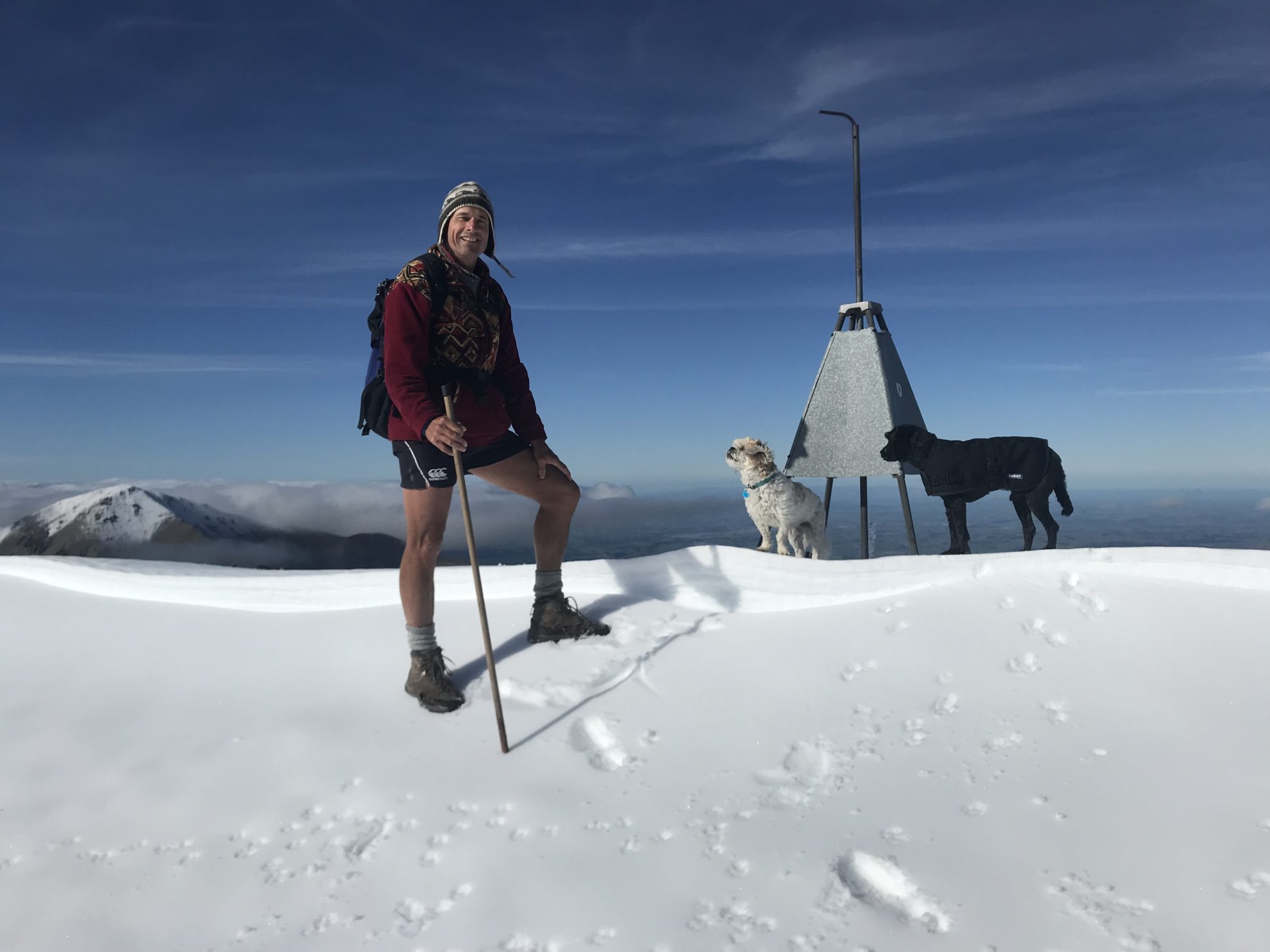
Joe Nawalaniec is a secondary school teacher and outdoors educator with over 40 years of experience tramping and climbing in New Zealand and overseas.
What are the best things about going bush in winter?
Top of the list, I never have to worry about sandflies, mosquitoes or wasps! I enjoy bush hot pools more. Fires are more ambient, and not a safety problem. There’s more fireside reading, card-playing and wine-sipping time in winter huts. The mountain scenery is infinitely more spectacular. There’s much more chance of having that track or ridge to yourself to enjoy, and less likelihood of not being able to get a bunk in that popular hut. The Great Walks are all much cheaper – and prettier. Above all, I get a lot more sleep and rest.
What are some of your favourite memories of taking high school students outdoors in winter?
Winter trips with St Patricks College Silverstream Gold Duke of Edinburgh lads, camping in the snow and ice at 1900m. These were wonderful trips, with the boys and me carrying up wood to have bonfires around our ice tarn campsite. Another time a student and I attempted a winter trip over Copland Pass, but ended up sandwiched in Copland Shelter with three other climbers for four days in an unabating storm, unable to even head outside to go to the toilet, while the shelter was being blasted and the snow was mounting up. A brief respite on day four meant a quick abseil down the Fitzgerald gut to escape. An unforgettable memory for a 17-year-old.
I think doing something outside their sphere of experience – something they would never normally do – gets some pupils hooked. Winter tramping and climbing is the ultimate in adventure for some of the luckiest teens. And for many, it’s a once-in-a-lifetime adventure.
What are some of the most extreme winter conditions you’ve been in and how did you handle them?
New Zealand can get cold, but winter climbing in the Himalayas is another universe of frigidity, where it regularly gets down to -30°C or lower. Everything can, and does, freeze. Camping above 5000m means I tuck my boots in as a pillow to prevent them from freezing. I wear all my layers and I sleep with my water bottles, batteries, headlamp and camera in my sleeping bag. Because if anything freezes, then it stays frozen and is useless. One time, I needed to ice-axe a couple of thumbholes into my indoor booties to be able to wear them over my layers. It was just so damn cold. Necessity is the mother of invention in extreme winter conditions.
What should people consider when planning a winter trip?
Instead of the low temperatures, or the weather, the number one thing to consider is the lack of daylight hours. Kiss goodbye to that lazy sunrise wake-up. I’m happy getting ready in the dark and departing by headlamp.
Winter shouldn’t be off-putting. I’ve found the weather in July and August can be a lot more reliable and stable than around the autumn and spring equinoxes. However, things do conspire to slow you down when winter tramping – the extra gear needed, bulkier clothing, deep snow, slippery streams and logs, so be realistic about your goals.
Favourite winter tramping destinations?
My happiest winter tramping and climbing memories would be the passes and peaks of Nelson Lakes and the south Marlborough high country. Central Otago takes on a different dimension in winter, particularly places like the Old Man and Old Woman ranges, or the Hawkdun and Ida ranges. In the North Island, a Turoa to Whakapapa traverse over Mt Ruapehu is great fun on a sunny day, and much better than the scree of summer. As is a quiet winter Tongariro Alpine Crossing, when I may be the only person doing it. In the Tararua and Ruahine ranges, the ridges become even more magnificent.
What safety precautions should people take when tramping in winter?
New Zealand weather is fickle all year round, but there is another layer of potential danger on winter trips. I often set my alarm so that I don’t oversleep and can make the most of the daylight hours. I carry two headlamps and spare batteries as well as candles and a rechargeable battery pack for my mobile phone. I take a set of lightweight pull-on mini-crampons and a short length of washing line rope for any unforeseen potentially icy conditions. As things tend to be greasier underfoot, a walking stick or ice axe often completes my winter ensemble.
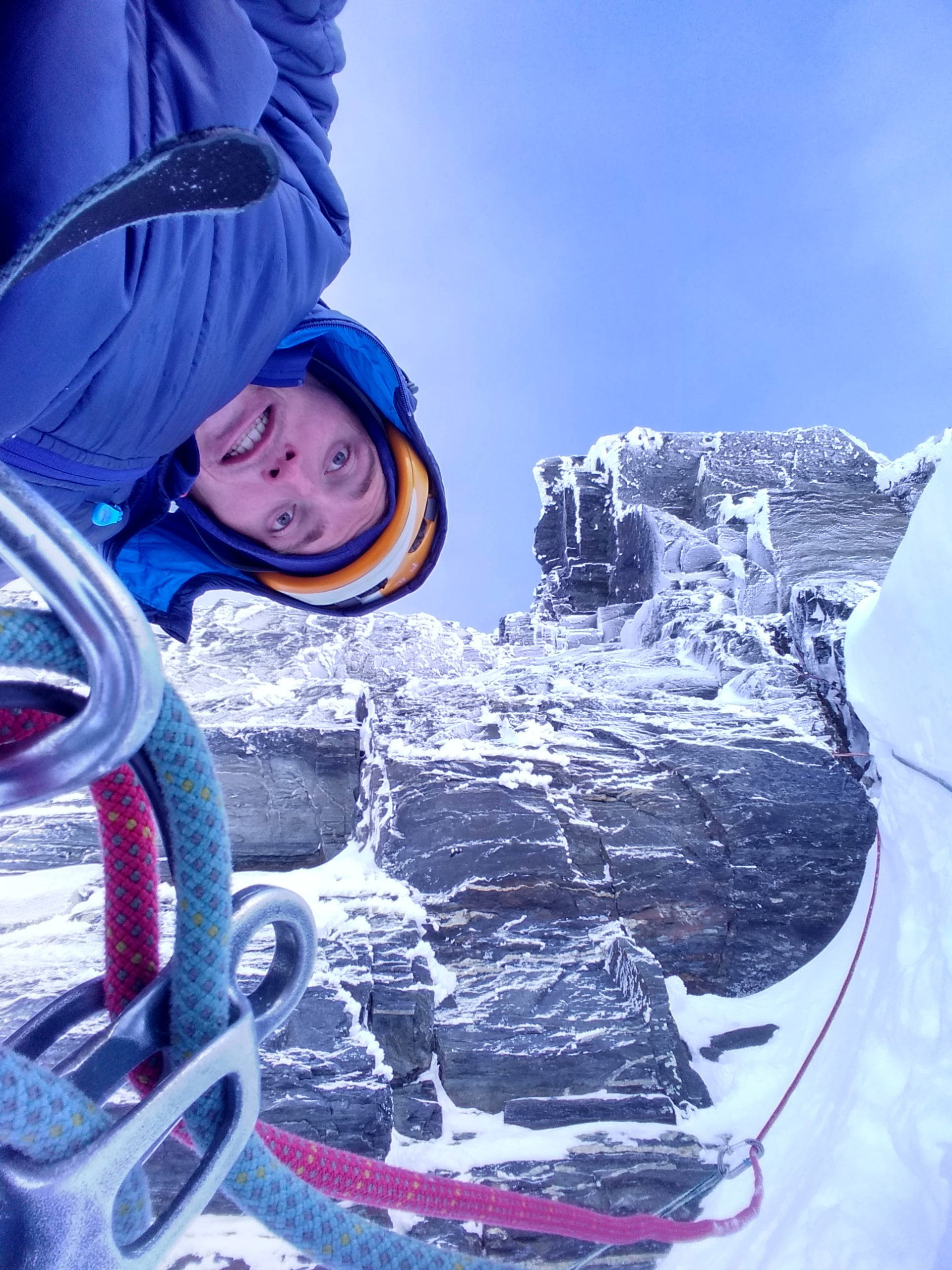
Alastair McDowell is a mountain adventurer and has been a member of the New Zealand Alpine Team for seven years. Earlier this year he – along with Hamish Fleming – climbed all 24 of New Zealand’s 3000m peaks in the space of a month.
Are the mountains more dangerous in winter?
Short answer: Yes! Shorter days, colder temperatures, less predictable avalanche conditions often with higher consequences. Winter deserves a more cautious approach and a different set of objectives. Instead of mountaineering in high alpine peaks, you might do more ice and mixed climbing in safer areas like The Remarkables. Or climb a more technical route with a flat approach like up the Hooker Glacier to the South Face of Mt Hicks, where there is less avalanche-prone terrain.
How do you approach winter in terms of planning your climbs?
You need to come up with a list of climbs you’d like to do well in advance and start talking to the people you might team up with. Plant seeds in your climbing partners’ heads early, so when the conditions, weather and time line up, you’re psyched and ready to go.
What makes winter mountaineering challenging?
Winter conditions are more fickle and harder to predict, both in terms of snow conditions for travel, and for avalanches. It also takes longer these days for winter to settle in, so you need patience. In mid-July in Arthur’s Pass, the mountains may be covered in snow, but it could be just powder on rocks with no base. You need to go out on exploratory forays and be willing to turn back – that’s how you build a picture in your mind about how the snowpack is developing. In spring and summer, snow conditions are more predictable with warmer temperatures and melt-freeze cycles.
What are some of your most memorable winter adventures?
Friends and I biked up the Cass Valley (near Tekapo) to try to make the first ascent of the south face of Mt Hutton. We wallowed through deep snow, had an open bivvy below a huge crumbling serac and managed to climb three difficult pitches up the face before bailing off, abseiling over a huge hanging snow blob. It took four years before I finally went back to finish the climb, which made it especially memorable.
What have you got planned this winter?
I’ll be doing some multi-day ski-mountaineering traverses around Arthur’s Pass, the Godley and Aoraki/Mt Cook region. I’d still like to do at least one big alpine ice climb.
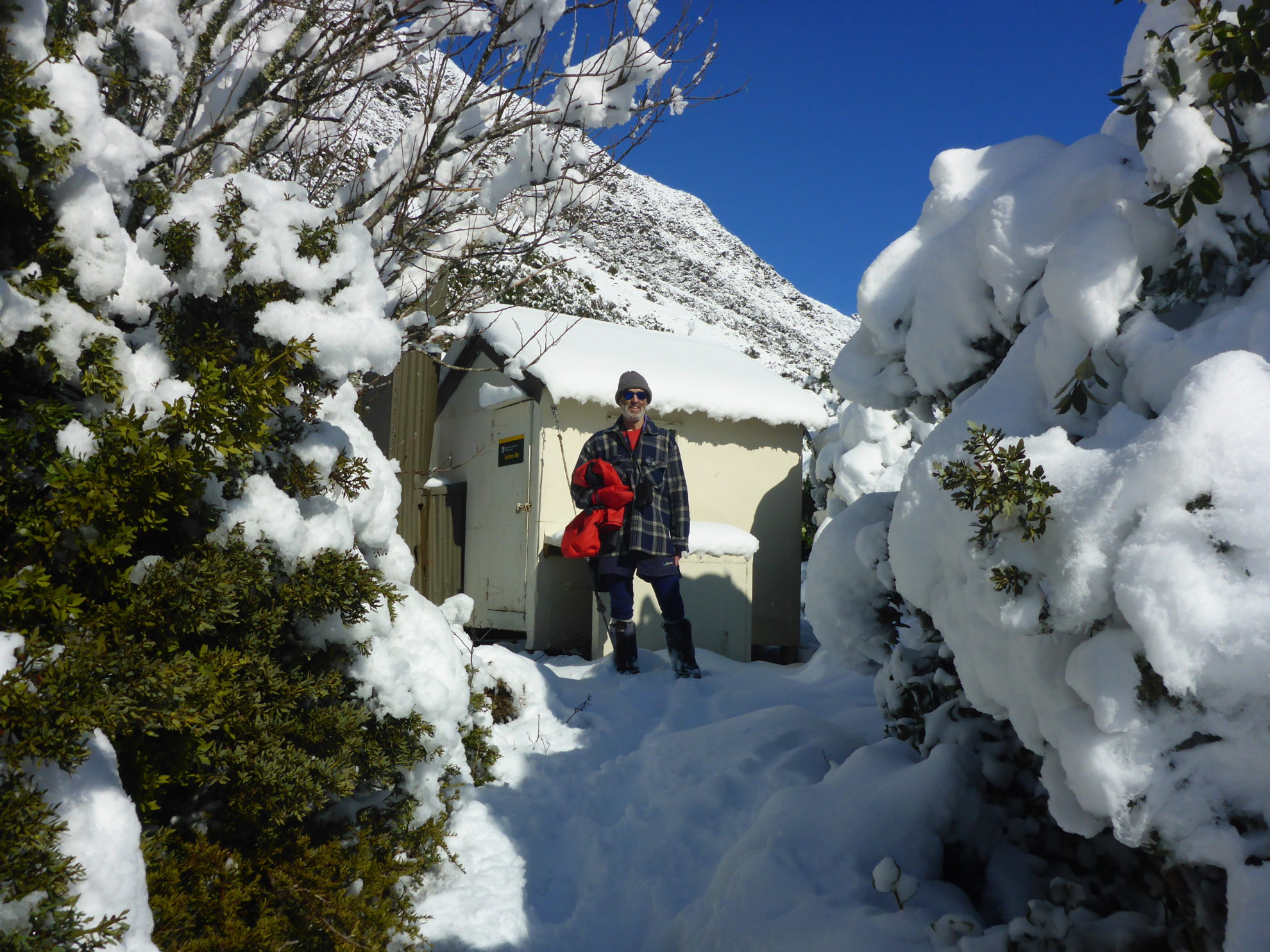
Brian Dobbie has worked for the Department of Conservation for 35 years and has bagged 900 huts.
Which are your favourite winter huts and why?
Barker Hut, a 10-bunk hut high above the White River in Arthur’s Pass National Park. I love it, not because it’s warm and has heating – it isn’t and hasn’t – and not because it is easy to get to – it’s not – but because it is beautifully sited at over 1500m with fantastic views of big mountains and is a great base to climb from. Bluff Hut, sitting high above the Mungo River (on the West Coast) is another. It’s cosy, newish, has a wood burner, views of snowy West Coast mountains and a reasonable, but demanding, track leading to it. I am also a fan of the Top Forks Huts, a couple of days tramping up the Wilkin Valley, in Mount Aspiring National Park. It’s a great base to explore the lakes up the south branch, which may well be frozen in a good winter.
Do you have any winter tramps planned this year?
Four of us are heading for a week in the Wilberforce Valley. We’ll be aiming for the head of the valley, hoping that in the middle of winter, snow levels will be at their deepest, reducing the flow into the streams and the main Wilberforce River and making it easier to cross. If we get a poor forecast and expect the river to be difficult to cross, we’ll do a week’s tramping somewhere safer.
What makes the perfect winter tramp?
Fine, calm, sunny weather, but – paradoxically – a short, heavy snowfall in the middle of the trip. Dazzling white snow on trees, deep blue skies and powder snow to push through, a small hut to yourselves…there’s nothing like it.
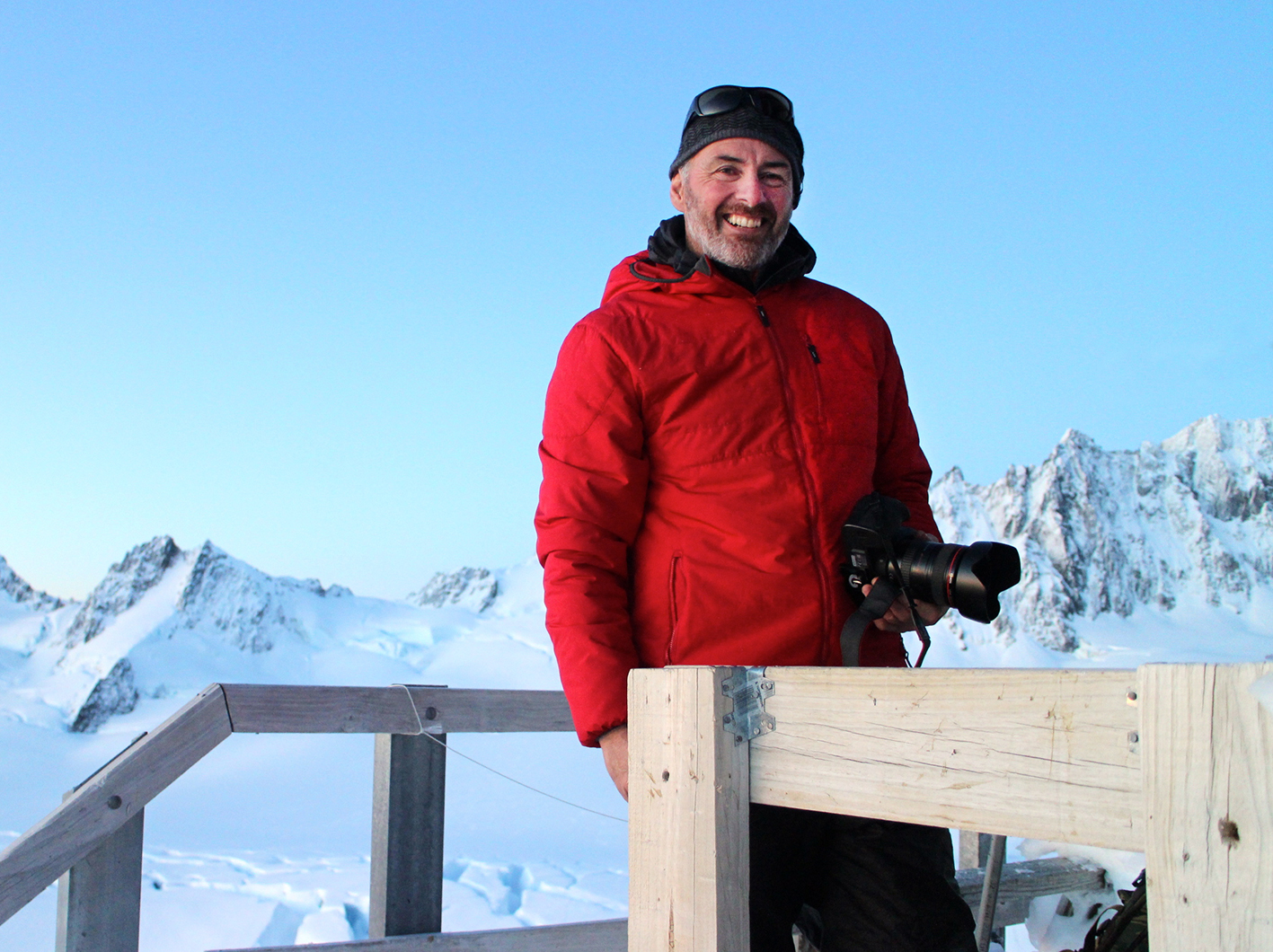
Andy Cole is the chief guide for Aspiring Guides and president of the New Zealand Mountain Guides Association.
What experiences do Aspiring Guides offer in winter?
Winter water ice climbing and skiing are limited to the winter season. If you’re an absolute beginner, we can provide a number of walking or snowshoe based adventures including ice climbing and mountaineering in areas such as The Remarkables. If you are a competent skier we can give you an off-piste, out of ski resort adventure where it is quieter and there are fresh tracks available, perhaps on a glacier.
Are the mountains more dangerous in winter?
Yes and no. During winter you need to consider the winter avalanche hazard, but the mountains are also locked up in ice, so the rockfall hazard diminishes. The winter snowpack covers crevasses sometimes hiding dangerous crevasse lids, but also fills the crevasses to make them safe to ski or walk over. It’s a matter of experience and judgement which is why a guide is helpful. On the plus side, the winter snowpack provides a nice, relatively even surface to play on. Whether you’re skiing, boarding or just on foot, travel in the mountains becomes easier and generally more efficient.
What are your favourite winter spots in New Zealand?
Anywhere where there is good snow to ski and fresh tracks to be had. Skiing on the West Coast glaciers in the evening can be epic if you get lucky with the weather and the snow conditions. You fly into either Pioneer or Centennial huts from where you can ski off the Main Divide at Pioneer Pass or Graham Saddle. Then ski to Chancellor or Almer huts or along the Fritz Range to Castle Rocks Hut. The sunsets are always amazing.
What are your favourite winter memories in the mountains?
Ski mountaineering on the Neish Plateau from a snow cave on Sealy Pass. We sat out a storm in the snow cave and listened to the All Blacks beat the Springboks in the last minute of the game on a transistor radio. That’s something you don’t forget.



