

Shuffling down the side of the track on Te Mata Peak, past broken branches scattered by Cyclone Gabrielle, Mike Lusk points to a mass of green grass.
It takes a moment to see it: a green helmet-shaped flower with two whiskers protruding upward. It is well camouflaged, and if Lusk hadn’t pointed it out I would have gone straight past.
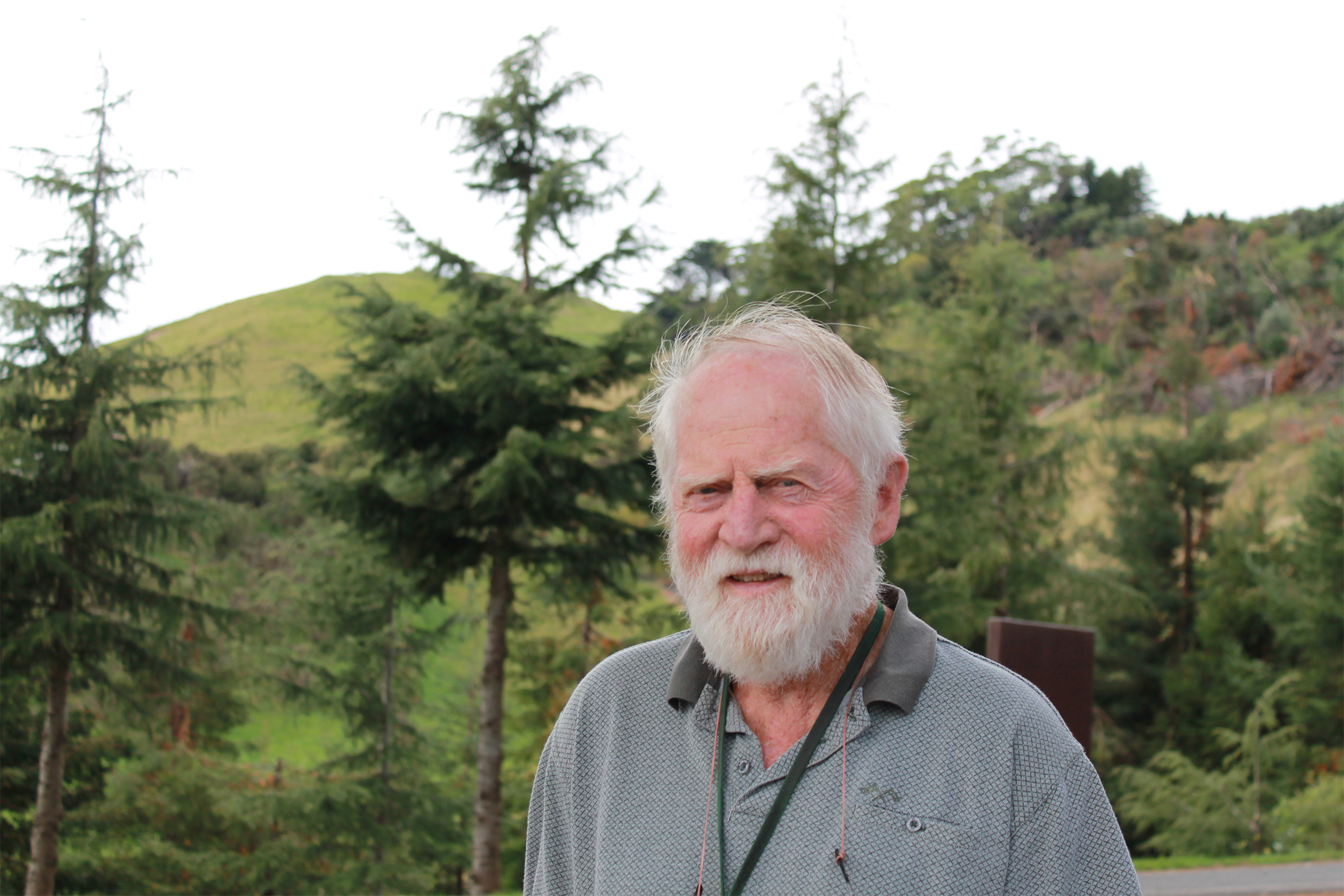
As a volunteer for the track and an enthusiast for orchids, Lusk is familiar with every orchid on the trail, whether in flower or not. He scrambles down the bank easily, despite his 76 years, pulling out wilding pines along the way, and has no problem kneeling to point out the flower.
He says getting close to the ground is the only way to see them.
“If I point them out to someone and they don’t get down on hands and knees to see them, I know they are not really interested in orchids,” he says.
These greenhoods are pollinated by fungus gnats, which land on the orchid’s ‘spring-loaded’ labellum (lower petal) and become entrapped, putting the gnat in contact with the orchid’s pollen. The gnat eventually escapes only to repeat the process with another orchid. Meanwhile, within 20 minutes the orchid resets itself for its next prey.
Aotearoa’s native orchids are more subtle than the tropical, garden-shop variety. Not all are green, and most are small and difficult to detect.
People tend to walk past native orchids without a second glance, but there are others, like Lusk, who search for them regularly. The plant’s elusive qualities add to the thrill of the ‘hunt’.
Lusk is a retired GP who first developed the ‘orchid hunter’s bug’ after noticing them on the sides of tracks while out with the Heretaunga Tramping Club. He soon realised that taking photos of orchids on tramping trips was making him antisocial and holding up the group.
“Taking pictures in haste is bad practice,” he says. “So now I go into the bush by myself or with other orchid enthusiasts. I’m not given to specific aims, such as photographing every orchid in New Zealand, but it’s certainly a thrill to see one I haven’t come across before, or to find a species outside its normal range or season.”
Through the New Zealand Native Orchid Group, he has been able to share those thrills and find other orchid enthusiasts who are content with a slower pace on the trail.
The New Zealand Native Orchid Group was established in 1983. Today, there’s around 100 members and a Facebook group exceeding 2000.
Ian St George, another GP and editor of the group’s journal, is a founding member. It was only a year before the group’s creation that he realised native orchids existed. He had attended an orchid society meeting in Dunedin, hoping to learn about a domestic tropical orchid, Cymbidium, which his mother left him. A discussion there, hosted by naturalist Janette West, had him gripped. It was about searching for native orchids.
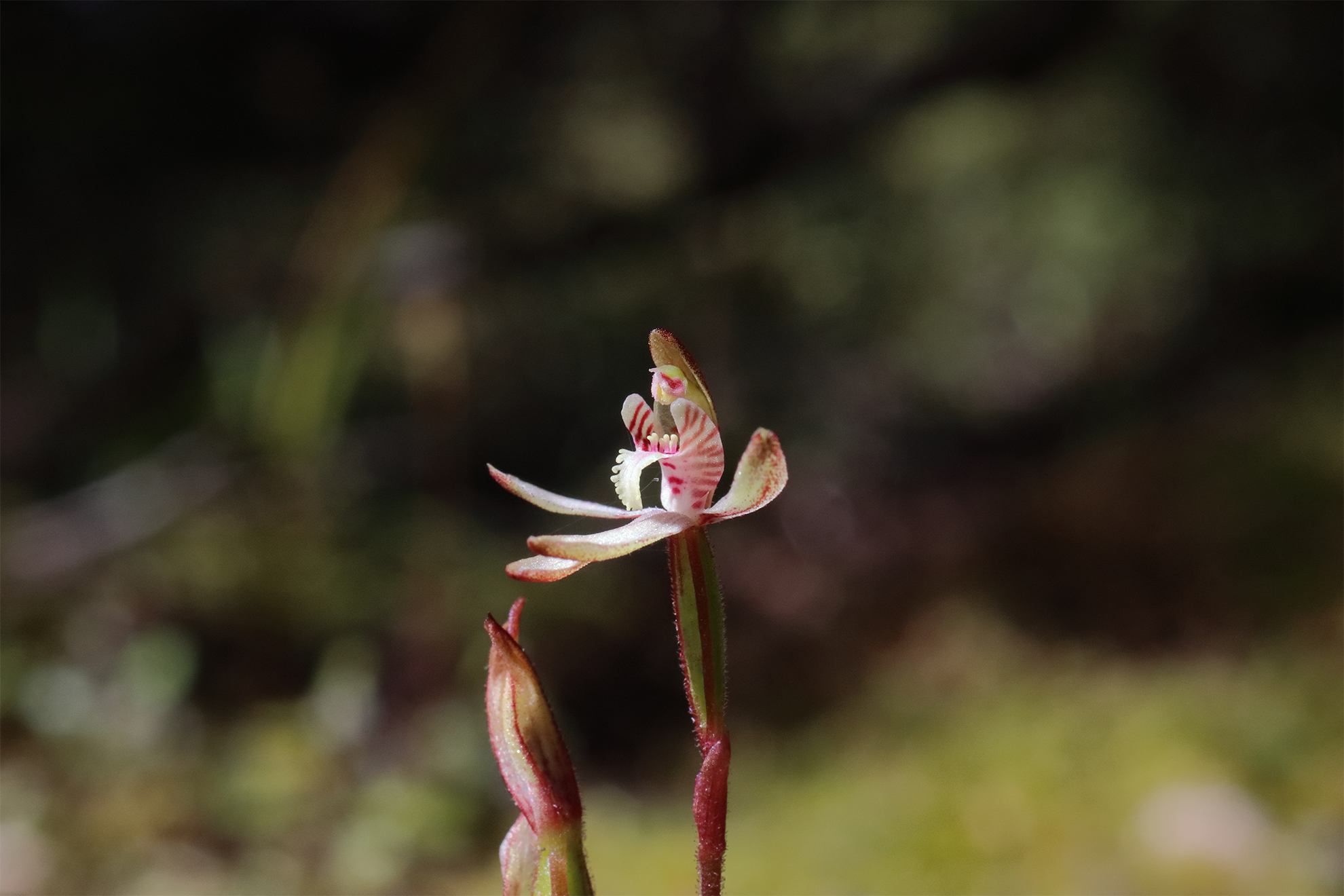
She described an activity that involved tracks, tramping, macro photography – a hobby he was developing – and, of course, the flower itself.
“They seem to be exquisitely beautiful little things, and that combination really took my fancy,” St George says.
Keen to learn more, he accompanied West on her next orchid hunt. A grassland area near Dunedin had been planted in pines and she wanted to see if orchids were there, before the pine forest grew.
“We found a native orchid that had never been recorded from Otago before, a little greenhood called Pterostylis venosa,” St George says. “Janette was visibly excited and I was too. It took off from there.”
New technology has aided the orchid group. St George says the iNaturalist app has been especially helpful: using a smartphone, people can scan plants and animals to identify them, then share the data.
The group’s growing interest in photography has played a part too as it’s this aspect that mostly drives the Facebook following.
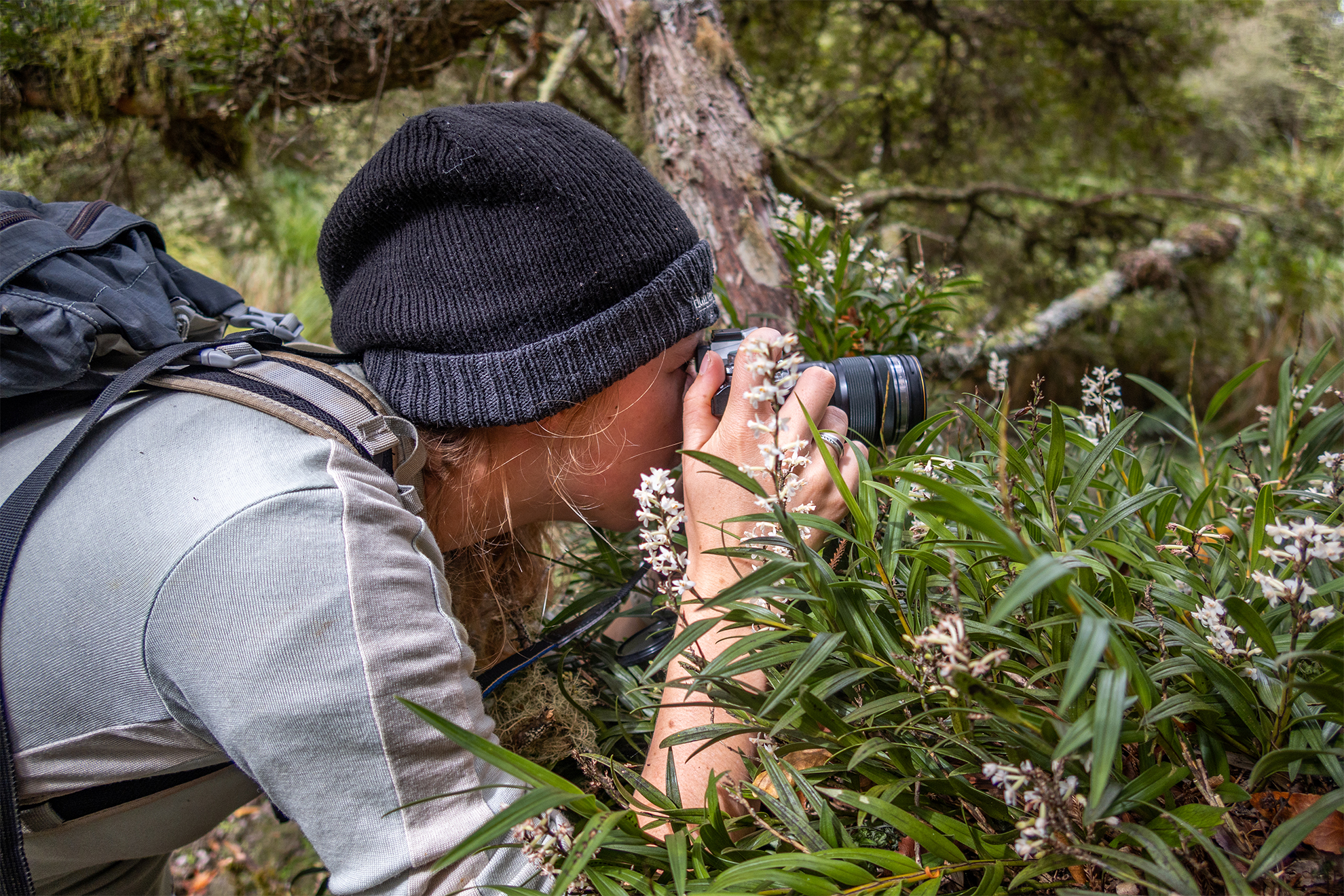
Another group member is botanist Cara-Lisa Schloots, 27, who says orchids introduced her to botany. She discovered orchids at high school after being shown a domestic variety by a neighbour.
“I went to a few orchid sales and realised they are really expensive,” she says.
Schloots soon began searching for and photographing the native variety – a much more affordable way to pursue her interest, with the added bonus of spending time in the wilderness, something she had always enjoyed. And, she found orchids that had been growing under her nose all along – three different species on a clay bank at her parent’s property.
From there her interest grew. She joined the native orchid group and went on to study botany.
It’s not only orchid group members who have been entranced by orchids. In the 19th century, English upper classes were gripped by a desire for exotic orchids, and commissioned orchid hunters to seek new, ever rarer varieties. The obsession was even given a name: orchidelirium.
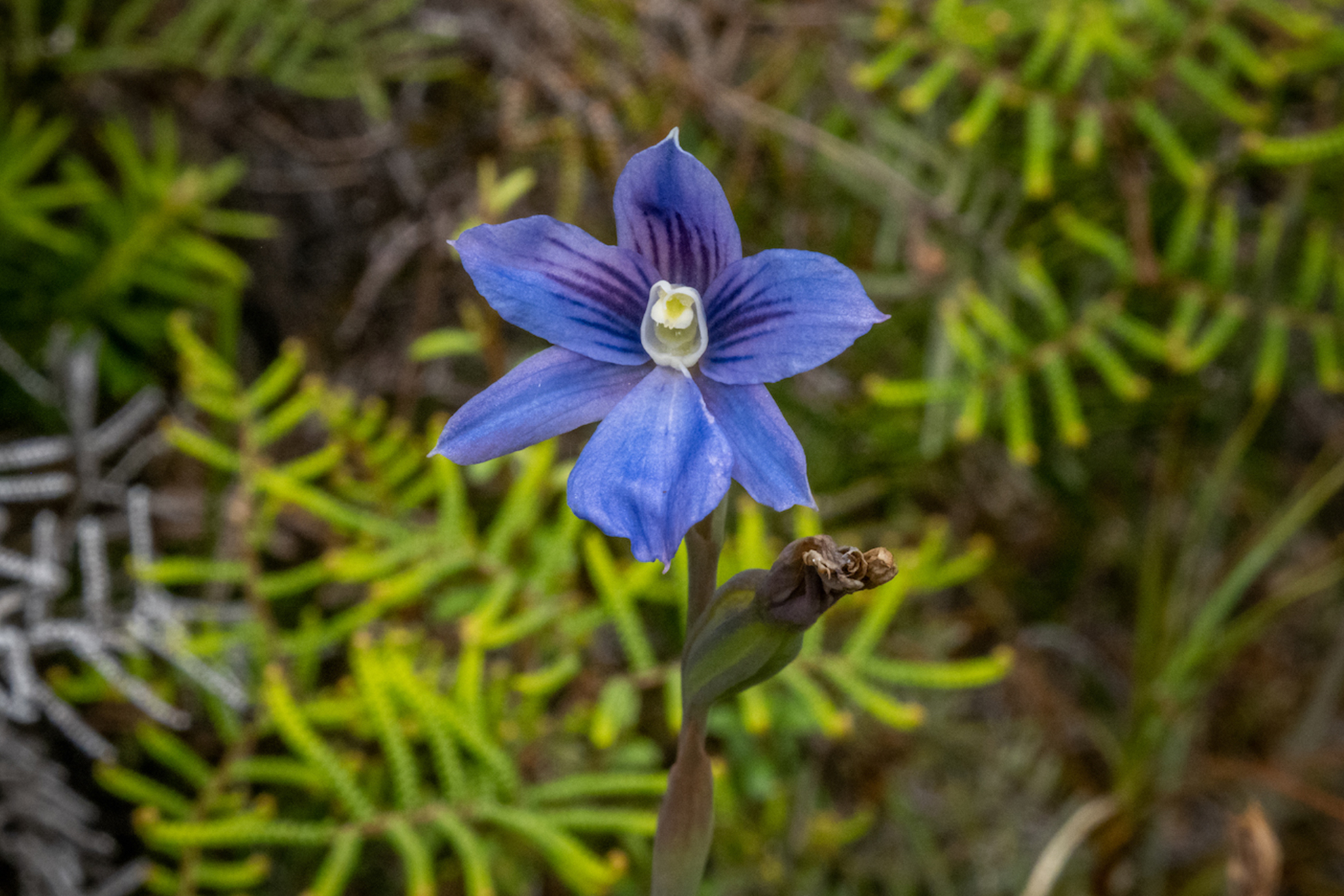
Charles Darwin could be partially credited with driving orchidelirium. He wrote a book about how orchid flowers attract pollinating insects, often by mimicking the insect itself. The bee orchid, for example, has a petal resembling a female bee. This attracts male bees intent on copulation, and orchid pollination is the result. Spider orchids – there’s a species in New Zealand – mimic the scent of mushrooms to attract fungus gnats.
Scarcity played a role in orchidelirium too, but the obsession was plagued with disappointment. Propagation was rarely successful as foreign varieties often perished in the English climate.
Eventually, cloning techniques were developed that allowed the flowers to be reproduced. The subsequent mass production of the exotic species may have tempered the Victorian orchid fever.
But the scientific appeal of the flower remains. Modern-day orchid hunters are drawn to find new variants and populations, and there is plenty of scope for citizen science.
“New Zealand orchids are a real mess, taxonomically,” says Lusk.
St George puts it another way: “There is so much in New Zealand orchidology to be discovered that you are always on the alert for something new.”
For example, the common orchid, Corybas trilobus, was thought to be one species until orchid enthusiasts in Otago noticed variations in the size and the timing of flowering. It gradually dawned that “you’re seeing something that no one really thought about before”, says St George.
There are opportunities to find entirely new populations too, including self-migrated rogue species.
DOC technical ecology advisor Brian Rance explains that an orchid’s minuscule seeds are capable of being blown from as far away as Australia to create rogue colonies in New Zealand.
“The seeds are almost like a spore, it’s like dust,” he says.
However, once the seeds arrive, they don’t necessarily grow. Orchids have complex needs that involve a symbiotic relationship with particular fungi: the seeds require fungal ‘infection’ in order to germinate.
“If they do establish, they might just be localised,” says Rance. “But on the flip side there are some that might have only arrived recently – in the last 100 years or more – and are still spreading. They become part of our native flora because they got here by themselves.”
The appeal of orchids goes beyond their botanical peculiarities, however. For Schloots, the process of searching for them is the main attraction.
“Because they are often so small, once you really start looking you notice so many other things as well … fungi, insects and other types of plants,” she says. “It really enhances your curiosity.”
Lusk and St George say their observation skills have been sharpened through orchid searches.
“The majority of people walk through without noticing them at all,” Lusk says.
It’s not only the thrill of the hunt. Searching for orchids can have therapeutic benefits.
In her book The Natural Health Service, British writer Isabel Hardman credits being outdoors with helping heal her mental health. She discovered this when first seeing the rare English orchid, the Lady’s Slipper. Once nearly driven to extinction by orchidelirium, the Lady’s Slipper had been reintroduced to the wild, including to a park near her home. She writes: ‘I forgot how bad I was feeling for about 20 minutes; I was so excited to have seen something so strange, with such an extraordinary story of survival and madness behind it. I wanted to find more orchids and learn about the strange wild flowers growing all around me.’
Here in Aotearoa, a few native species are rare or threatened, primarily by loss of habitat and pollinators, although Rance is aware of some incidents of people digging up plants.
Another threat may be simply what makes them so accessible. As Lusk points out, “trackside is very good for orchids because light is right and competition is low”.
But with tracks comes track maintenance, including sprays. Lusk is especially concerned after failing to find orchids in South Island places where they were expected. Instead, there was evidence of spraying.
Rance says DOC maintenance staff are made aware of the risk to orchids.
But Lusk, who also maintains tracks, says there are ways to do it without herbicides that destroy the plants. He would like to see maintenance protocols take that into account. “I am not ferociously anti-anything. I just wish they would time it [spraying] better,” he says.
Tracks need to be maintained in ways that allow the flower just enough light and provide the tramper with something new to discover.
Ian St George recommends that newcomers walk with a native orchid enthusiast, but the following tips can help:
34 years of inspiring New Zealanders to explore the outdoors. Don’t miss out — subscribe today.

Questions? Contact us



