Deathly names, tragic terrain
With names such as Deaths Corner, Pegleg Flat and Starvation Point, the topo maps of Arthur’s Pass are littered with warnings about your potential demise.
But some of the terrain is gentle and frequented by puffer jacket-clad tourists.
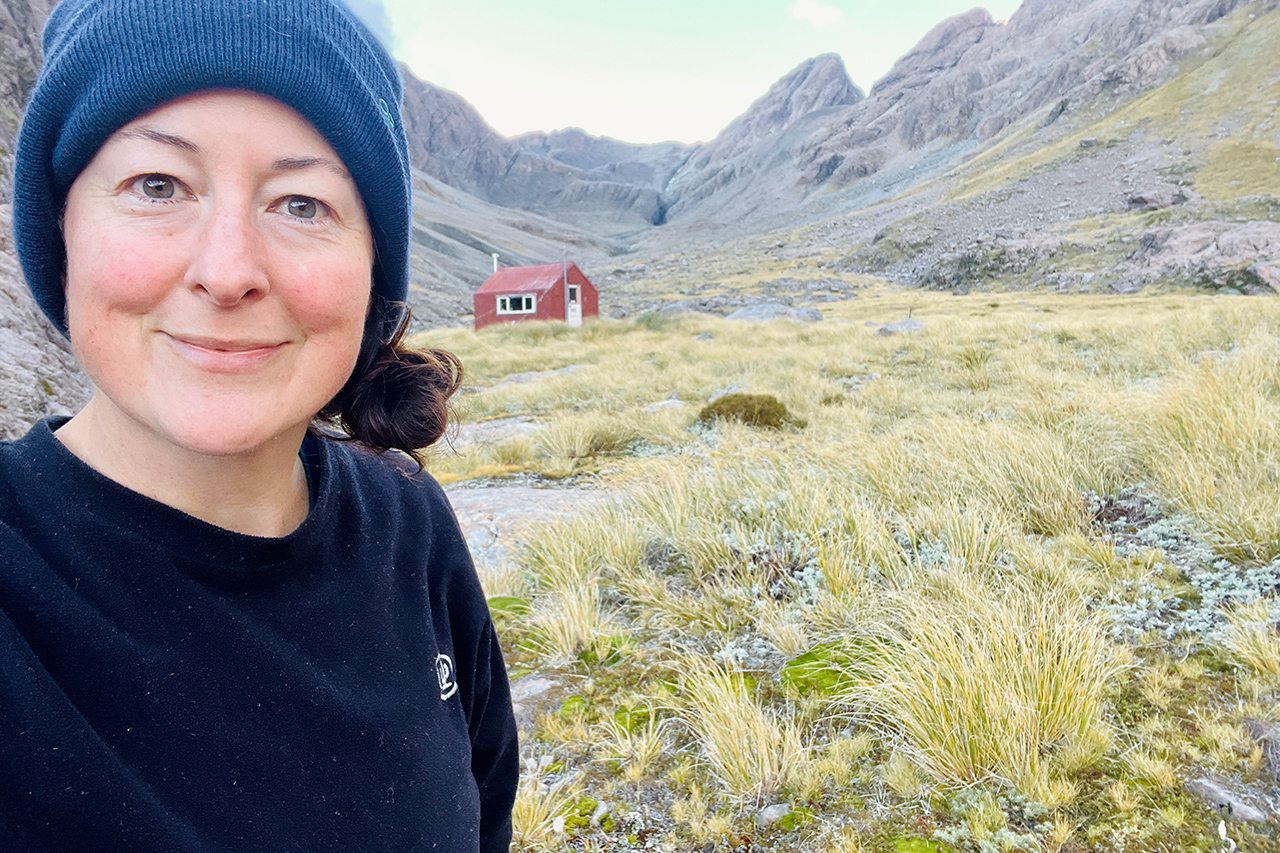
I carried out active recovery on the Arthur’s Pass Walking Track, which runs parallel to the highway, and ventured up the Devils Punchbowl Falls Track to witness the forceful water and ponder
the lack of an apostrophe in a name that is clearly possessive (or possessed?).
I tried to reach the ski field up the Temple Basin Track, only to turn back after nearly being knocked flat by wind gusts, but returned another time to hike up to Temple Col and peer over the other side into the far reaches of the Mingha.
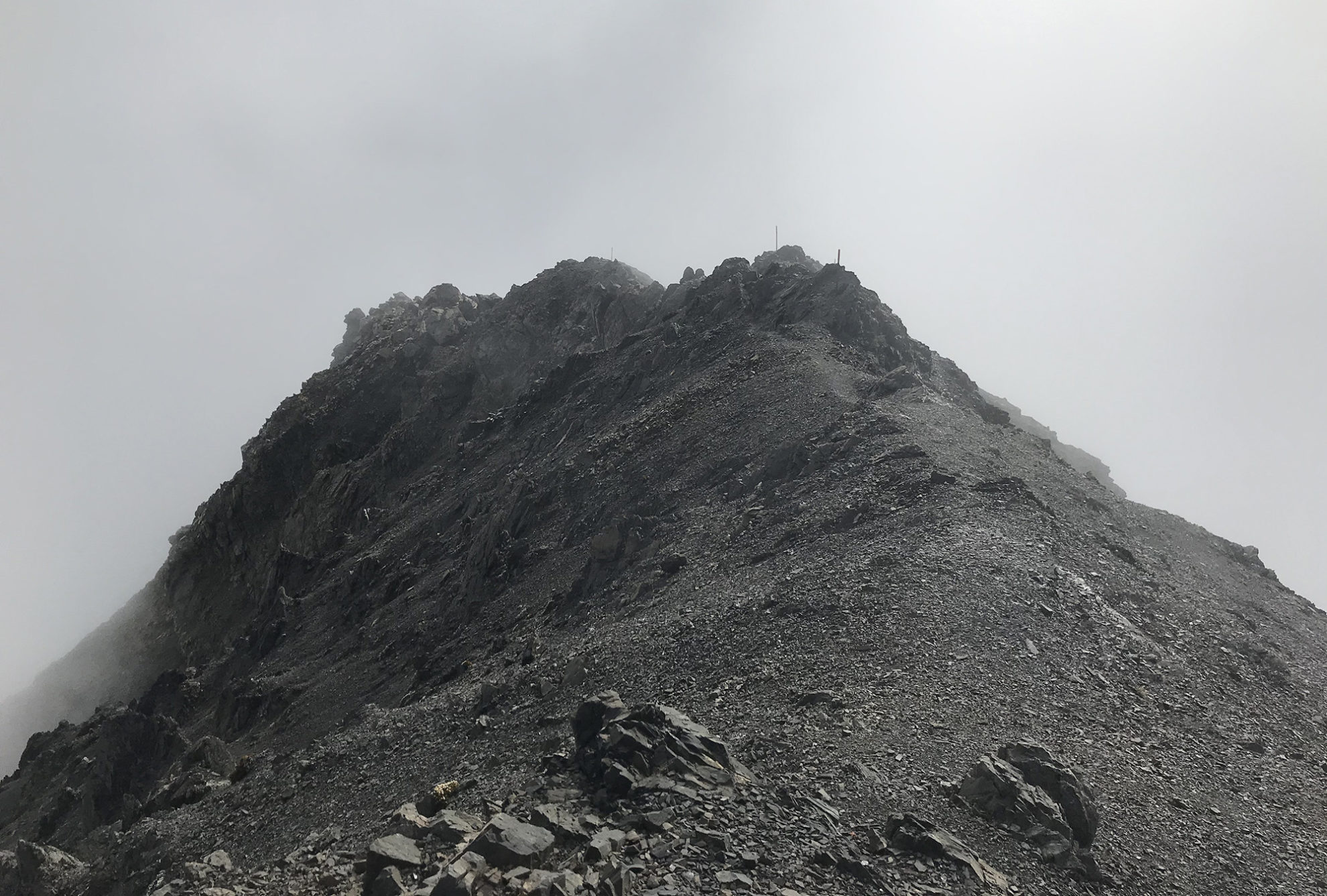
Two decades after the McHaffie affair, two trampers on Avalanche Peak came across the body of a lone hunter with a gunshot wound. It was thought not to be suicide, but that he’d somehow managed to bungle his shot and accidentally shot himself.
In 2018 a German tourist went for a walk after taking photos at Reid Falls at Ōtira Gorge, just west of the pass. He fell 50m, broke some bones and bashed himself up pretty badly. For the next three hours he crawled through the bush, and eventually popped out at the top of the steep flume that carries water over the top of SH6. He couldn’t move – if he hopped onto the flume, he’d slide down and careen to his death off the end into a rocky riverbed. He sat tight clinging to tree roots, and was eventually spotted by other tourists who raised the alarm. Rescuers couldn’t reach him via helicopter as he’d be blown off by the rotor wash. He was eventually retrieved by a lines team dropped from above.
The falls he was photographing were named after Billy Reid, a roadman who lived in a hut nearby. Reid was returning from the pub one night in Ōtira, and when he reached the sharp bend in the road just before the falls he kept walking … straight over the cliff.
When I read about these bizarre and unthinkable situations, it makes sense to me that a troubled young nurse could disappear in Arthur’s Pass and never be seen again.
Chasing D McHaffie
On 7 March 1929, NZ Truth reported breathlessly on Dorothy McHaffie’s disappearance.
‘Had it been Miss McHaffie’s intention to hide herself in the bush country, in or near the Pass, it would be easily possible for her to do so without fear of detection as the bush in that locality is very dense, and searchers could go within a very few feet of her and not find their quarry … [perhaps] she wandered away into the silent vastness of the Southern Alps to forget the world or to obliterate some distressing memory. If she is secreted in the hills, the task of locating her might never be accomplished.’
Rumours persisted. A woman fitting McHaffie’s description had apparently been seen riding in a car towards Kumara. Two letters addressed to her at the Arthur’s Pass Hostel disappeared from the letter rack shortly after they had been put there – by persons unknown. And two men driving from Christchurch hadn’t been able to ford the Waimakariri River and had returned to Cass station, where they had taken the train instead. At Arthur’s Pass they changed to the Christchurch-bound train and got off again at Cass, now accompanied by a woman.
But the case went cold.
I chased new threads of the story’s fabric in the archives. With newspapers now digitised and searchable, perhaps McHaffie had popped up elsewhere years later and been mentioned, I thought. But not so.
Further investigation indicated that a probate file for her existed and I applied for access. It contains an affidavit from Dr W.M. Irving, who testified that he had seen her the day before she went to Arthur’s Pass; she was in ‘a highly nervous condition’. Dr Irving gave her a sedative and ordered that she be left to rest. A nurse testified that Miss McHaffie wasn’t her usual self and had been in ‘a nervous and neurotic condition’.
I jumped through further hoops, obtaining police clearance to access some handwritten local records in which she was mentioned. But after leafing through the heavy tome in Archives New Zealand in Wellington, I discovered nothing more than her name entered as a missing person. Incidentally, I did also come across the handwritten entry for James Park and John Morpeth, who drowned in Burnett Stream in Arthur’s Pass the month before (Park Morpeth Hut was built in their memory in 1931).
Eventually a stunning portrait photo of McHaffie came to light when Hamilton City Libraries began digitising and posting archival photos to their website and social media. McHaffie wears a nurse’s uniform and looks over her left shoulder with the merest hint of a smile.
I like to think she fled her problems, shed her identity and started a new life. Maybe she bucked convention and became a hardy glacier guide on the West Coast. Maybe she boarded a ship for Australia and found a new life on an outback station. Of course, it’s possible she came to a final resting place at the bottom of a deep rugged ravine, where strong cascades rage over boulders and moss collects around the headwalls. Either way, I hold hope for the small green bush shoots of new life.