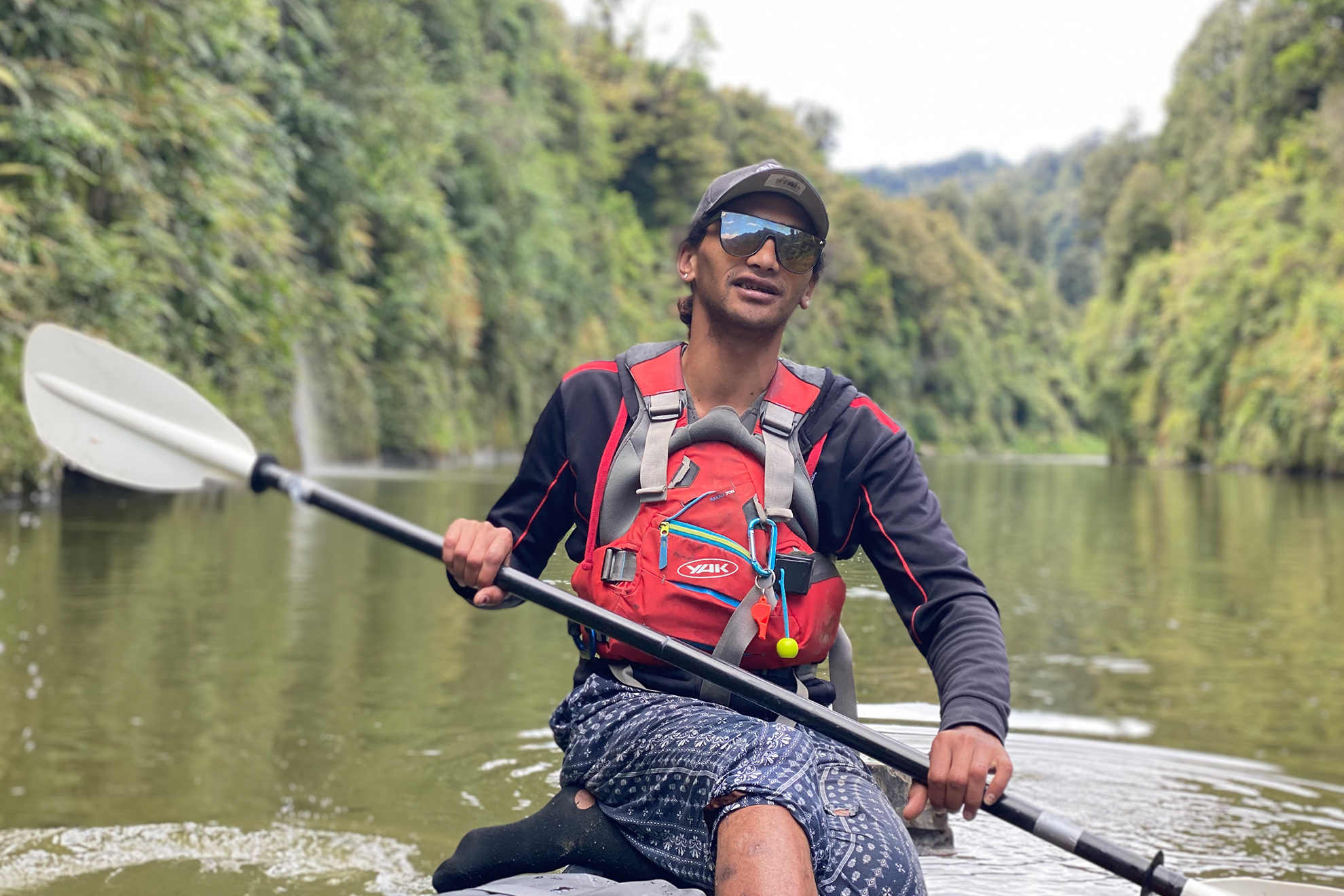
“Some say the river is male,” begins Turu, as the morning sun throws shadows across the awa’s cloudy-green surface. The paddling is easy between us, despite the full and heavy load. “But I’ve always seen her as female,” Turu admits. “To me, she can be both temperamental and kind. She’ll teach you everything you need to know and she’ll give you a bloody good telling off.” Turu, though, encourages me to form my own relationship with the river. “As long as you have an open mind and an open heart, the river will show you her loving embrace. We say to people: ‘Come with us, we’ll guide you. But have your own experience. Be on your own journey’.”
Whanganui River tourism isn’t new. Since the turn of last century, visitors have jumped aboard steamboats and smaller craft to explore ‘the Rhine of New Zealand’ as it was described in the 1950s. These days, people don’t arrive in three-piece tweed suits and straw hats for a day’s outing like they once did. Instead, they come in friend, family or corporate groups. Some want a digital detox (there’s no cell phone coverage) and total immersion in nature. Others are here to learn basic paddling skills on easy, low-grade rapids and pick up a bit of history while they’re at it.
Canoe Safari guests, for example, will stop at early settler farms and visit Tamatea’s Cave, a site of early Māori exploration, camp on the riverbanks and hike to the heritage-listed Bridge to Nowhere. The raucous self-guided group we meet later that night at John Coull Hut is on the river to scull cans of Pals (a brand of alco-pop), dress in pink nighties and have a lads’ adventure in rental canoes.
Before lunch, Turu briefs me on three of the awa’s tūpuna (ancestors), beginning with Hinengākau, of the upper-middle reaches, revered for her mana (prestige) and reputation for tutoring a long line of women warriors. Turu’s own whakapapa (genealogy) links to Tamahaki, the ancestor associated with the river’s middle reaches, and the hapū (sub-tribe) of Ngāti Uenuku. Meanwhile, his wife Iris, with whom Turu shares an adult son and a young grandchild, traces her whakapapa to the river hapū of Taumarunui Waimiha.
That afternoon, back on the river, after a bushwalk, Turu shows me a snarl of half-submerged rocks on the river’s edge.
“It’s one of my family’s favourite spots for collecting koura [freshwater crayfish]!” he calls out as we speed past. Further on, as we manoeuvre in and out of moss-soaked caves and surf eddies to get a peek down the river’s various tributaries, Turu points out wāhi tapu (sacred) sites in the cliffs overhead. Somewhere among the verdant ponga are urupā (burial grounds) and historic pou whenua (markers), he explains. In years past they were important waypoints. Today, they’re clues to the original people of the river obscured from view by regenerating bush.
It’s lunchtime on day two when Turu says his post-university OE was unexpectedly cut short by a call to return to the river.
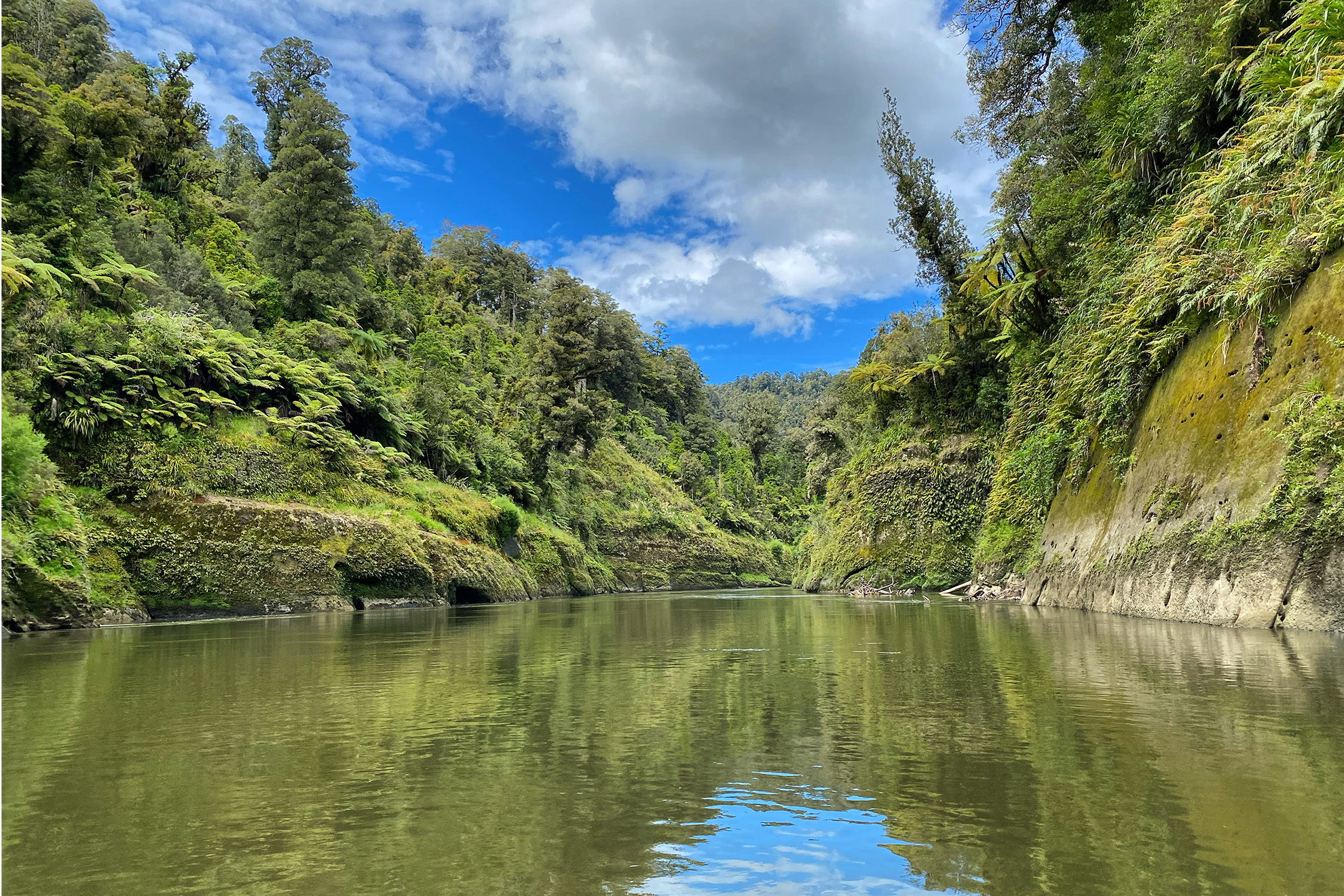
“I was backpacking in Morocco with a friend when I got a letter saying it was time to come home,” Turu says.
His much-loved koro (grandfather) had died and his whānau (family) agreed it was time for Turu to return to Te Ihingarangi to represent his people as an iwi leader. It’s a busy role that involves everything from learning and passing on iwi stories about the river to monitoring and reporting on the health and wellbeing of the river to recruiting more rangatahi (young people) as river guides.
“I never looked back to be honest,” he says later that afternoon when we pick up the topic at Tīeke. “It’s been amazing to see our iwi go from strength to strength. When I was growing up here on the river, things were extremely hard for our people. Things were tight money-wise, though we weren’t materialistic. We knew how to live in this environment – the river and the bush have always given us sustenance. Mostly our mamae [pain] came from land loss and a river that had been carved up and polluted by development. Over the years, our tuna [eel] fisheries had been destroyed. Our land had been taken and either sold off or given to war veterans for farming. There was conflict and anti-government protests because there was little to no recognition of the things that mattered to us as a people. I mean, the knowledge and tikanga [culture] was strong in our old people and in many of us on the river. But not everywhere,” says Turu, sitting outside on the deck of the DOC hut and rolling a smoke.
“Now, with this world-leading legislation, and all the things flowing on from it, people see value in what we say and how we live in harmony with nature as kaitiaki [guardians]. I feel extremely proud of where we are at. It really feels like things are changing for the better.”
The kōhatu (stone)
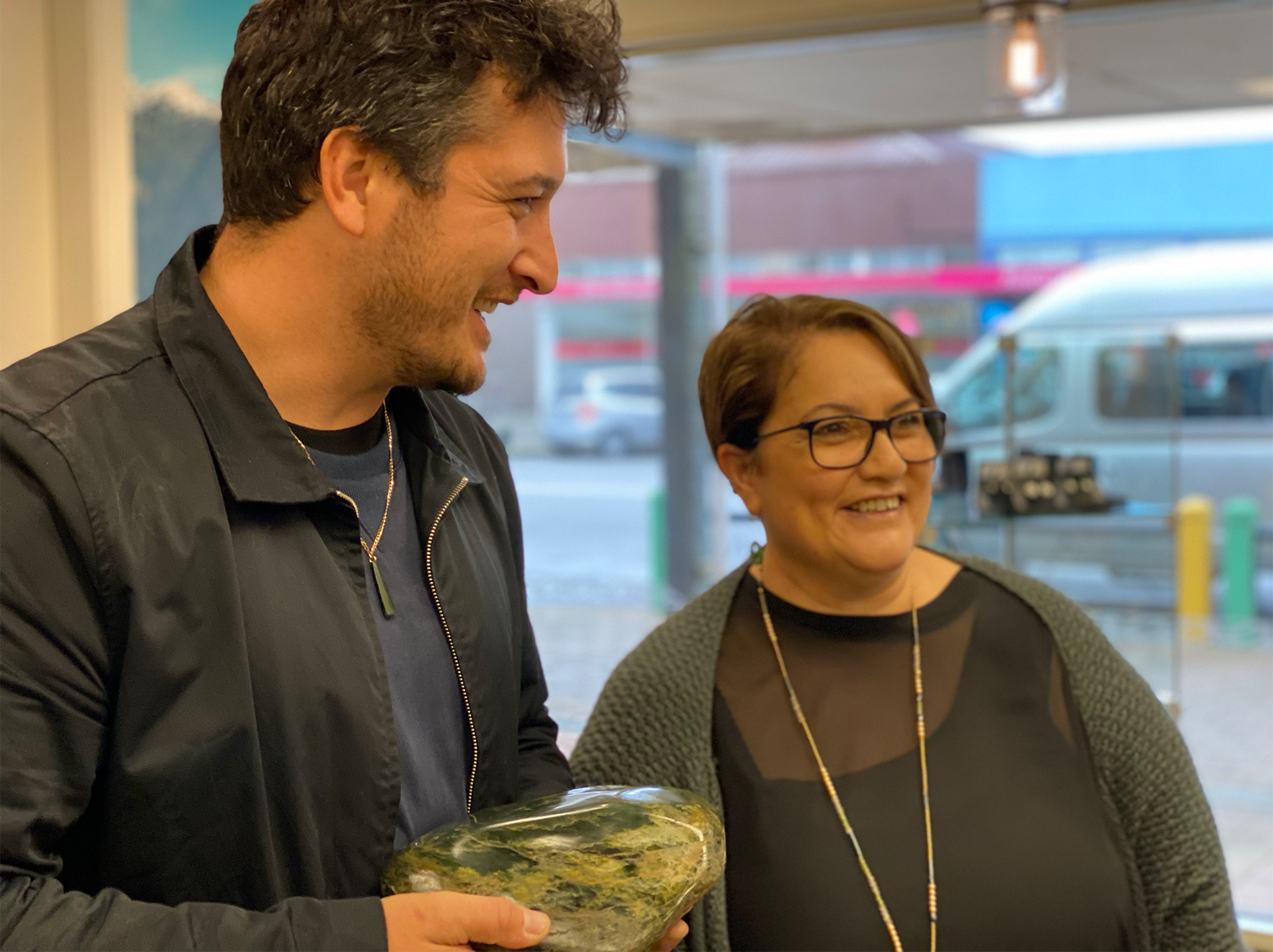
Change is on the mind of Ngāi Tahu kaiwhakahaere (board chair) Lisa Tumahai when we meet at Ngāti Waewae’s pounamu shop in Hokitika. Lead singer of Six60, Matiu Walters, just left the store with the band, holding a 7.6kg pounamu kōhatu (stone) sourced from the Kaimata River, near Lake Brunner.
Two hours ago, Tumahai and her whanaunga (relative) Te Rua Mason formally gifted the kōhatu to the band on behalf of local hapū Ngāti Waewae during a pōwhiri (welcome ceremony) at nearby Arahura marae. “It’s our way of making the boys pounamu ambassadors and raising public awareness of what it means to be kaitiaki of the stone,” she says. “The kōhatu will travel with the band on tour. They’ll learn to care for it and look after it – making sure it doesn’t get lost in some hotel room or left in the boot of a New York City taxicab. Over time, they’ll come to know its shape, how it feels to the touch and its wairua [spirit].”
In 1997, legal ownership of all New Zealand pounamu was given back to Ngāi Tahu by the government. The law made it illegal for anyone other than Ngāi Tahu to commercially mine and extract greenstone, though the public is allowed to forage for pounamu on public beaches and keep pebbles small enough to carry.
“The tribe’s connection with pounamu goes back 800 years,” says Tumahai. “In the late 1880s, when our people were pushed off their lands, that connection was broken. As an iwi, we’re now trying to rebuild that relationship with our taonga.”
Around Tumahai’s neck hangs a dark green kawakawa pounamu pendant on a long beaded chain. On her right hand, she wears a yellow-green bracelet of raukaraka jade.
In 2014, she explains, Ngāi Tahu set up an authentication system. A triangle-shaped logo was developed to show a pounamu product is made from genuine Ngāi Tahu greenstone (and not overseas jade or black market New Zealand pounamu). A unique numbering system enables buyers to trace exactly where ‘their’ pounamu came from and who carved or sourced it. Any untraceable product without the Ngāi Tahu logo should be considered illegal, she says.
Last year, the South Island tribe announced plans to build four tourism hubs on the West Coast, starting at the historic Mawhera pā site in Greymouth, says Tumahai. Each will feature stories telling of Ngāi Tahu’s special relationship with pounamu and suggest guides and operators who can speak to tourists with authority and give manuhiri an authentic cultural experience. She says the days of visiting the West Coast and seeing or experiencing little of its Māori heritage are over. “It’s exciting; it’s a new time. And I’m pleased to say things are well underway.”
It’s a warm West Coast morning when, at Tumahai’s suggestion, I enter the Pororari River Track, a few minutes drive north of Punakaiki. The 3.5km track follows a limestone gorge along the rust-coloured river and gets walkers onto the Paparoa Great Walk. I make my way through a colourful waharoa (gateway) depicting the story of Rehua, an atua (god) of local hapū, Ngāti Waewae and Ngāti Wairangi. Chunks of local greenstone are embedded in the gateway’s stunning design. A sign nearby describes the origin story of Rehua and notes Mahana Coulston as the waharoa carver. Installed in 2019, it’s an example of things to come.
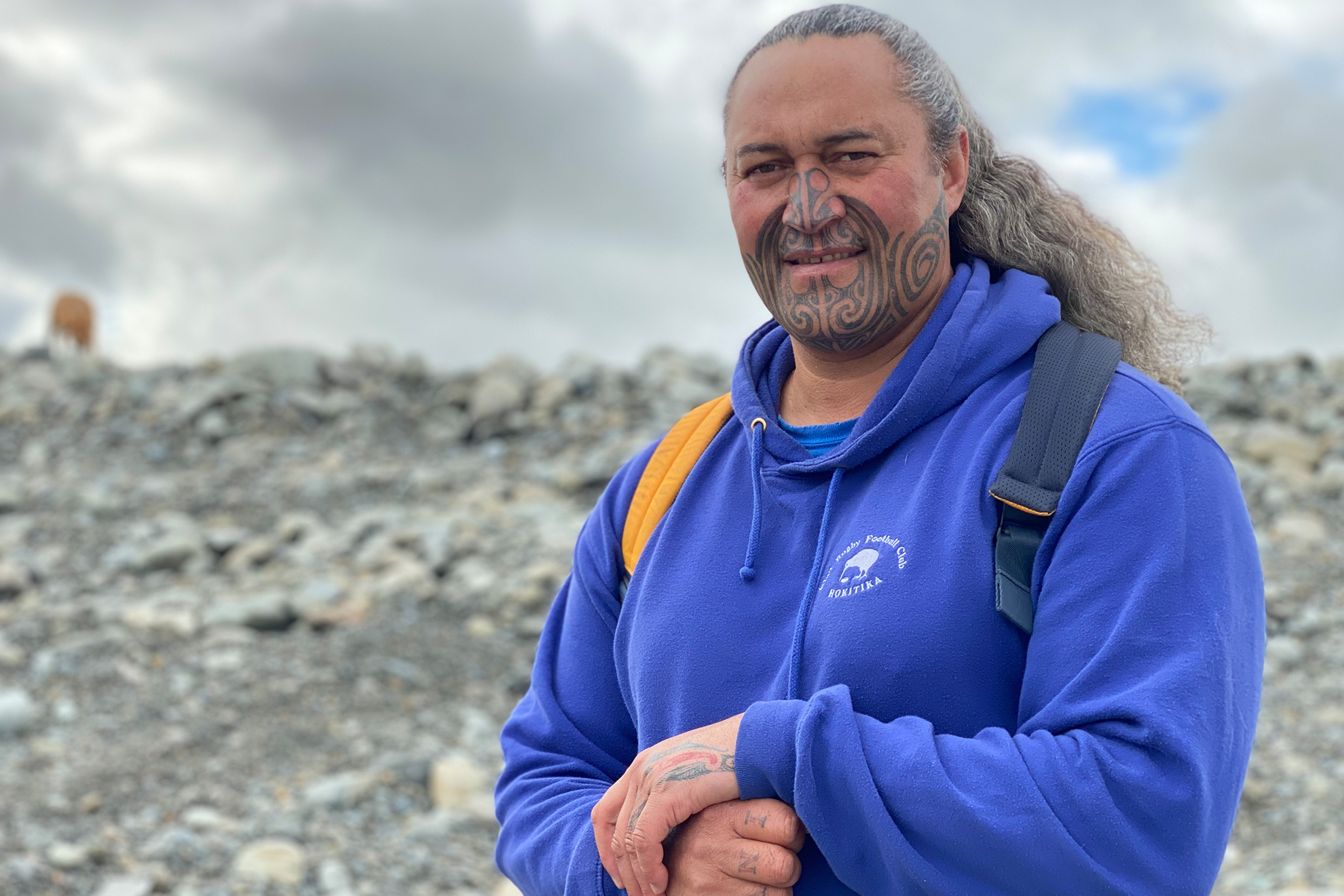
Walking guide Te Rua Mason has a deep and personal connection to pounamu. “I got my moko [facial tattoo] done at Arahura marae last year,” he explains as we pick our way over the Arahura river’s smooth, silvery rocks.
“My wife, who comes from a little settlement called Ruatāhuna in Te Urewera, and I, both got moko to help bring mana to what’s a fairly new marae up there on the hill,” says Mason, a mānuka staff in hand and a well-worn backpack on his shoulders. “My moko talks about my family’s connection to the pounamu. Our kōrero [story] has been handed down, father-to-son, through the generations. We’re part of a long ancestral bloodline of pounamu people. Pounamu continues to be our family’s link to the whenua [land]. It’s part of what we do as a family. We come here and walk the river looking for pounamu.”
I’ve joined Mason on a half-day guided hīkoi (walk) to forage for pounamu. He established the business, Te Rua & Sons Pounamu Trails, before the pandemic hit to give his school-aged kids a way to make a living in years to come and share their story with manuhiri. When he’s not stone hunting or guiding, says Mason, you’ll find him whitebaiting, deer hunting, teaching (te reo Māori), coaching rugby, or, depending on the commercial demand from China, harvesting sphagnum moss for export.
Following the quick and eager footsteps of Mason’s dogs, Rasta and Beth, we make our way across the Arahura’s exposed banks scouring for pounamu. Mason’s briefed me on what to look for. Pearly white inanga and kahurangi, a bright green, translucent stone. Mostly, it seems, I’m drawn to hunks of brittle serpentine, the pounamu equivalent to fool’s gold. Mason’s response to my frustration: “I like to say that looking for pounamu is a bit like looking for love – the more you search it out, the further it gets away from you. You’ve just got to let it be.”
It seems I’ve perfected the art of letting it be by the time I catch up with Ngāti Mahaki forager and carver, Shannon Mahuika, about 200km down the coast at Mahitahi (Bruce Bay). Walking the river across the road from his carving studio, I’m chuffed to pick up a small piece of blue Aotea.
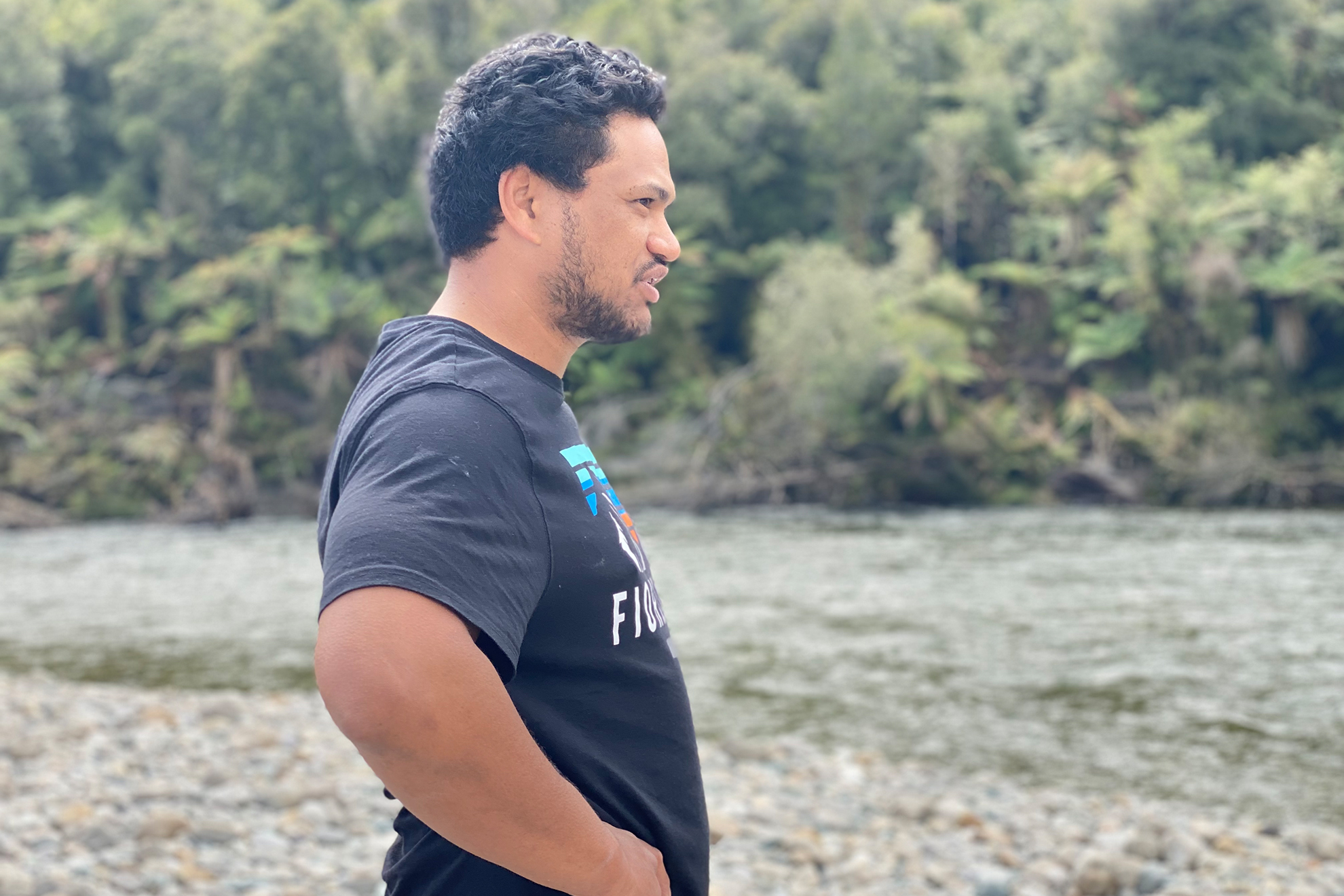
Mahuika is New Zealand’s only carver of Aotea, a unique stone (also known as kyanite) best suited to jewellery. In 2009, he was one of the first students at Rotorua’s bone, stone and jade school, Te Takapō o Rotowhio, tutored by master carver, Lewis Gardiner.
“Growing up, I was a cheeky young fella. When I left school I wasn’t sure what I would do. One thing I did know was that my culture was strong,” he explains. “My father, Jeff Mahuika, was a carver and kaitiaki pounamu [guardian of greenstone]. I’d grown up around pounamu pretty much all my life. In the school holidays, he would bring us up the awa – that’s where the spiritual journey started for me.”
It’s a beautiful day in South Westland. Not far from where we stand, a frothing Tasman Sea is clawing at the shore. The salty air is warm. Mahuika says he’s excited about Ngāi Tahu’s plans to better tell and share the story of pounamu with visitors to the coast.
“Do I see a role for me? Most definitely. Educating people and sharing my passion of walking the awa and finding our taonga as it is revealed through nature; that’s the best way to be. That to me is what it means to be kaitiaki of a taonga like pounamu.”
The rākau (tree)
In Northland, Vanessa Rapira’s kaitiaki role could mean life or death for New Zealand’s largest-known ancient kauri, Tāne Mahuta.
It’s 1pm when I join Rapira on the edge of Waipoua Forest, one of the world’s last remnants of kauri forest and the region’s largest remaining tract of native ngahere (forest). Before heading in, she guides me through the large metal cleaning station to brush clean and disinfect my shoes. As a kauri ambassador for Te Roroa, the iwi of Waipoua Forest, it’s Rapira’s job to meet manuhiri at the foot of Tāne Mahuta and teach visitors how to behave around ancient kauri to ensure the trees survive for years to come. Shoe cleaning instruction is a crucial part of her role.
“I’ve been coming here all my life,” she explains as we walk through the visitor gates along the protective boardwalk leading to Tāne Mahuta. “It’s an honour to work here as an ambassador. My family has been part of and lived in this forest for more than 600 years.”
In 2018, kauri dieback, caused by a lethal pathogen spread by human foot traffic, was detected in Waipoua Forest. Instead of closing off public access to Tāne Mahuta, Te Roroa and DOC agreed to beef up the kauri ambassador programme. Today, an ambassador is stationed at the ancient kauri most days of the week welcoming visitors.
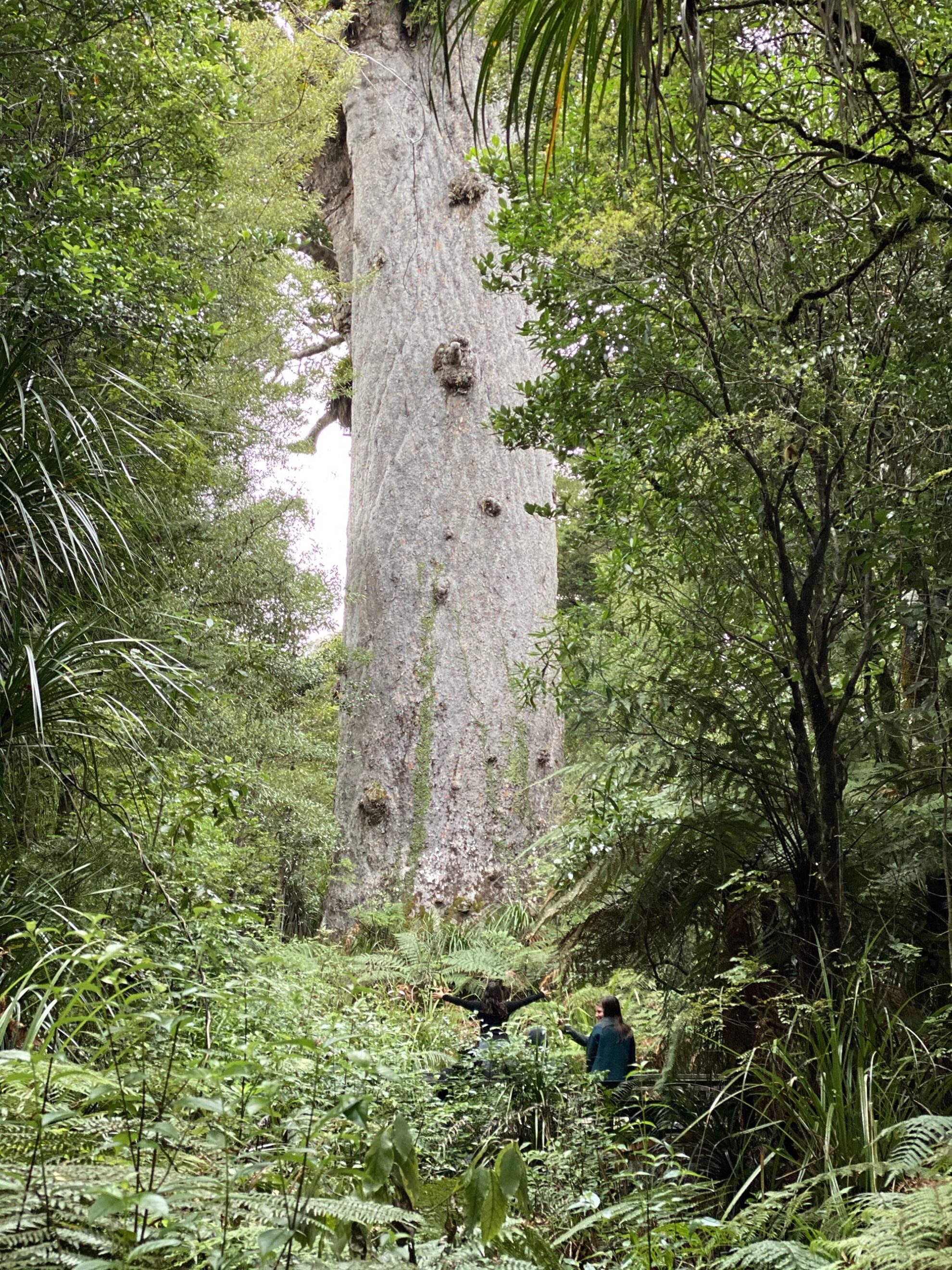
Taoho Patuawa, Te Roroa Kauriora and Operations Manager, joins me on public seating near Tāne Mahuta as half a dozen tourists gather to take photos of the giant tree and wait for Rapira to begin her 15-minute talk. Patuawa says the kauri ambassador programme offers manuhiri a mix of information. People are told about Tāne Mahuta’s whakapapa and his special relationship with Te Roroa as a rākau rangatira taonga. They’re introduced to some basic facts such as Tāne Mahuta’s age (he’s somewhere between 2000 and 2500 years old) and height (about 51m tall – and, remarkably, still growing). They’re briefed on some fascinating ecological data (more than 100 different plant species live in the kauri’s crown, including grasses, ferns and a 100-year-old bonsai-style totara tree). They’re also schooled on the best ways to behave to prevent any lethal spread of kauri dieback (by using the cleaning stations and staying on the tracks), says Patuawa.
Even so, says Rapira after her presentation and as the small crowd disperses, it’s surprising how some tourists will listen to her talk, but still insist on wanting to hug or touch the impressive tree. It’s an ongoing challenge, she admits. “Of course we want to support that relationship with Tāne – he’s God of the Forest after all – but we also need people to follow the rules. So, I just keep reinforcing those simple messages,” she says patiently. “Please use the stations to clean your feet. Please stick to the tracks. Please pass on what you know to others and please just be grateful we can all still enjoy these ancient taonga.
“Then I cross my fingers and hope they play their part so Tāne Mahuta is there for generations to come. To me, it’s about seeing these magnificent trees as you would a loved one – a rangatira who you depend on for his wisdom and the awe and pleasure of his company and who, especially now, depends on all of us for survival.”

This story has been produced with support from the Public Interest Journalism Fund.