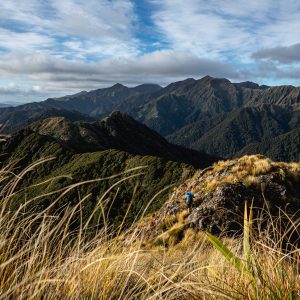
The emergence of private tracks is quietly transforming how some walkers experience the outdoors. Often crossing farmland or the estates of conservation-minded owners, the walks provide an alternative philosophy of tramping. And with walks at all budgets, they’re for everyone – from families with young children to retirees seeking a lighter load.
The family groups
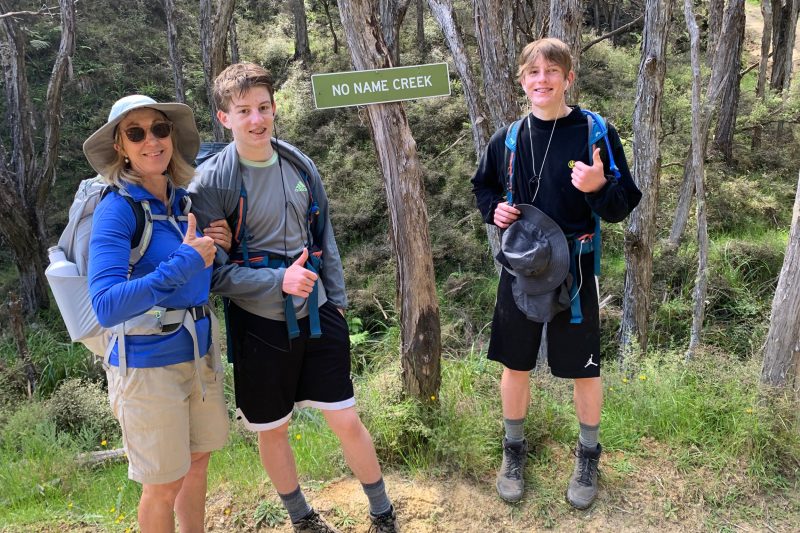
After three decades of tramping experience in New Zealand, Louise and Nico Pirret-Buik and their two teenage sons decided to explore the Tora Coastal Walk in Wairarapa. A friend had recommended it, and their interest was piqued by the promise of greater flexibility and more connection time in their outdoor adventure.
“We’d experienced the full spectrum of walking options, from fully guided tours with Ultimate Hikes to independent tramping using DOC huts,” says Louise. They now sought something different.
The primary appeal of the private track was the autonomy it provided: “You can get up and go when you want without disturbing others,” Louise explains. The private setting also created a more personal atmosphere, providing quality time away from distractions and enhancing family bonding.
Another important drawcard was the elimination of logistical headaches. With food and accommodation arranged, the Pirret-Buiks could focus on enjoying the experience rather than managing meals and camping gear. It was “organised comfort”, as Louise puts it. “With the authentic hospitality and careful attention to accommodation and food, we felt like genuinely welcomed guests rather than just passing observers.”
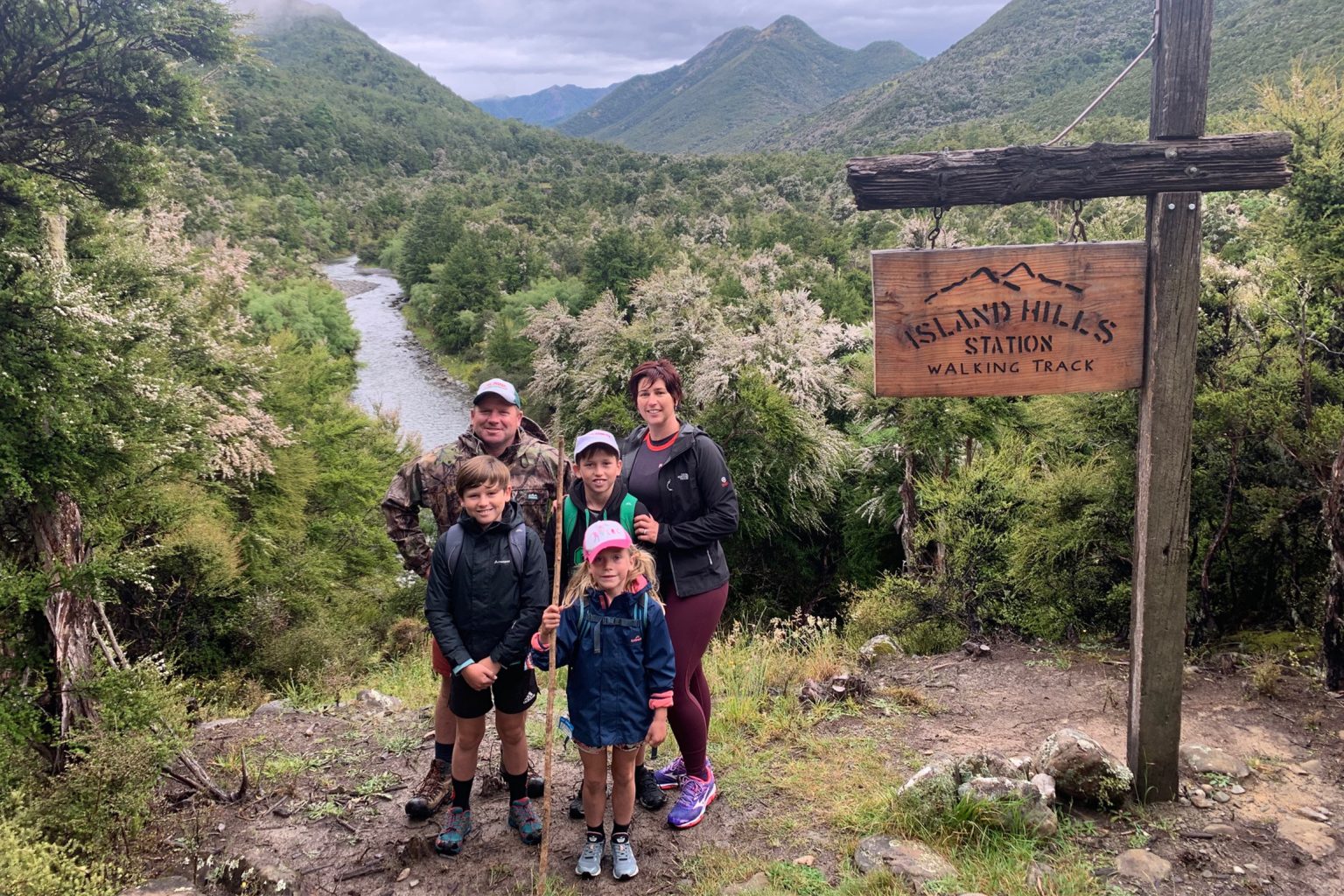
Matthew Lee and his wife, with children aged 12, 11 and 7, had already walked the Abel Tasman Coast Track and the Routeburn Track.
“Getting the kids off devices, into the outdoors and spending time together as a family” were the driving forces behind their decision to book a private tramp at Island Hills Station in Canterbury, says Lee. Finding activities that engage everyone in a family can be challenging, but this walk seemed to tick all the boxes, including the fact that they could bring their dog, Bruce.
For Lee, what set this private walk apart was the personal touch when hosts delivered “a couple of cold beers at each hut, which was appreciated after a day’s hiking”. The farm experience provided magical moments for the children, such as watching newborn lambs being fed, that wouldn’t necessarily be found on DOC tracks.
The conservation element also added unexpected educational value for the Lees. One of the children subsequently sponsored a BT200 pest trap, which the family now monitors remotely. “So far they’ve nabbed two rats and a stoat, which is a fun way to connect the kids to the conservation goals for the land,” says Lee.
“The walk was outstanding – a mix of easy and challenging trekking,” he says. The track delivered “breathtaking vistas, serene wilderness and a deep connection with New Zealand’s rugged high country”.
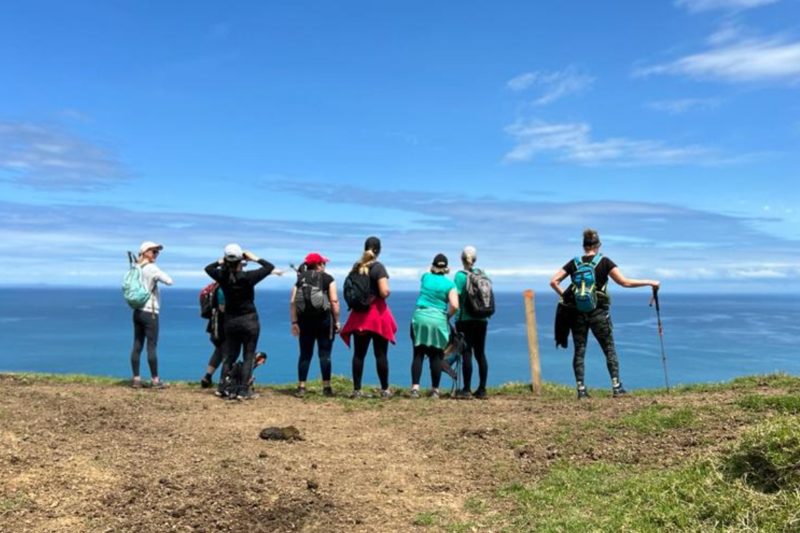
Women walking together
For Nicole Gibson, an Auckland-based outdoor enthusiast, the appeal of a private walk was about more than keeping fit. Along with a dozen female friends aged in their late 40s to 60s, she’s discovered a sweet spot that combines adventure with comfort, prioritising connection, wellness and memorable adventures.
“We’re all active, social women wanting to spend time together and keep fit,” she says. “But we’re not hardcore trampers, and we appreciate the luxury of not having to carry packs and tents or self cater.” This mindset led the group to embrace private walks that include “stunning scenery, decently challenging walks, accommodation that houses us all together, gourmet meals and snacks and luggage transfers, all included in the package”.
The Pahi Coastal Walk at the northern tip of Coromandel Peninsula was a highlight for Gibson and her friends. “It was a fully catered package, with stunning, varied scenery and the optional add-on of an e-bike ride on the final day,” she says.
With several multi-day tramps under her belt over the past decade, including Great Walks and backcountry hut experiences, Gibson now values both challenge and comfort. Her adventures have ranged from two to five days, all “tougher than your average walk around the hills of Auckland” but manageable for the moderately fit.
For Anna Priestley, from Wellington, the decision to try the Kawakawa Station walk in south Wairarapa came down to one simple factor: “The fact that we didn’t have to carry big packs was really appealing.”
That initial curiosity and enjoyment of the walk has led to a regular ritual for Priestley and her wife, Vonnie. They’ve now completed the Kawakawa Station walk three times, and Priestley’s sure it won’t be the last.
Another aspect that sets these experiences apart for the couple is the social dimension. “Each time we’ve completed the walk we’ve gone with a different group, and that’s made it special,” says Priestley. “Experiencing the vast landscape with good friends and family members, arriving at each hut at the end of the day with a sense of achievement along with a settled feeling of being able to spend the evening eating beautiful food and relaxing without the distractions of city life, is really memorable.”
The digital detox is another motivating factor. “It’s off the grid, away from the distractions of phones and social media,” says Priestley. Located within Wairarapa Dark Sky Reserve, the walk offers spectacular nighttime viewings with the added bonus of binoculars provided on the last night.
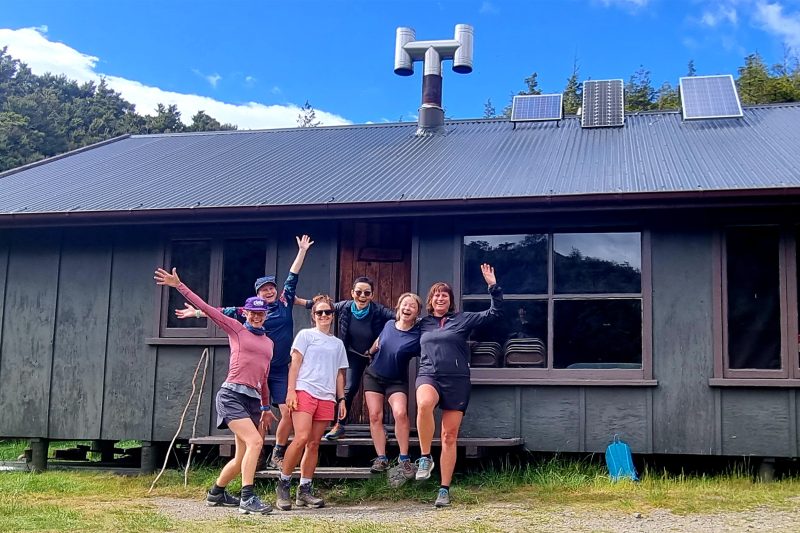
International friendships
What started as casual post-run drinks among Christchurch running club members has evolved into much more for this group of friends. Ania Morawiec, originally from Poland, and Sally Davies, from Wales, found themselves part of an international group – from England, Wales, Ireland, Poland and South Korea – all drawn together by a shared love of movement and adventure.
“Sometimes in life we’re lucky enough to meet someone with whom we instantly connect,” explains Davies. “For our group of six, we hit the jackpot: we all connected with each other, despite our far-flung geographical places of origin.”
The decision to extend their post-run meet-ups to a whole weekend brought a dilemma: everyone wanted adventure and comfort but not all had the gear for self-sufficient tramping. The solution of a private walk seemed a suitable one.
“The exclusivity of the land is a big draw,” says Davies. “Seeing somewhere that is not open to the public is quite special and can have lovely quirks about it.”
The appeal is about more than exclusivity, though. For Davies, the experience justifies the extra investment. “It’s the little touches that are noticeable,” she says. These include everything from pack transport services to meaningful interactions with the track owners, who bring local knowledge and personality to each trip.
Morawiec cites the example of how Shaun Monk, the owner of Island Hills Station, elevated their experience. “The first night, he made us whitebait patties and drove us in his 4WD up a steep track so we could sit on top of the hill to gaze upon the magnificent views while we sipped our wine. It was wonderful!”
Their three-night experience showcases what the group believes makes private tracks special: unique accommodation each night, thoughtful food at stopping points, and a perfect balance of wilderness solitude with underlying safety and support. “We didn’t see Shaun while we were on the tramp – it was like we were there alone in the wilderness but with a feeling of safety and comfort. It was everything you could ask for,” says Morawiec.
That the landscape is also dramatically different from their homelands is also a pull for this group. And with no cell phone reception, and bags carried by their hosts, the group can focus entirely on each other and their surroundings. “You can really connect with people,” Morawiec says, emphasising the value to her mental wellbeing as well as her physical fitness.
Four years on, the group still gets together for an annual trip of friendship and escape. They’ve been back to Island Hills twice and have also walked the Banks Peninsula Track and Kaikōura Coast Track. As Morawiec says, “these trips bring us closer”. The combination of that ‘something special’ factor with a high degree of camping luxury is what keeps this group coming back.
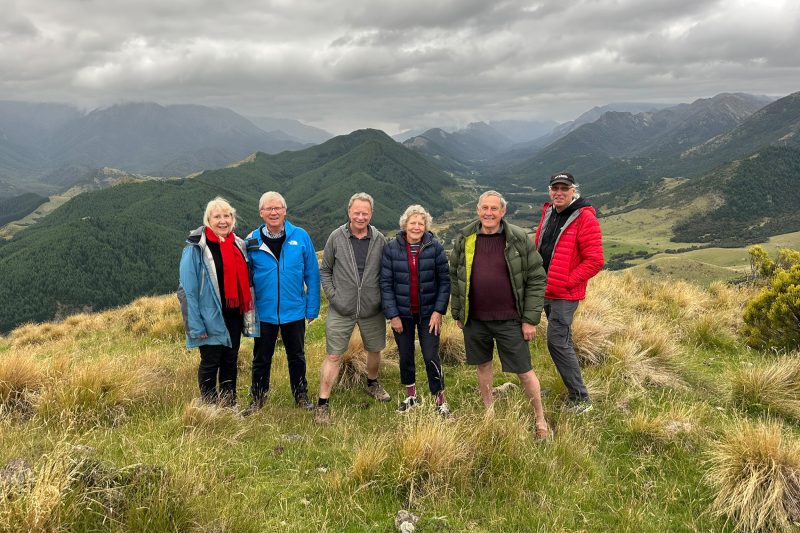
Older trampers
By Leigh Hopkinson
Private walks have enabled Susan Duncan (64) and partner Nick to keep tramping together.
“He’s now knocking on the door of 75 and his knees are munted. His days of DOC huts and carrying a big pack are over,” says Duncan. “I’m still a DOC hut girl, but it’s fantastic to be able to share our love of tramping in a way that accommodates his knees.”
The Raglan-based couple started with Kawakawa Station after it was recommended to them. The ease of just carrying a day pack, combined with the gradual gradient that many farm walks offer, made the experience “absolutely brilliant”.
Part of the appeal was having access to a private farm. “I’m a townie, Nick’s a townie. So being on a working farm was fascinating. Then there’s the sheets and the showers …”
The couple have since completed the Pahi Coastal Walk, where the pre-prepared food and optional ebike ride were a highlight.
A bonus of both walks was the social aspect. Numbers are capped and groups walk independently, but the Duncans enjoyed the company of others. At Kawakawa Station one walker was a botanist and willing to share their knowledge; on the Pahi Coastal Walk everyone met at the pub afterwards for a beer.
“Pahi Coastal Walk was a shared adventure with random strangers, but we also had time just to be on our own. It was a nice combination,” Duncan says.
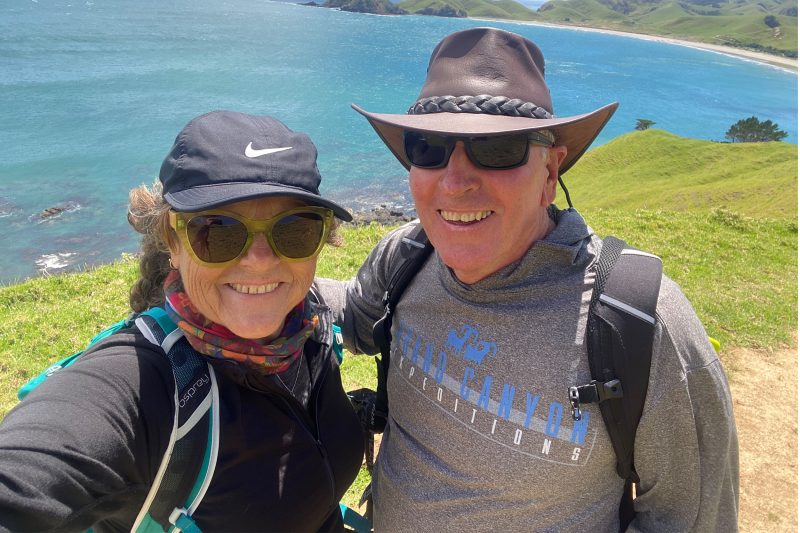
For Philip Richards (72), the hospitality private walks offer is hard to beat. He has been on the Island Hills Station Walking Track three times now and would happily do it again. An experienced tramper, he says what sets it apart is the generosity and ethos of its hosts.
“If you pay a little extra they put on a barbecue on the first night – whitebait entrée, venison steaks and wild pork sausages. It’s very generous,” he says. “The other thing I like is they’re doing a lot of conservation work; over the years I’ve seen significant regeneration.” Richards and his wife Jocelyn have sponsored a trap on the property.
The station’s history is also a drawcard, as is the varied accommodation, which ranges from converted shearers’ quarters to a log cabin built in 1932. “How often do you get to stay in a 100-year-old log cabin?” he asks.
Richards lives in Christchurch, where he is part of a regular tramping group he formed with friends. The group walked Island Hills in 2020 and again earlier this year. They have also walked the Banks Track and the Kaikōura Coast Track.
Although they are all capable of carrying a full pack if need be – including their oldest member, who is 80 – Richards says it’s nice not to have to.
“Private walks offer a different experience to the Great Walks, which can be crowded, and a greater degree of comfort,” he says.