We ask hikers which direction they chose and why – and what the advantages were.
Each year Te Araroa hikers weigh up which direction to walk in. Te Araroa Trust’s data shows that of every 100 walkers, 79 go SOBO (southbound) and 21 NOBO (northbound). But NOBO is growing in popularity, especially among Kiwis. Factors to consider include fitness, seasonality, logistics and community.
Stefan Ozich
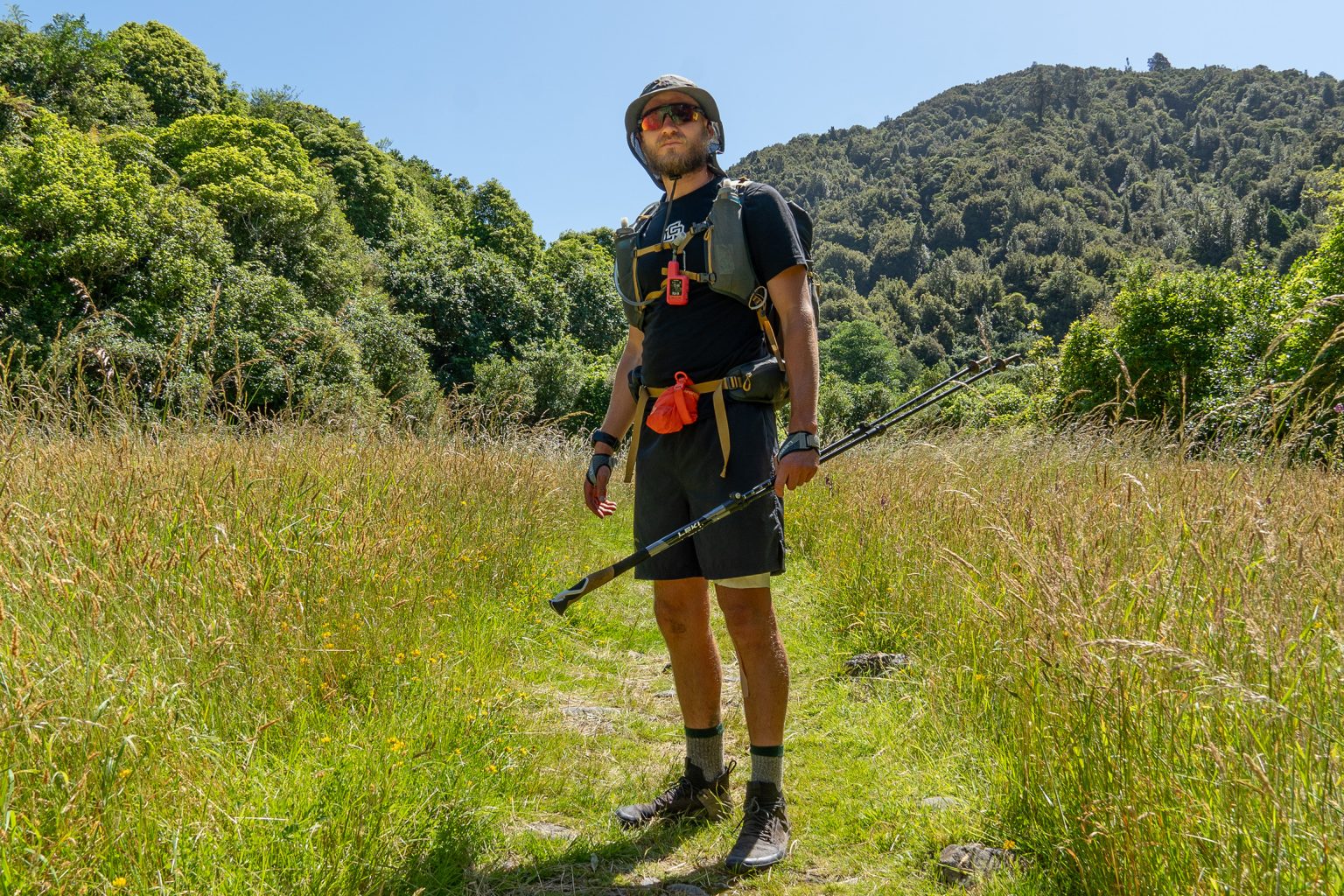
Marathon runner Stefan Ozich has a unique perspective on Te Araroa: he ran it SOBO then NOBO, back-to-back in 2024–25. Ozich raised more than $250,000 for men’s mental health charity The Last Chance Project, after his brother took his own life.
He recommends going SOBO. “I think southbound is preferable because it gives you a lead-up to the most difficult sections: the Tararua Range, the Richmond Range, Waiau Pass, I’d even put the Motatapu in there. The cruxes are back-to-back, but evenly spaced out.”
Are there advantages to going NOBO? “You get the hard parts done first. You’re also more likely to learn what’s up ahead, because you encounter walkers heading south and get their intel.”
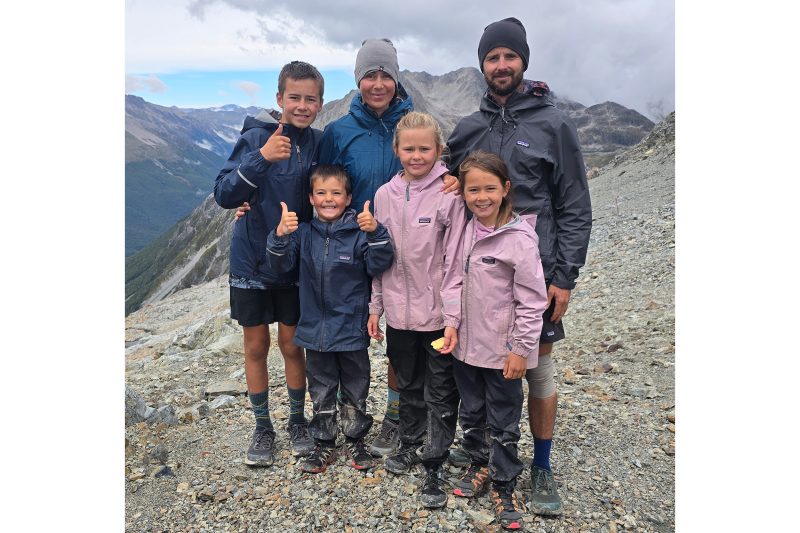
The Williams family
Courtney and Andrew Williams and their children Elliot, Skye, Summer and Oliver walked Te Araroa in 2024–25. The Taupō family chose to go SOBO because it allowed them to start in mid-September and take the trail slowly. “At that time of year the weather in Northland is generally far more stable than in Southland, and it felt like the safest and most enjoyable way to begin such a long journey,” said Courtney. “Also, ‘We’re walking to Bluff!’ just sounds better and was strangely motivating in itself.”
The Williamses loved that the trail began at Te-Oneroa-a-Tōhē Ninety Mile Beach – a hard but rewarding start. “Stepping straight onto a long exposed beach tests you in ways you don’t expect. We believe that challenge early on builds resilience, something that carries you through the rest of the journey,” said Courtney.
Another bonus was that all the markers pointed the right way. “I’m not kidding; there weren’t many sections with arrows for NOBOs.”
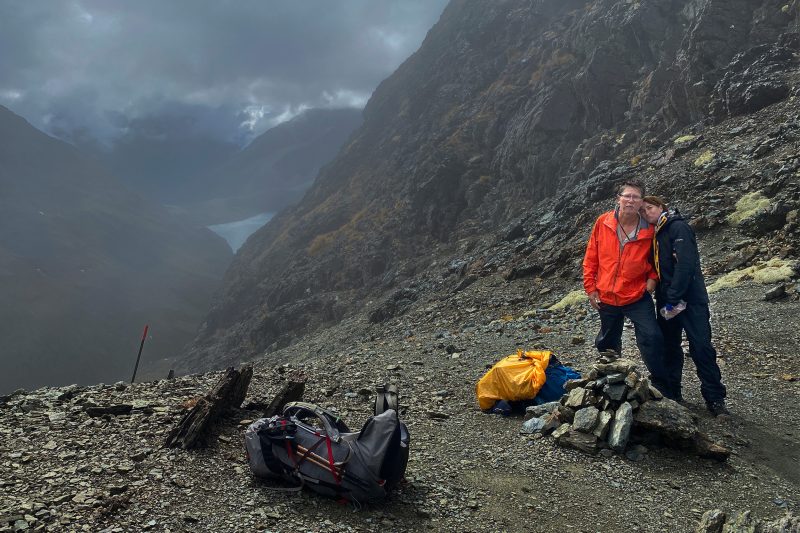
Murray Cornish
Journalist Murray Cornish, author of the Te Araroa book Walking a Thin Line: Mud, mountains and madness, walked NOBO in 2023 with his partner Claire Brattey.
“We worked on the theory that walking north towards the warmth made more sense than walking south towards the cold,” said Cornish. “It also allowed us to start later in the season: we started in the first week of February and finished on the winter solstice at Cape Rēinga. You would be very brave to attempt those dates SOBO.”
Cornish believes the approach to high points Stag Saddle and Waiau Pass are “much more hiker friendly” going NOBO.
The other advantage was dodging the crowds. “It was estimated there were 4000-odd hikers out there the year we walked it. We ran into most of the SOBOs about a month into the walk and then it thinned out quite quickly and we often had huts and campgrounds to ourselves,” he said.
Debra Howell
Kiwi Ultralight founder Debra Howell went NOBO for the South Island in 2016–17. “It worked better seasonally as I started on Boxing Day. I also liked the idea of doing it the ‘weird way’,” she said.
Howell wanted a solitary wilderness experience, and got it. “I regularly went stretches of up to a week without encountering another person.”
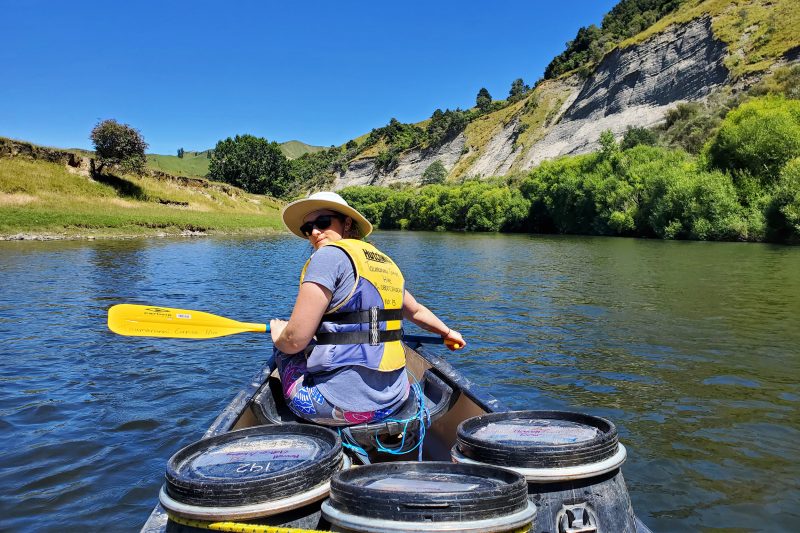
She then went SOBO for the North Island in 2017–18, but wishes she hadn’t. “The deciding factor was the Whanganui River. I couldn’t wrap my head around how I would do that section northbound. In hindsight, I could have taken a jet boat upriver to the Bridge to Nowhere and continued on foot.
“If I were to walk Te Araroa again, which I hope to do in five to six years with the whole family, I would absolutely walk it NOBO, because there are fewer people, more flexibility around start dates, and arguably a longer and less pressured season, which feels especially important when walking with kids.”