Preparation
Filmmakers start by asking themselves why they want to film an adventure.
Allen always distinguishes between work or pleasure at the outset, and takes his bulky DSLR only if high-quality images are required. A GoPro or phone suffices for social media platforms.
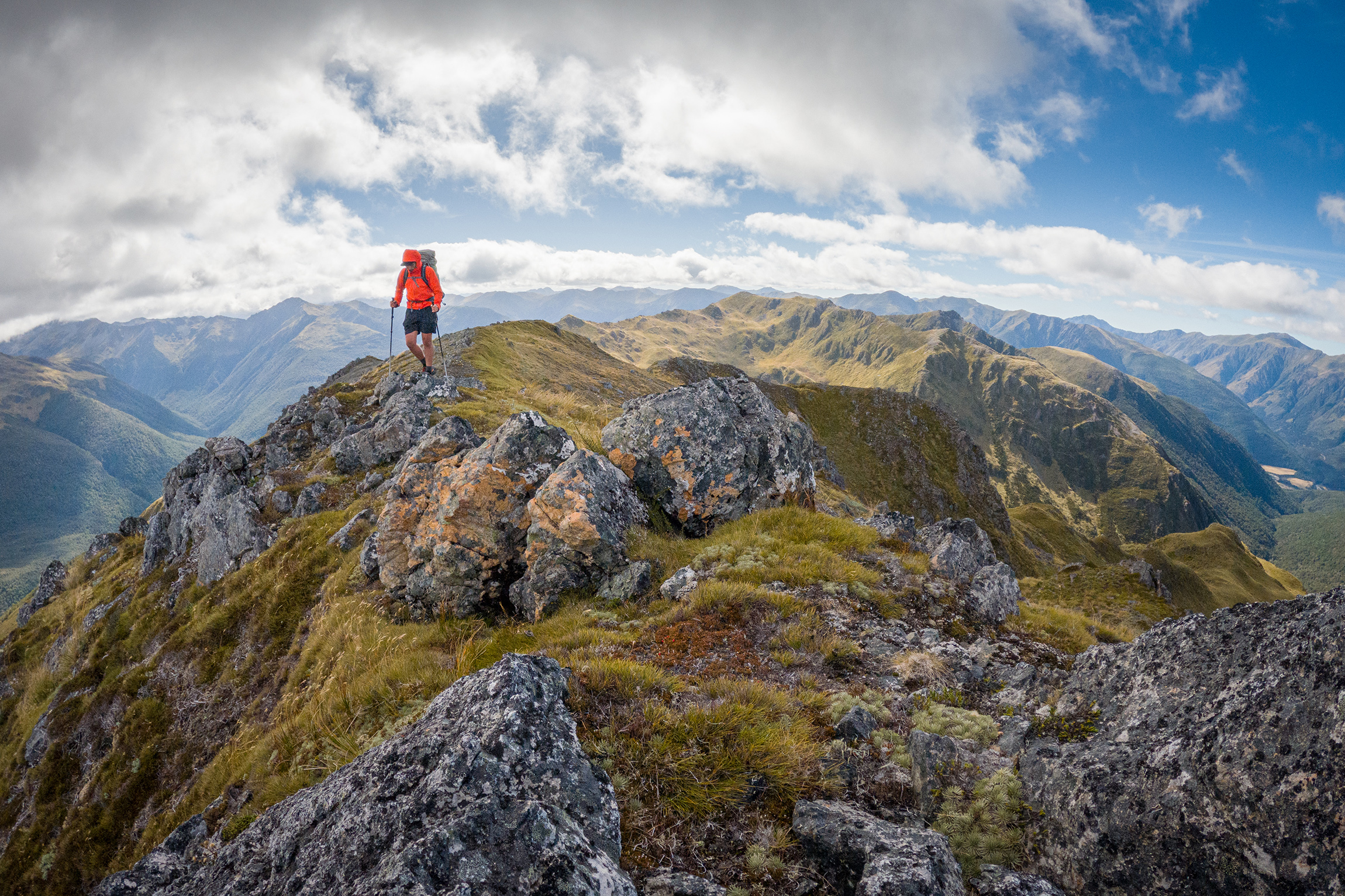
Planning is paramount. Fedde looks for potential locations, plays of light or compositions to better understand a place.
“Going out with a lens has made me more aware of what is around me, even if I’m not making a film,” he says. “Capturing an experience on film is about finding slower rhythms to appreciate the world.”
Choosing gear
Fancy or expensive gear is not essential.
“You can make something pretty good with your phone and a GoPro,” says Burger. “A GoPro is waterproof, has good battery life and they are perfect for vlogs.”
GoPro 9 and up have solid in-body stabilisation mechanisms that even expensive mirrorless cameras do not have. They are not so good for close-up shots, however, as the lenses are wide-angle.
Burger suggests taking a 30W solar panel (which will charge a late model iPhone in 3–4hr in full sun) and a 20,000mAh Nitecore power bank. The waterproof version is a bit heavier but more robust.
He recommends using a drone to capture different angles but acknowledges the limitations on where they can be used. Drones are heavy and chew through batteries, and permits required for their use on conservation land can be costly and difficult to obtain.
On location
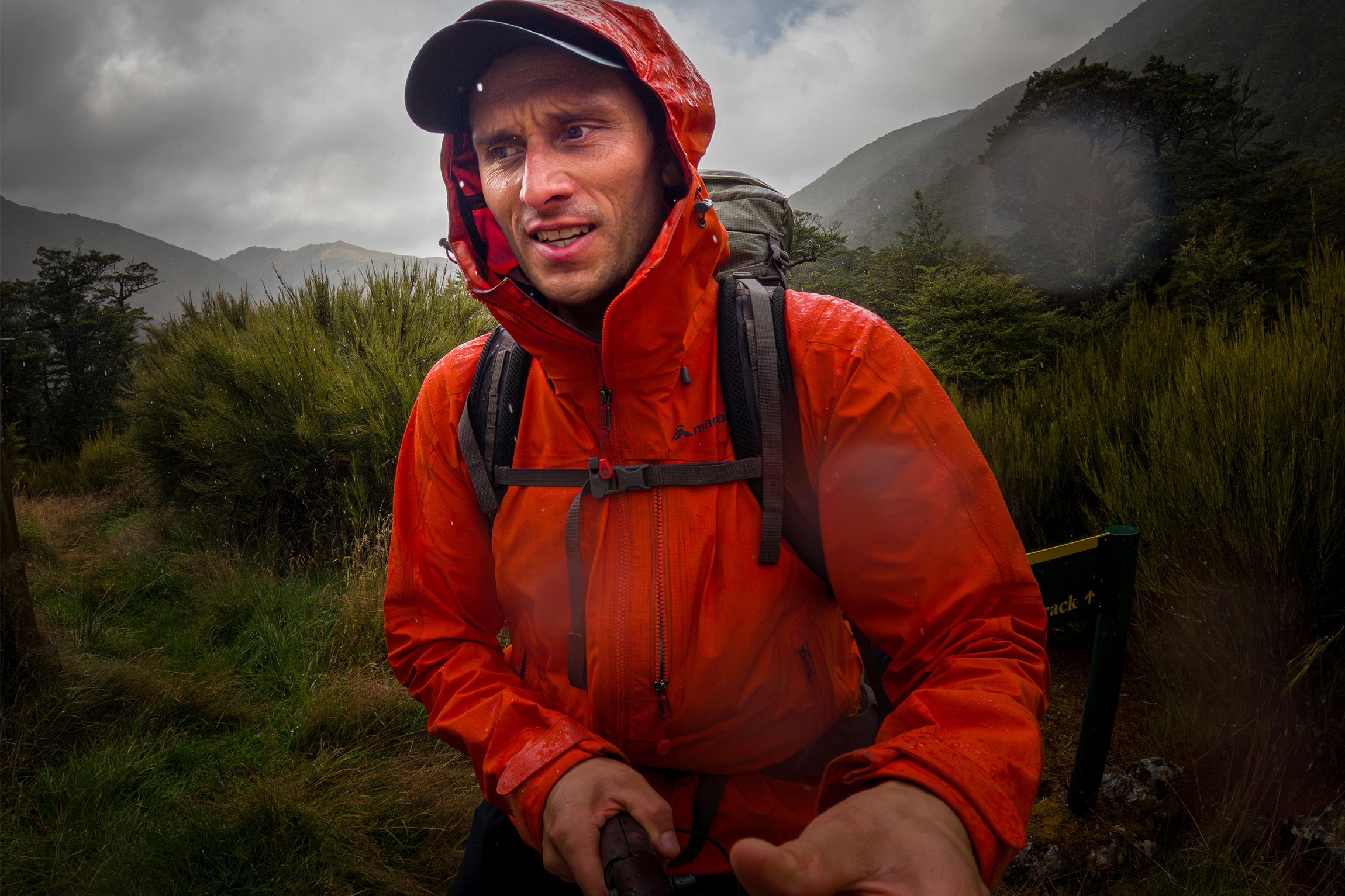
Fedde says to be deliberate about what you are filming. Content must be watchable – good quality images with no shakes. A tripod can vary the selfie angle and offers creative ways to show the scale of a person moving in the environment.
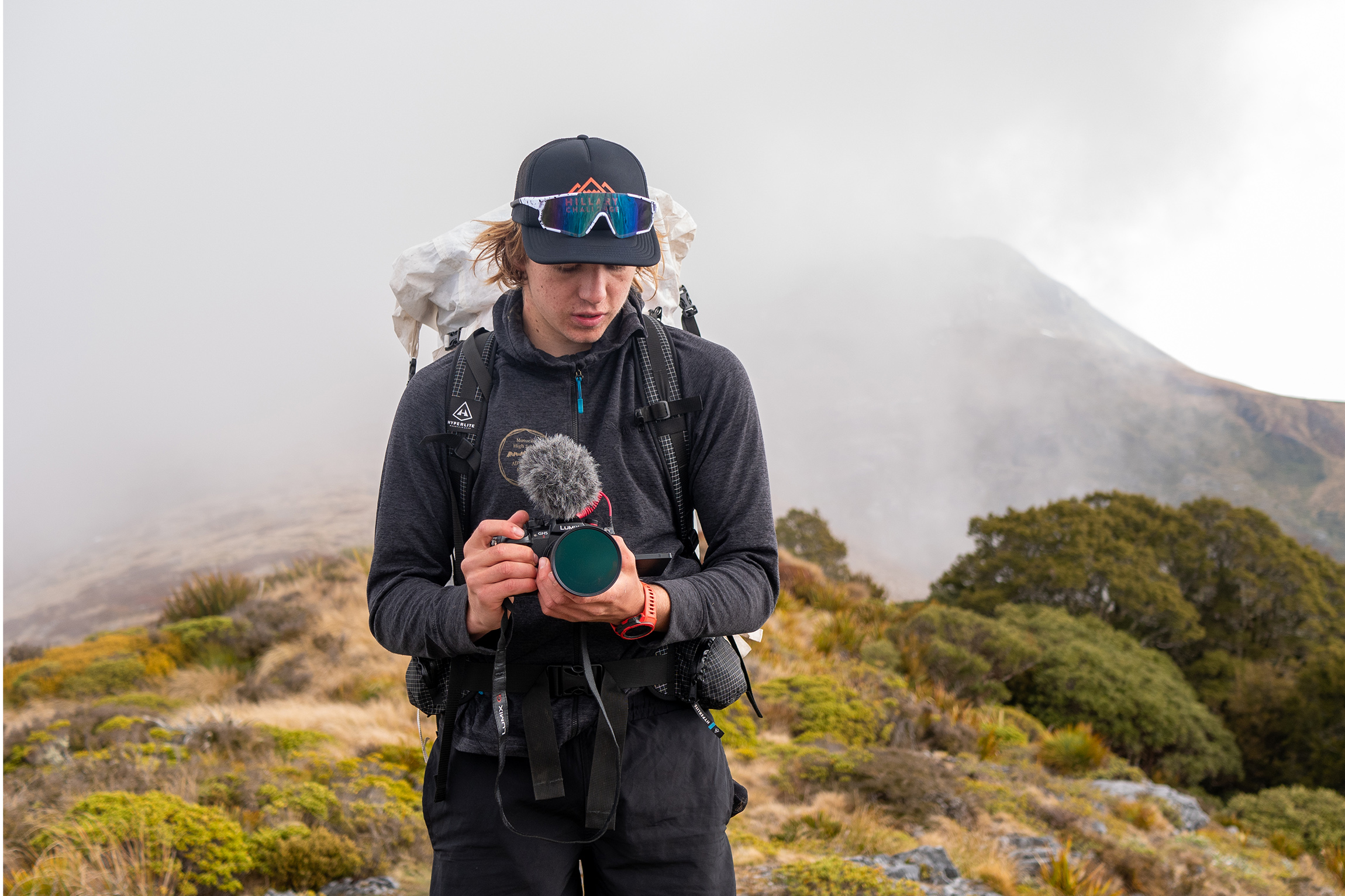
He finds a mix of longer, sweeping panoramas works well with voice-overs. He’s been using a Sony A7 R5, which covers all his needs for stills and video and is relatively lightweight, but is also experimenting with the even lighter Panasonic Lumix S9.
When talking to the camera, Burger says to be yourself and avoid being self-conscious.
“Speak to the viewer and be consistent by filming in landscape mode,” he says.
He also says to find footage for the whole trip. “It’s easy to get excited and shoot everything in a two-hour window.”
An external microphone can be useful as on-camera ones are omnidirectional. Burger mounted one on an old mop handle for his Kahurangi film. Using a wind muffler or foam on a GoPro helps to reduce unwanted noise, like the sound of the wind.
Fedde often includes sound effects that he has recorded in the field, such as running water and bird calls, to build emotion.
All three filmmakers encourage authenticity. “Be genuine about what is happening,” says Fedde. “If it’s rough and it sucks, then show that!”
Production
Back home, there is plenty to do to turn your footage into something people will want to watch. Free editing applications include iMovie, Windows Movie Maker and DaVinci Resolve. Burger found Adobe Premiere Pro was a game changer as it enabled more streamlined workflows.
Allen recommends allowing plenty of time for editing. It can take him 4–6hr to edit footage into a 90-second clip for TikTok. He goes through all the footage, selects key moments and dumps them into a timeline. He then copies and creates a new version to cut into a structure that runs for 2–2.5 minutes. Next he selects music and analyses the tone, then re-cuts to get it down to 1–1.5 minutes.
Once footage is cut a filmmaker will often go through a process of ‘colouring’ – enhancing colour and contrast to create the desired feel and fix imbalances.
Fedde says once he has completed a clip he watches it several times to ensure that the sound levels are appropriate and the film flows. He then exports the master version in the highest possible quality and saves a reduced version for posting to Instagram.
Sharing content
Many people just want to share their clips or films with family and friends, but if you want to commercialise your content, Allen says Instagram and TikTok are best for short-form content – three minutes or less. YouTube is best suited to longer content, but it’s a slow process to build followers.
“I tend to get better engagement, in terms of comments, on Facebook … it’s best for community building and connection,” he says.
When searching for sponsors, Allen says it is important to look for companies that share your values. “Frame your pitch in terms of kaupapa, then the relationship becomes more about a shared purpose and how to work together in the long term.”
To gain exposure, Burger suggests looking for local competitions, such as the NZ Mountain Film Festival, and uploading your films to FilmFreeway, which can be used to submit to a range of festivals.
A website or blog can help build followers, but he says to make sure you post original content. Another review of a Great Walk is not going to cut it: “Everyone has short attention spans these days, so it’s important to cater to that.”
1. Hunting and gathering
Hunted content requires prior research to maximise the chances of bagging the footage you would like. Examine topo maps for aspect, neighbouring topography and the arc of the sun. Gathered images are those where you have your camera handy at the moment the image comes to you. Prepare for both.
2. Gear
“Don’t stress about gear. Cell phones and GoPros work just great,” says Allen. “You are better off buying a microfibre cloth to clean them than a DSLR with all the bells and whistles.”
Extra batteries, memory cards, cleaning cloths and headlamp batteries are useful, along with a water-resistant camera case, even if the camera has good weather sealing.
3. Enjoy the moment
There is often impetus to whip out a camera straightaway. “Resist the urge and be present in the moment beforehand,” says Fedde. “Enjoy it for what it is because it is diminished by looking through a screen.”
4. Keep gear dry
Bring plenty of dry bags inside a pack liner. Silica gel packets saved from dried foods work well to reduce humidity. Make sure you have a lens cloth, even for cell phones.
5. Charging
Ensure everything is fully charged before you go.
6. Filters
With cameras, neutral density filters reduce the light entering the sensor, allowing for motion blur. A circular polariser will make your blues and greens more punchy, protect your lens and reduce glare.
7. Packlight
When your gear goes up in quality, so does the weight. Fedde prefers to pack light. His base weight for camera gear is now around 2kg.
8. Framing
Be selective about what to include in the frame. Think about what the camera is pointing at and frame a composition that is nice to look at.
9. Resolution
For video, don’t go below 1080px. Shoot everything in 4k, even if the file size is massive.
10. Memory
Use 512GB SD cards. You need enough to cover the trip and to process onto an external hard drive. Film more material than you think you’ll need – it’s easier to trim down than to extend.
11. Backup
Moving images take up a lot of space. Buy external hard drives or cloud subscriptions.
12. Keep gear accessible
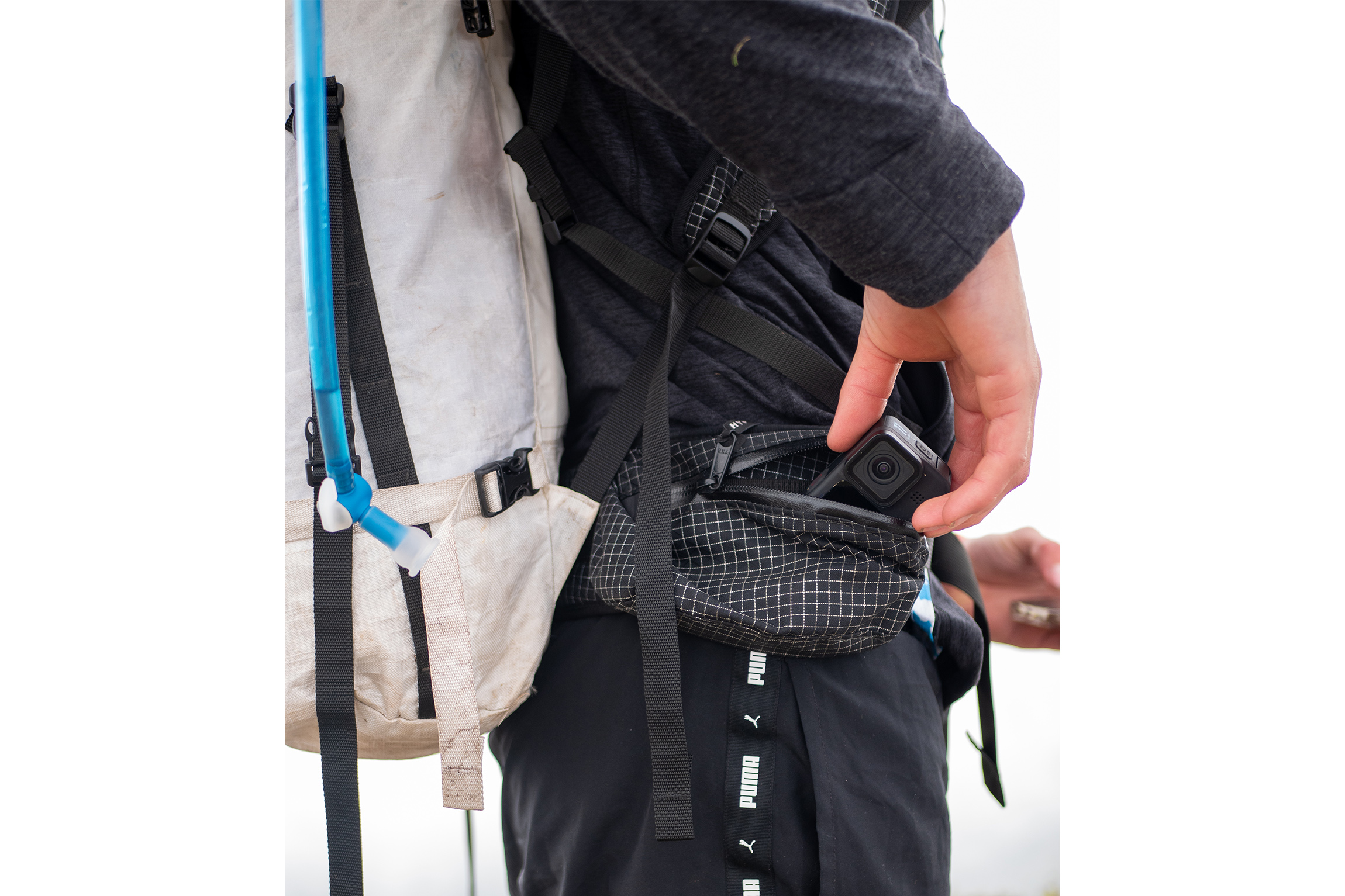
Easy access to gear is key when on the move. “Put your phone in the hip pocket of your tramping pack so it’s easy to get out,” says Burger. “If it’s in the top of your pack, filming is just not going to happen.” A backpack with running vest-style pockets works well.
13. Resist zooming in
“Resist using the digital zoom on your phone as much as you can,” says Burger. “It’s best to film on a normal lens (24mm) then crop later.”
14. Get a second opinion
Don’t get too attached to footage. Show someone else your film before posting to see whether it is too long.
15. Music
Marry the music with the vibe of the story, and reduce the volume if talking accompanies the imagery.