

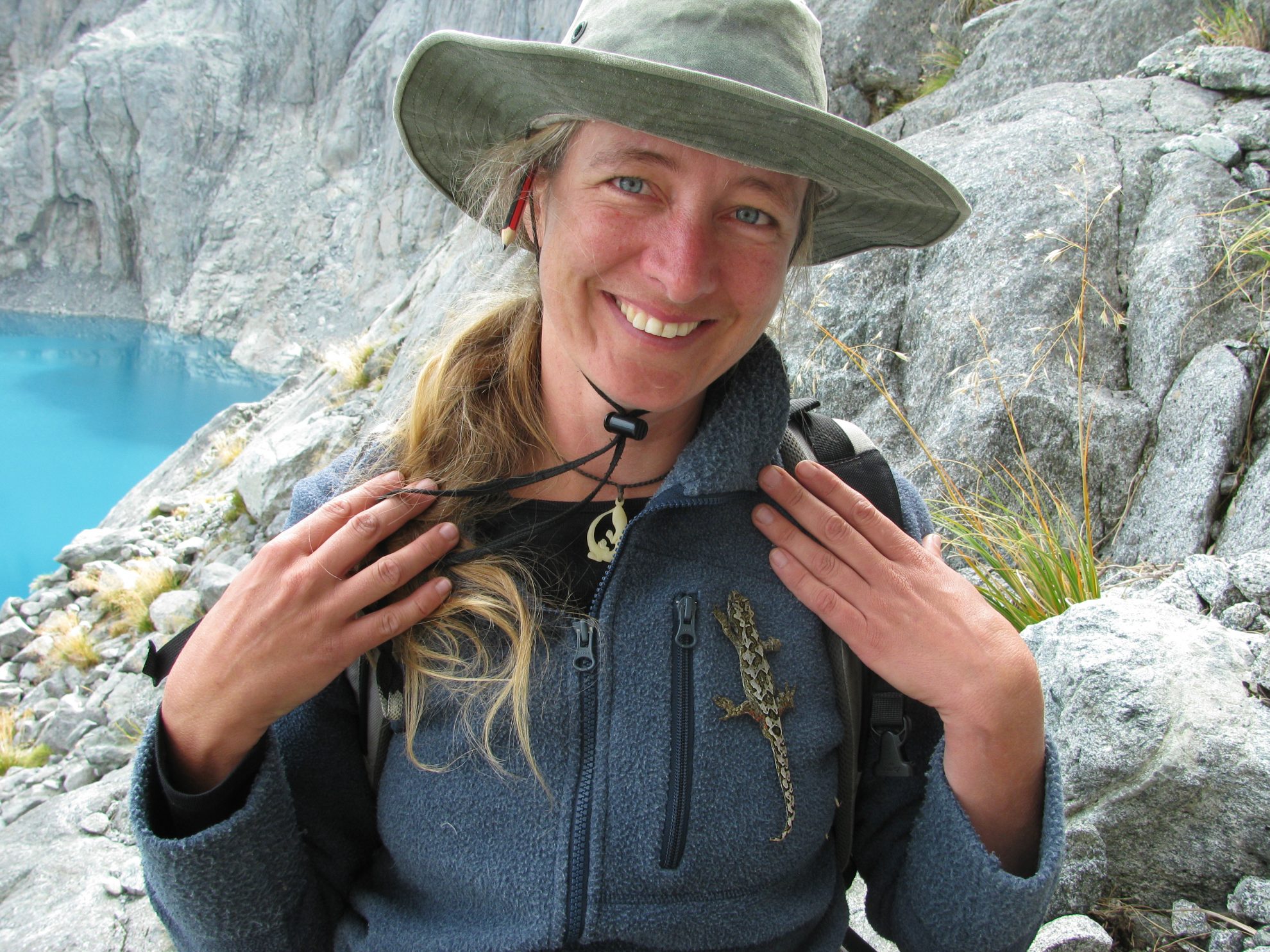
As the temperature rises with climate change, the need to discover and protect these peculiar species becomes increasingly urgent.
“With the climate warming up, predators will be moving higher and higher, and in a decade there might be mice up there,” Lettink says. “We need to know what’s there before it’s too late.”
Given that many species have adapted their appearance and behaviour to blend into niche, and often inaccessible, habitats, the hunt is proving difficult.
Even if researchers can pinpoint the specific whereabouts of an alpine specimen, it can take a number of return trips to locate even one animal, all the while maintaining a high degree of secrecy, lest poachers beat them to it.
Lizard poaching is salt in the wound for conservationists.
New Zealand’s geckos are greatly coveted for their vibrant markings, long lifespan and diurnal behaviour, and fetch hefty prices overseas.
“People want something you can see during the day, so they can say ‘come and see my sexy lizard’,” says Lettink. “If you have a rock dwelling thing that only comes out at night, it’s not much fun to have in a cage.”
The poaching of just a few specimens from a habitat can be disastrous for a population. In one now infamous case, the ‘undie smuggler’ – German visitor Hans Kurt Kubus – was intercepted at Christchurch Airport in 2009 with 44 lizards stashed in his underwear.
While Kubus was caught with his pants down and consequently sent to prison, it isn’t possible to catch all poachers.
The flamboyantly-coloured jewelled gecko – classified as near threatened – has been smuggled out in such numbers, the species’ price halved on the black market.
The idea of breeding native geckos to drive down demand in international markets is often floated as a solution to the poaching issue, but “mostly by idiots”, Lettink says.
She’s done the maths, and her population modelling suggests New Zealand’s geckos reproduce too slowly to make a dent on demand.
“I wanted to approach it rationally to find out if it would be possible, and my modelling told me what I wanted to know – the demand is not going away,” she says.
Pests are another major threat to our geckos, and it’s not just the usual suspects – mustelids, rodents and cats – doing the damage.
Hedgehogs, possums and pigs are all common culprits, and introduced wasps, which exist in New Zealand at a higher density than anywhere else in the world, can strip a lizard to bone and tendons within 15 minutes.
Keeping tabs on New Zealand’s lizards involves considerable detective work, and discreet operations, false leads, and following obscure clues are all part of the job.
Conservationists need more resources, Lettink says, and that’s where “the eyes of the backcountry” – the trampers, climbers and hunters – fit in.
Lettink says any unusual lizard specimens spotted above 1600m are of interest and should be reported through the DOC website.
Photos and GPS coordinates are useful for follow-up surveys, but Lettink warns against sharing location information on social media or the internet, as poachers monitor both.
She suspects many trampers will have had run-ins with rare species, but not realised the significance of the animal.
“Maybe they’ve had an encounter they’ve shelved away, but I don’t think anyone would forget running into an alpine lizard,” she says.
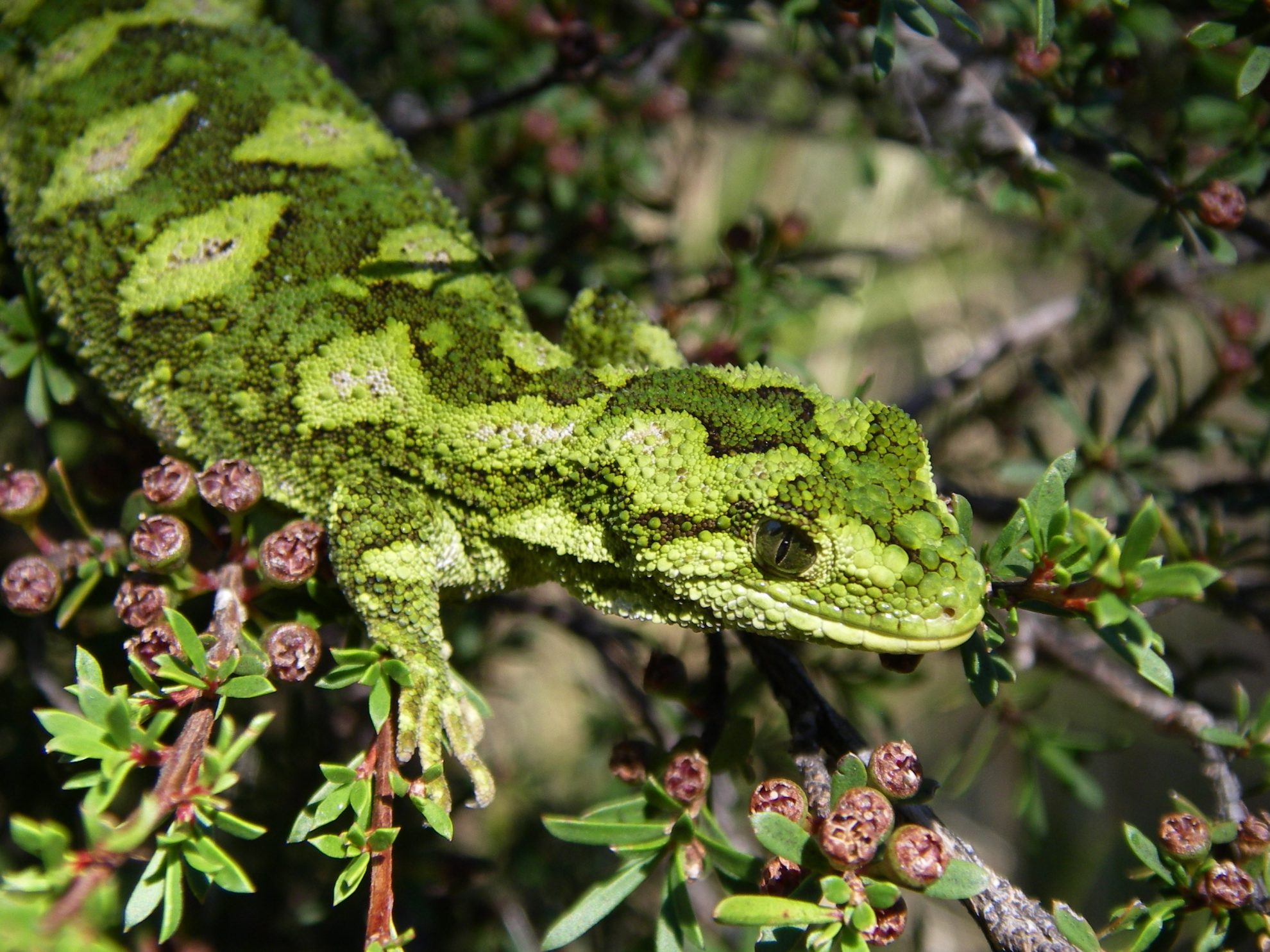
Have you seen this gecko?
Scientists are currently on the lookout for the rough gecko Naultinus rudis, which lives in the native bush and shrubs of north Canterbury and Marlborough. The species grows to 18cm long, has raised scales, and basks on sunny days.
Auckland Zoo Conservation Fund is currently supporting the surveying project for this species, but would like to enlist the help of those who frequent the backcountry. If you think you’ve seen a specimen, live or dead, contact marieke@faunafinders.co.nz.



