


Hobbyists like Samuelu play an important role in the study and conservation of the endangered pekapeka.
Their groundwork in detection allows scientists to further map populations, and learn more about this elusive creature of the night.
Community Waitakere citizen science coordinator Sophie Barclay likens bat hobbyists to a “science army” – albeit still a small one.
Community bat walks may book out within hours, but the species’ presence in Auckland still comes as a shock to most, Barclay says – not surprising when a fleeting silhouette at dusk is likely all but the most observant will ever notice of the pekapeka.
“Pretty much every time I tell people what we do, they say, “We have bats? Do they have rabies?”
While New Zealand is free of rabies, its transmission via bats is a real threat overseas, and perhaps contributes to the societal fear of a mostly harmless species, maligned so often by the horror genre.
Even in Māori culture, the pekapeka was spoken of with dark undertones – the proverb ‘pekapeka rere ahiahi, hokioi rere po’ (the bat flies at twilight, the hokioi flies at night) urges haste on travellers, as the hokioi, an ominous mythical bird, comes out at night.
Sinister or not, they were eaten just the same by early Māori, who smoked them out of their tree hollows and collected them when they fell to the forest floor.
Despite their sinister rap, Barclay warmed instantly to the “adorable” bat, and appreciates the good work they do on their night shift.
“They can eat over a thousand mosquitoes in a night, which makes them one of my best friends,” she says.
Their voracious appetite for winged critters sees pekapeka travel up to 50km a night, which can make them difficult to observe unless the location of their roost is known.
This is where the science ‘army’ proves its worth – the more eyes to the skies, the greater chance researchers have of pinpointing populations.
“That’s the exciting thing about citizen science – it’s not just for scientists, it’s about demystifying and removing the barriers of science for everybody,” Barclay says.
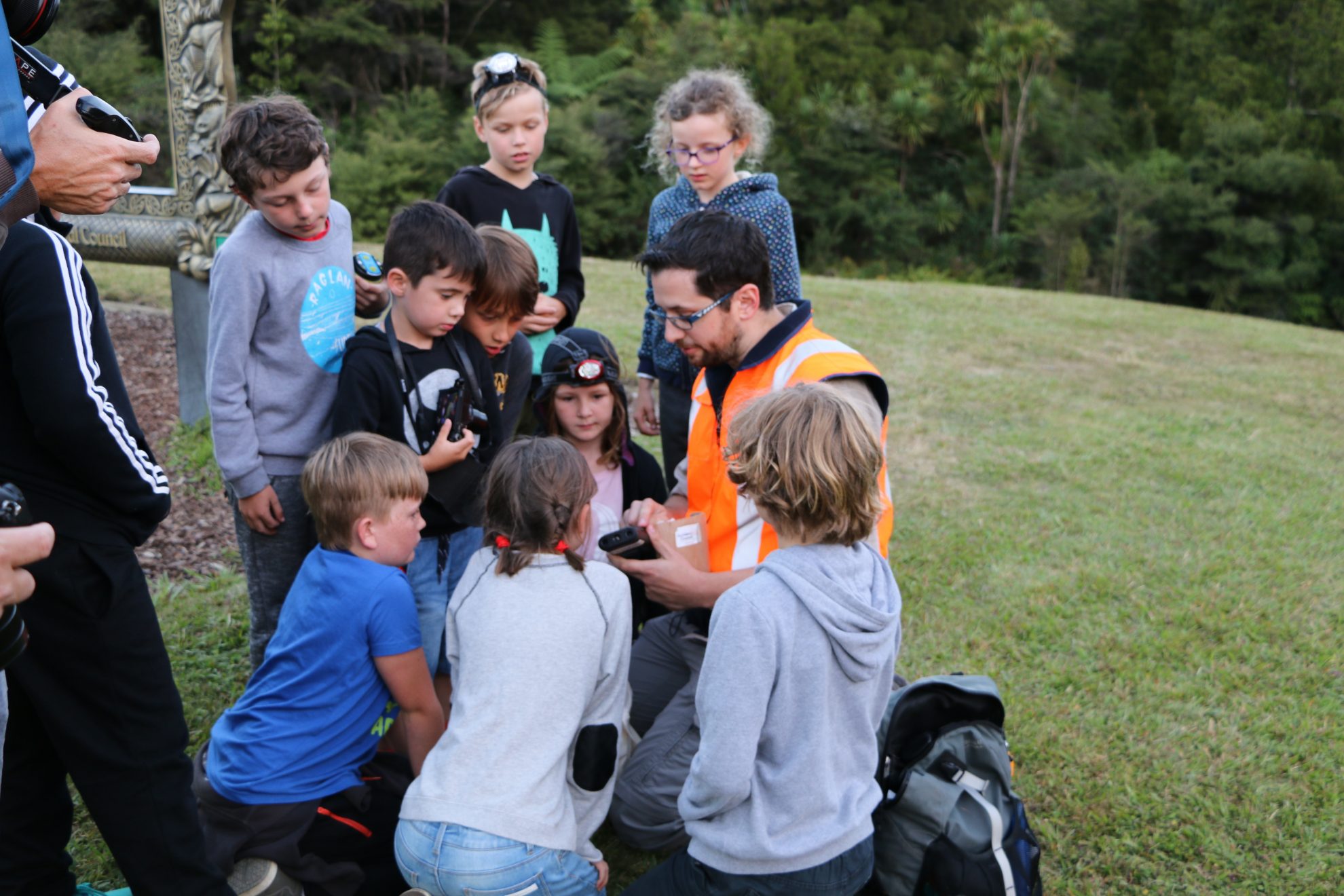
Bat hunters are able to log their findings on the iNaturalist NZ app (a citizen science platform where users can record and share their observations in nature) or directly to researchers such as Auckland Council senior biodiversity advisor Ben Paris – perhaps better known by his alter ego ‘the bat man’.
Tips for bat detecting
Long-tailed bats are best spotted on warm evenings in spring and summer, as they hunt on the wing.
Clearings near the bushline with a nearby waterway are a good place to start.
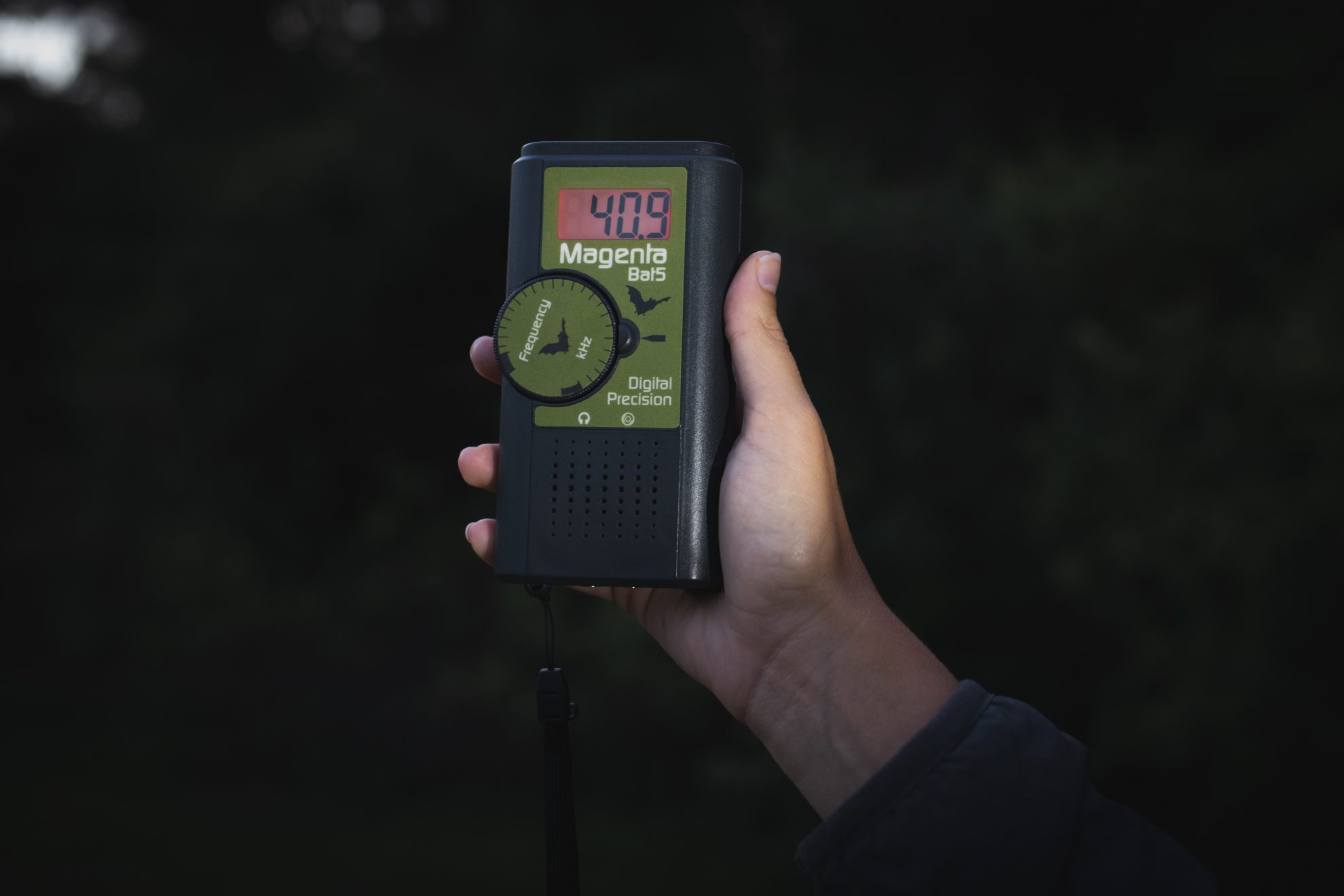
Bat detectors are the best tool for discovering populations, and can be borrowed through Auckland Council and Waikato Regional Council, or purchased online.
To operate, tune the frequency to 40kH, point the directional microphone towards the sky, and listen for the echolocation clicks.
Bat hotspots
Long-tailed bats are widespread throughout New Zealand, and urban populations are found in Auckland, Hamilton and Geraldine.
Scattered populations also exist in Northland, Hawke’s Bay, West Coast Fiordland, and offshore islands.
The rarer short-tailed bat exists in several major colonies in the North Island – including Central North Island, Codfish Island and Little Barrier – and in a few isolated locations in the South Island – namely their stronghold in Eglinton Valley in Fiordland.
On the bat-wagon since 2008, Paris first fell for the leathery taonga when he started running night walks to observe a population discovered feeding near Hamilton.
“I didn’t know much about them, but it was my job to get people enthusiastic. The night walks were super popular and would always book out
really quickly,” he says.
Now based in Auckland, his passion hasn’t dwindled – and nor, it seems, has public interest in the species.
Urban populations discovered in Auckland and Hamilton have proved a popular drawcard for summer com-munity events.
Organisers can barely keep up with demand for bat walks, and Auckland Council’s bat detectors – which are free for residents to borrow – “go out the door like hotcakes during the summer”.
“There is a long waiting list, and the more people that realise we have bats here, the more their popularity will continue to grow,” says Paris.
Despite this growing popularity, the funding available for New Zealand’s only endemic mammal isn’t enough, Paris says – “it usually goes towards the cute and feathery, rather than the cute and furry”.
He admits relatively little is known about the two endemic bat species that still reside in New Zealand, and a third which became extinct in the 1960s.
The more widespread species – the long-tailed bat – lives on all three of New Zealand’s main islands, as well as offshore sanctuaries such as Little Barrier in the Hauraki Gulf.
Adults grow to roughly the size of a thumb, and their wingspans stretch the length of a hand.
Aerial hunters, they fly at speeds of 60km/h, using echolocation to scan for flying insects. They’re most often spotted at dusk, silhouetted against the sky.
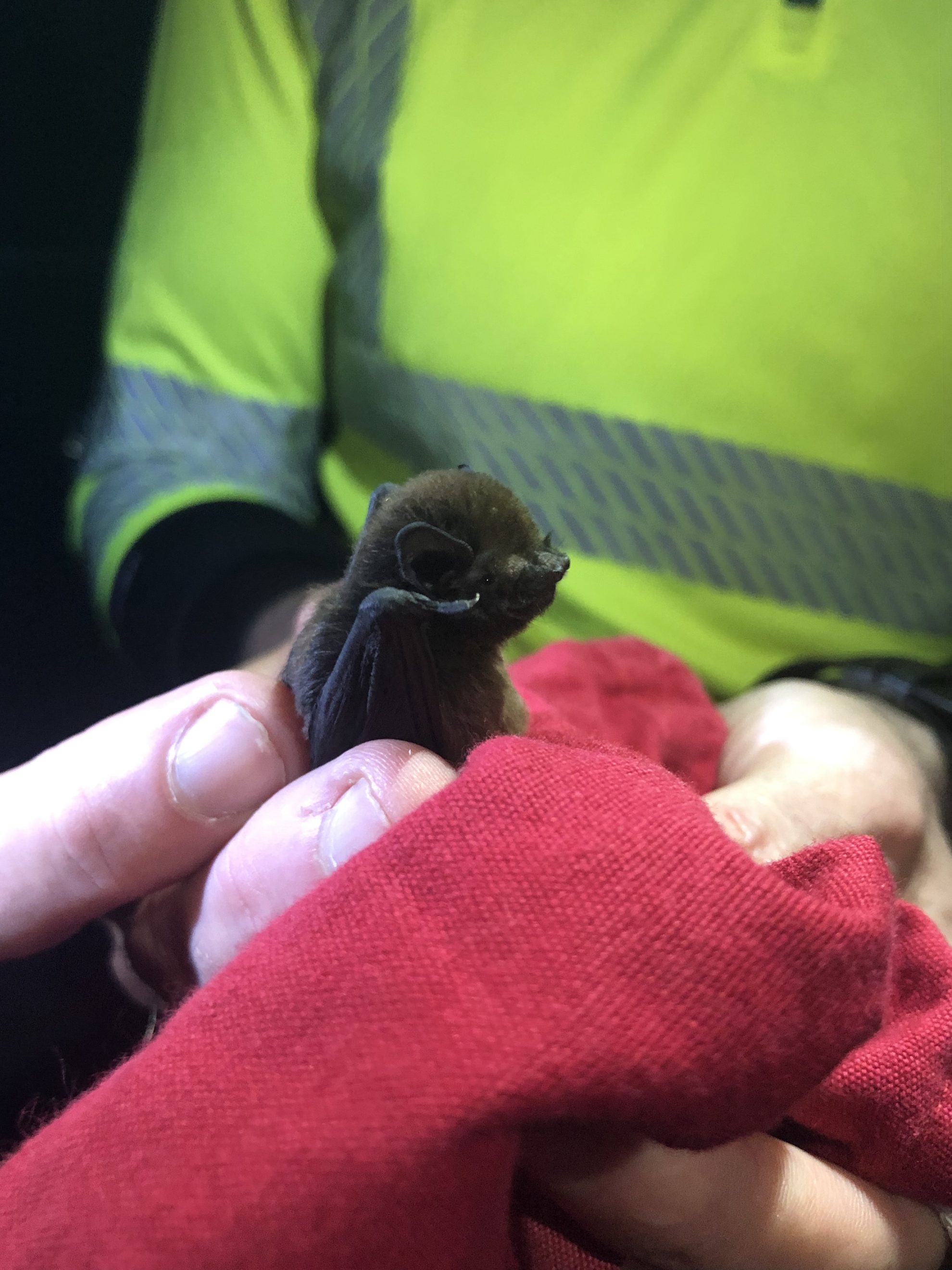
The short-tailed bat is a bulkier specimen weighing 12-15g.
It’s more of a ‘generalist’, Paris says, and uses its folded wings as limbs to crawl on the forest floor to feed on grubs, fruit, nectar and pollen – an uncommon trait in bats.
The only other living bat species to hunt on all fours is the common vampire bat, which as its name suggests, feeds on blood.
A threatened parasitic plant species – Dactylanthus, or, woodrose, is thought to rely on the short-tailed bat’s unique feeding habits for pollination.
Although long-lived for a small mammal species, the life expectancy of New Zealand’s bats isn’t known.
Similarly-sized mammals such as mice have a lifespan of a couple of years, but our bats may live to 40, Paris says.
“In one study, they kept catching the same bat for 25 years, identifying it by the ring on its arm,” he says.
Both species enter a state of torpor when temperatures are low, dropping their core temperature and remaining motionless in their roost to conserve energy.
In winter, they may spend up to 10 days in this state and are thought to only venture out for hours at a time.
Contrary to pop culture belief, pekapeka don’t tend to roost in caves, crypts or haunted houses.
Their days are instead spent sleeping in mature trees, hiding away until dusk under loose bark or in tree hollows.
“They select a tree specifically for its heating properties,” Paris says. “They like trees which will warm them up during the day, and keep them warmer in the afternoon, before they fly out to feed.”
Where they travel is hard to predict, but researchers believe they tend to follow waterways like highways and hunt over large open areas such as golf courses or schools.
To be a bat enthusiast is to embark on a journey of surprise and discovery, however, and detecting them in new or unexpected territory is all part of the fun, Paris says.
Know your bat
Long-tailed bats – the aerial hunters – are the smaller of New Zealand’s bat species, weighing just 8-11g.
They are a furry chestnut brown, and have a long tail attached to their hind legs by a thin membrane.Short-tailed bats are slightly heavier, and stocky in appearance. They have larger, triangular ears, a free tail,
and are quickly identified by their crawling behaviour, which sees them fold their wings away and walk on all fours.
“They’ve shown up in pine forests in Riverhead, around Taupo, in completely open farmland by Hamilton Airport. We’re learning that we can’t discount areas because there is no bush – they are hanging around in some interesting places.”
Predation and habitat loss are the two biggest threats facing pekapeka today, and the long-tailed and short-tailed species are classed as nationally critical and nationally vulnerable, respectively.
In 2010, a single cat killed 102 short-tailed bats over the space of a week near Ruapehu – proving just how vulnerable the creatures are, particularly during the day. Stoats and rats are also key predators, nimble enough to infiltrate roosts to feed on sleeping bats.
Paris says a lack of research means protection can be subject to guesswork.
“We assume a lot because of what we know about birds and their predation, but there is still a lot we don’t know about our native bats and how we can better protect them,” he says.
1080 pest control and trapping is making a difference in Auckland, however, and positive increases in numbers have been reported in Fiordland’s Eglinton Valley – the last remaining mainland stronghold of the southern short-tailed bat, which went from an annual decline rate of five per cent a year, to an increase of eight per cent.
Kauri dieback and the toppling of mature trees, living and dead, also threatens the species, and while little is know about how pekapeka select their roosts, it is believed the preservation of large tree species is vital to their survival.
The declining pekapeka is a difficult species to protect. Their size, behaviour and shrinking habitat makes them largely invisible to humans, and they’re often overshadowed by feathery conservation campaigns.
“Most people wouldn’t have seen a bat ever, and even those who spend a lot of time in the bush will only ever see a flitting silhouette against the sky at dusk, and probably think it’s just a late bird,” Paris says.
Fortunately, the tireless passion of a few is putting the plight of the pekapeka into the public eye, and with each season that passes, the watchful eyes of the night shift multiplies.



