

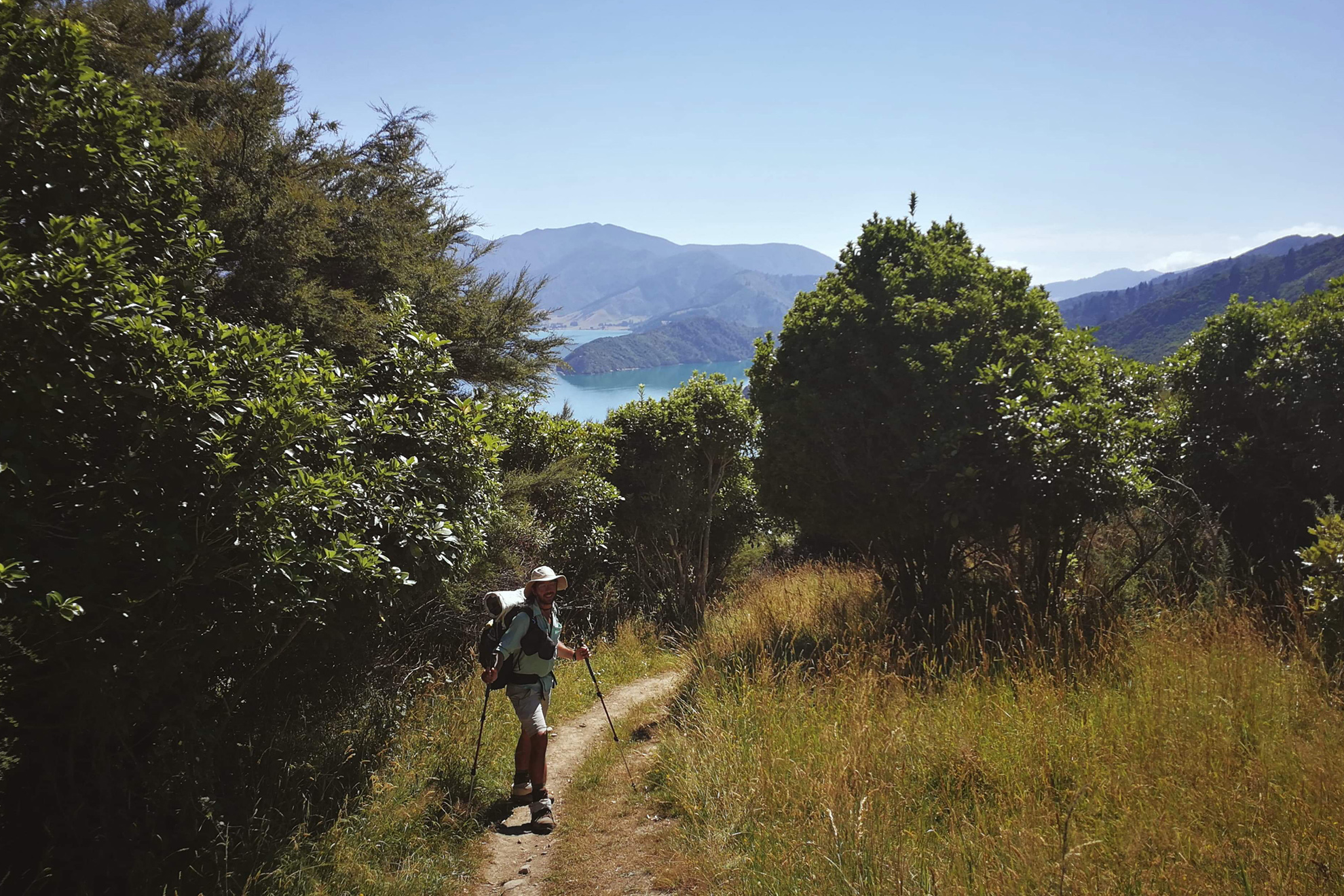
Known as ultralight backpacking or hiking, this approach focuses on carrying the least and the lightest versions of gear while still being prepared for the great outdoors. That could be a lighter shelter or pack, a quilt instead of a sleeping bag, or trail runners instead of tramping boots.
This minimalist trend, popular with through-hikers in the US for more than two decades, is becoming increasingly popular here, according to Dan Murphy, director at tramping tour company Hiking New Zealand. “A lot of these hikers have hiked other long-distance trails … and have brought those habits with them,” he says.
Meanwhile, a New Zealand cottage industry is unfolding, selling lightweight gear and educating Kiwi trampers on how and why to go lightweight.
But just how safe is lightweight tramping? In early 2019, with the New Zealand tramping season in full swing, several media reports suggested questions were being raised over safety. Mountain Safety Council (MSC) chief executive Mike Daisley was quoted as saying: “The main concern is if people sort of confuse being ultralight – for instance, deliberately choosing to reduce the weight they’re taking with their equipment versus leaving important pieces behind.”
At the time, the MSC reported that insufficient equipment was a contributing factor in nearly a third of tramping fatalities, although no link to lightweight hiking or lightweight equipment was noted. Four years on, MSC says it has no statistics on call-outs that are, or could be, associated with lightweight tramping.
But the concern remains. “Lightweight packing becomes an issue when pack weight is considered more important than actually carrying the gear,” says Daisley. “Lightweight packing doesn’t mean leaving out extra warm layers, a rain jacket or emergency shelter.” It’s really important, he adds, that lightweight alternatives do not sacrifice safety for trips into alpine terrain or exposed areas.
Daisley is right to be concerned. A survey of 199 hikers in the White Mountain National Forest of New Hampshire in 2011 found that only 17.8 per cent carried all 10 items deemed essential for a hike: map, compass, extra clothing, rain gear, headlamp, knife, first aid kit, whistle, fire starter and extra food and water.
Reasons for not carrying items were varied, the most common being that it was a ‘short hiking trip’. But there were also 26 instances of hikers saying they ‘didn’t need’ items and four instances where hikers cited ‘backpack weight concerns’. The authors concluded: ‘Our data imply day hikers are more apt to be underprepared because of their perception that shorter hikes are less dangerous.’
An analysis of hiking fatalities in Switzerland between 2003 and 2018 found equipment shortages may contribute to hiking deaths, particularly for those occurring below 1800m. According to the 2020 report, victims in this group were more likely to have lightweight footwear, no backpack and inadequate clothing.
While this specific analysis does not suggest a direct correlation between equipment shortages and lightweight backpacking, it does highlight Daisley’s concern: “No matter the length of the trip or the weather forecast, packing smart means always carrying the basic equipment,” he says. “Warm, layered clothing, a rain jacket, a warm hat and gloves, a head torch and an appropriate emergency communication device are the absolute minimum. What you take with you will make a big difference if something were to go wrong such as getting lost, delayed or injured.”
Murphy agrees that going lightweight becomes dangerous if ‘what if’ scenarios aren’t factored in when packing for a hike. “It’s important not to forget the importance of being self-reliant when going into the backcountry and being prepared. But that’s not to say you can’t be both lightweight and self-reliant.”
That’s a point that Cody Howell makes, too. The co-founder of Nelson-based gear company Kiwi Ultralight says one of the biggest hurdles they face is the conception that lightweight gear is unsafe or that ultralighters are unprepared. “Lightweight tramping becomes unsafe at the same point any other base weight becomes unsafe – when a tramper goes into the outdoors unprepared or uneducated … The driving goal with ultralight backpacking is to take as little as you can while ensuring safety and making sure that the little you take is of the highest quality.”
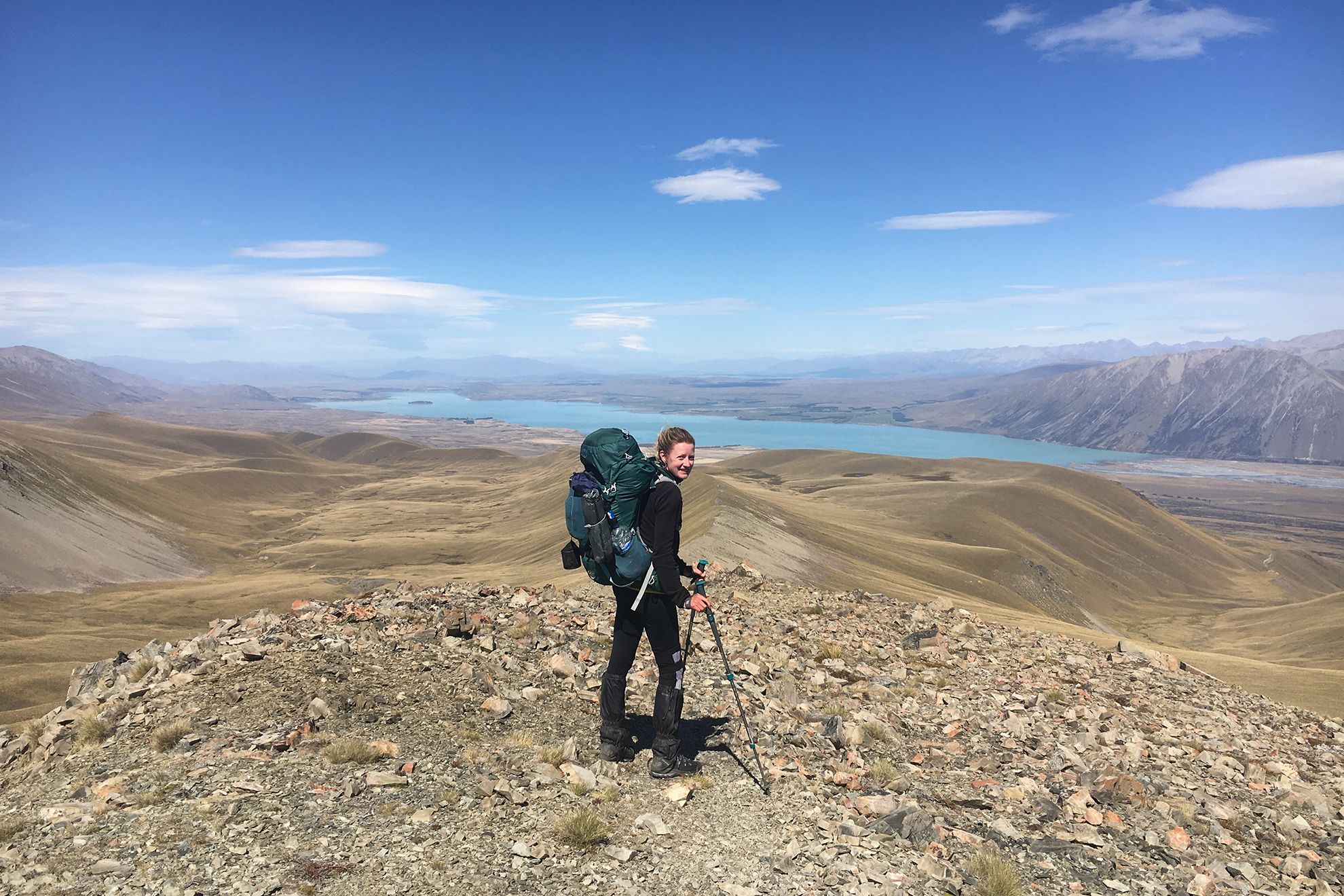
With this tenet in mind, the advantages of lightweight hiking start to become apparent. As Howell points out, carrying less weight means a more comfortable hike where travel can be made further and faster. It also means lightweighters are more agile when it comes to scrambling, river crossings, negotiating downed trees and avalanche routes.
Howell believes carrying less weight is safer. Daisley and Australian survival skills course instructor Kelli Jackson agree. They point to reduced speed, balance issues, and an increased likelihood of injury and fatigue when tramping with a heavier pack. There has been limited research to justify this, but a 2014 study of hikers on the 340km John Muir Trail in the States showed a correlation between a higher base weight and injury.
Liv Bolton, who walked the TA in early 2018, relates to this. With a base weight of about 11kg, her pack became 17kg when laden with food and water. “Being only five foot five, this was incredibly heavy, and I felt like a tortoise,” she says. “The impact on my body was aching hip joints at night; I struggled to sleep some nights after a really long day. I also had a knee injury halfway through, which I do think was from carrying the weight.”
However, in order to go lighter, she felt she would have had to spend “a fortune on lightweight kit”.
Indeed, cost is often one of the bugbears of lightweight gear. But Howell says hikers don’t need to – indeed shouldn’t – sacrifice quality or safety for the sake of saving money. “One of the benefits now is decades of research and experience of the global ultralight community. This means better materials and know-how than makers had even a few years ago. It results in products that are higher quality and (of) lower weight.”
There are still concerns over kit durability, especially with New Zealand terrain and unpredictable conditions. “Lighter doesn’t necessarily mean less protective, but it could be less durable,” survival instructor Kelli Jackson says, although she admits that does depend on how and where gear is used. Murphy notes that New Zealand trails are generally rougher than European and North American trails, which can lead to gear wearing out faster, while the country’s maritime climate can make it hard to tick all the boxes with specialised gear. Such as, Daisley points out, emergency shelters: “Some lightweight shelters are not well suited for the high winds that many parts of the country can experience,” he says.
The solution, however, is simple. For lightweight to be safe and suitable for a user, knowledge of the track and weather conditions are imperative, says Jackson. “It’s really about understanding the worst case of what you will possibly experience, finding gear that mitigates that risk safely and then looking for lighter options … Gear becomes an issue when it doesn’t protect us from death or severe injury – regardless of what it weighs.”
Ultimately, education is key to ensuring that lightweight tramping is safe. Howell says a lot of his job in selling lightweight gear is exactly that – sharing gear lists, analysing clients’ gear lists, informative and educational blogs, hands-on customer service. “We expect it’s rare that people push it to a dangerous point if they are well informed.”
Jackson agrees that most ultralight hikers are experienced, realise that weight shouldn’t compromise safety, and they have researched the terrain and conditions. “A lack of understanding about what to expect tends to apply more to day-hikers or those new to outdoor adventures,” she says. “That’s where the education really needs to be directed.”
It makes me think of the Tongariro Alpine Crossing. The rain was horizontal, the wind at gale force, visibility a mere 10m at best. Me in full wet weather gear, giving up and turning back, passing a group of foreign tourists. They in dripping jeans and plastic festival ponchos, some with plastic bags tied around their feet. There are some things more dangerous than lightweight backpacking.



