

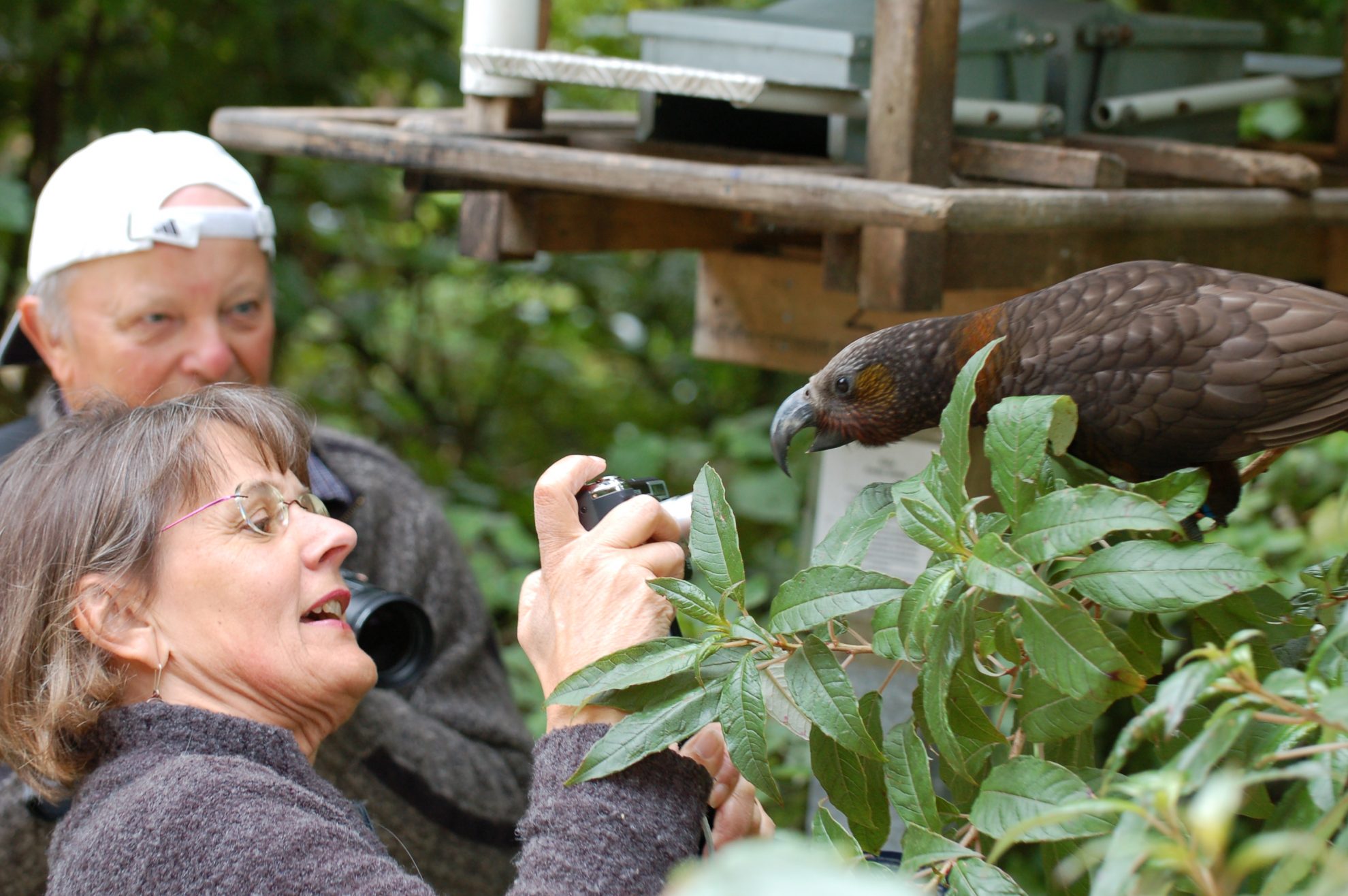
Saville says it’s a booming business internationally, attracting a high-value clientele who are avid travellers.
“Almost all of our clients have been on bird watching tours in other parts of the world. Typically they are well educated, well off, middle aged and well travelled,” he says.
Saville runs 21-day tours of NZ’s birding hotspots from Northland to Stewart Island and says he has experienced exponential growth over the past three years. The tours have nearly sold out this season and places are now booking into 2019. Saville puts the increase down to the company’s experience and the rise in visitor numbers. But given the potential for birding here, he says, nowhere near enough is done to promote New Zealand’s wildlife as a drawcard.
Kaikoura albatross tour operator Lynette Buurman agrees. What it needs is a marketing strategy to position New Zealand as birdland, she says.
“I wish Tourism NZ would see us as an important niche industry,” she says.
Birdwatching has failed to break into Tourism NZ’s marketing campaigns and the industry isn’t listed as a target market. The agency’s top four ‘specialist interest’ sectors are biking, golf, skiing and walking/hiking. But why not attract more people to gawk at birds?
In a statement, marketing director Andrew Fraser says he doesn’t think there is enough interest to warrant greater support.
“Tourism NZ is focussed on promoting the areas that have proven appeal,” Fraser says.
The agency has undertaken significant consumer research to select special interest areas that differentiate New Zealand and are already well developed, he says. Birdwatching isn’t one of them. Fraser says searches for ‘birdwatching’ on the Tourism NZ website are also low compared to all other nature experiences.
But Auckland University of Technology professor of tourism Simon Milne says Tourism NZ is being shortsighted. Milne says birdwatching is a perfect fit for New Zealand’s tourism strategy: it pushes people to the regions, targets a high-value demographic, gets people to stay longer and it’s sustainable.
“It’s a missed opportunity,” Milne says. “It’s an incredibly high value industry and offers a sustainable option, making use of local resources and encouraging conservation efforts. But New Zealand is lagging behind other destinations in maximising this opportunity.”
Milne is also research and development director at the NZ Tourism Research Institute, which has conducted research into the value of the birdwatching industry in New Zealand. The institute has found there’s huge potential, but Milne believes we are blind to the value of our own wildlife.
“We have one of the world’s greatest assets in our birds and yet we are doing so little,” he says “When you live in a place with these assets, you forget what you have until outsiders point it out to you. Globally, people are far more awake to this than we are.”
Forest and Bird chief conservation advisor Kevin Hackwell agrees, saying birdwatching could be a cornerstone of a nature tourism industry.
“We could be a lot better at promoting nature tourism in New Zealand in general, but we take what we have for granted,” Hackwell says. “It’s often only after we get foreigners coming and getting so excited, going to great length to see [birds] that people realise what we have.”
He says building a birdwatching industry would also have the benefit of raising awareness of conservation more generally.
“People really appreciate New Zealand’s conservation efforts, because we lead the world in managing habitats and threatened species.”
Milne says one of the big missed opportunities is Auckland. There are multiple birding sites within an hour’s drive of the city. Island sanctuary Tiritiri Matangi is already listed as the city’s top tourist activity on TripAdvisor and Miranda is an hour’s drive away. There’s also the mainland open sanctuary at Tawharanui, north of Auckland (which has takahe, kiwi, kaka, bellbird), the ‘mainland island’ Ark in the Park in the Waitakere Ranges, the Hunua Ranges, where kokako are recovering following a recent 1080 drop, a major gannet colony at Muriwai, and a myriad of seabirds in the Hauraki Gulf. As pest control efforts ramp up, this asset will grow.
It’s an opportunity which has been raised by DOC director general Lou Sanson. At the opening of the new DOC visitor centre in Auckland last month, Sanson said marketing Auckland as New Zealand’s best birdwatching destination could be a way to get people to stay in Auckland longer and take some pressure off other tourist hotspots, such as Milford Sound and Franz Josef Glacier. It also supports New Zealand’s conservation goals.
“It’s a question of how to position Auckland and the magnificent Hauraki Gulf so it becomes a key destination,” Sanson said. “We have so many amazing species and the best place to see them is Auckland. We need to be telling those stories and the iSITE is a key part of that.
“I’m sure we can do it.”
Auckland birder and Wrybill Tours guide Phil Hammond says the idea has merit.
“In three or four days, people can see 35 endemic species in Auckland – that’s up there with the other hubs around the country,” Hammond says.
With the Government setting a goal to make New Zealand predator-free by 2050, what will the future hold for birders? Wellington provides a window into that future. Since predator-free sanctuary Zealandia opened 22 years ago, the rebound in birdlife has exceeded all expectations. Kaka and tui are now commonly found throughout the city – kaka from the sanctuary have been spotted as far away as Mt Bruce, north of Masterton.
“It’s gone much further than anyone anticipated,” says Zealandia research and conservation manager Dr Danielle Shanahan. “We banded our 800th kaka last summer. That’s a remarkable recovery for an endangered species.
“Kakariki are also rebounding and tui have gone from just two pairs in the city, to now be a common sight.”
Nestled in a suburban valley, Zealandia was the world’s first fully-fenced urban eco-sanctuary and has reintroduced 18 native species, six of which have been absent from the mainland for more than 100 years. Buoyed by the success, community trapping groups have sprung up, and the city council has invested in trapping reserves.
“They’ve had a massive effect as well,” Shanahan says. “The more people see these birds recovering, the more it galvanises communities.”
The sanctuary has also been a major tourist attraction, putting Wellington on the map as a wildlife destination – about half of the visitors to Zealandia are international tourists.
“Everyone is keen to see what New Zealand looked like before the impact of humans.
“It’s an important story for us to tell. It’s part of who we are and the more it is a part of our everyday life, the more international visitors will want to come experience it.”
The tourism potential of New Zealand’s recovering birdlife seems promising. Would it be so bad if we focused on attracting birders as much as backpackers?
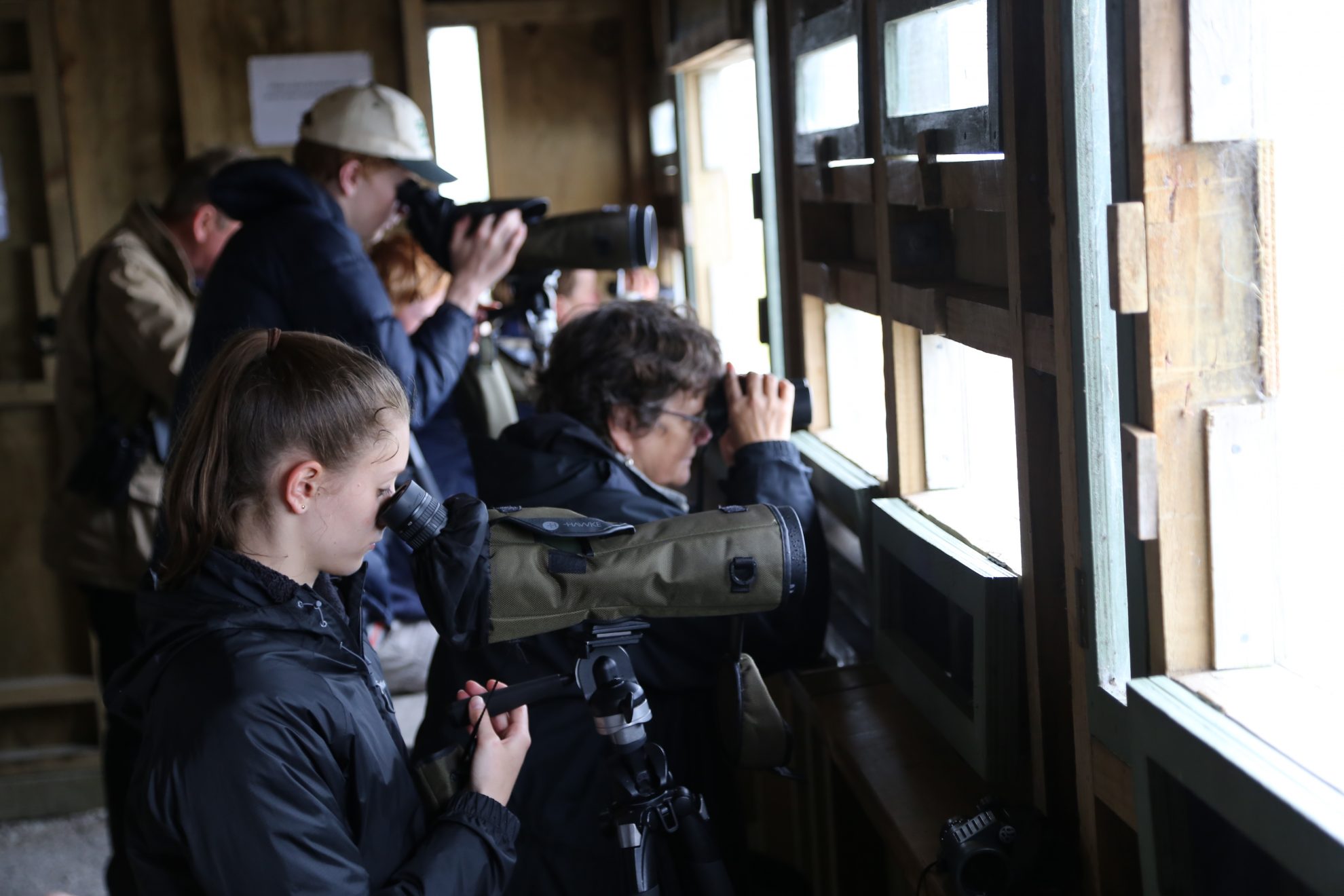
A group of New Zealand birders has been heading to North Korea each year to check-up on our migratory birds, which rest there on their way to the Arctic Circle.
A small group from the Pukorokoro Miranda Naturalists’ Trust has been conducting surveys of the shorebirds on the west coast of North Korea.
A number of NZ shorebird species migrate to Alaska and Canada via the Yellow Sea, including the bar-tailed godwit (which has the longest migration of any bird; 11,000-12,000km) and the red knot. The trust had already surveyed all shorebird sites in China and South Korea, but there was a large gap of information about the west coast of North Korea.
“The coastline there is a very sensitive place and we wanted to go there with binoculars to watch birds,” trust member Adrian Riegen says.
In 2007, the trust heard that then Foreign Minister Winston Peters was heading to North Korea on an official visit, and they asked if he would broach the idea. Peters followed through and in 2009, three trust members flew to the country.
The birders, accompanied by a government minder, went about identifying the most important sites.
“We found birds that had been banned from as far afield as Invercargill and northern Alaska,” Riegen says. “The state of the environment is far better than China or South Korea – they haven’t reclaimed so many mudflats. It’s the scale of development that is driving the decline in bird numbers elsewhere.”
The trust has since partnered with DOC to fund further trips.
The trust is working to have some of the North Korean birders flown to NZ to see the work being done at Miranda.



