

I can’t cope with crackers and tuna pouches for five days. For starters, I’m vegetarian. And, I have standards. I enjoy food too much to forgo its pleasure in the hills.
I was a militant vegan when I started tramping 15 years ago, and buying lightweight tramping food was next to impossible. Only one brand made outdoor meals, and they had a single vegetarian (not vegan) option. I spent a few trips hauling in raw ingredients and preparing them laboriously over a tiny camp stove. It was heavy, time consuming and the results were average.
Change was needed.
So, I dug out our old dehydrator and got to work.
People have been dehydrating food for millennia; how hard could it be? Short answer: not too hard. But there are some basic dos and don’ts.
Dehydrating your own food can be surprisingly easy and fun. You can buy fabulous freeze-dried meals, or you can buy a dehydrator, put in a bit of effort and feel immensely smug at mealtimes.
Here are some tips to get you started on your own meals.
Options to explore
It’s simplest to start with pre-made food. I regularly dehydrate store-bought curry paste, hummus and tomato paste. I have also dried sriracha and other sauces in little medallions to add extra flavour.
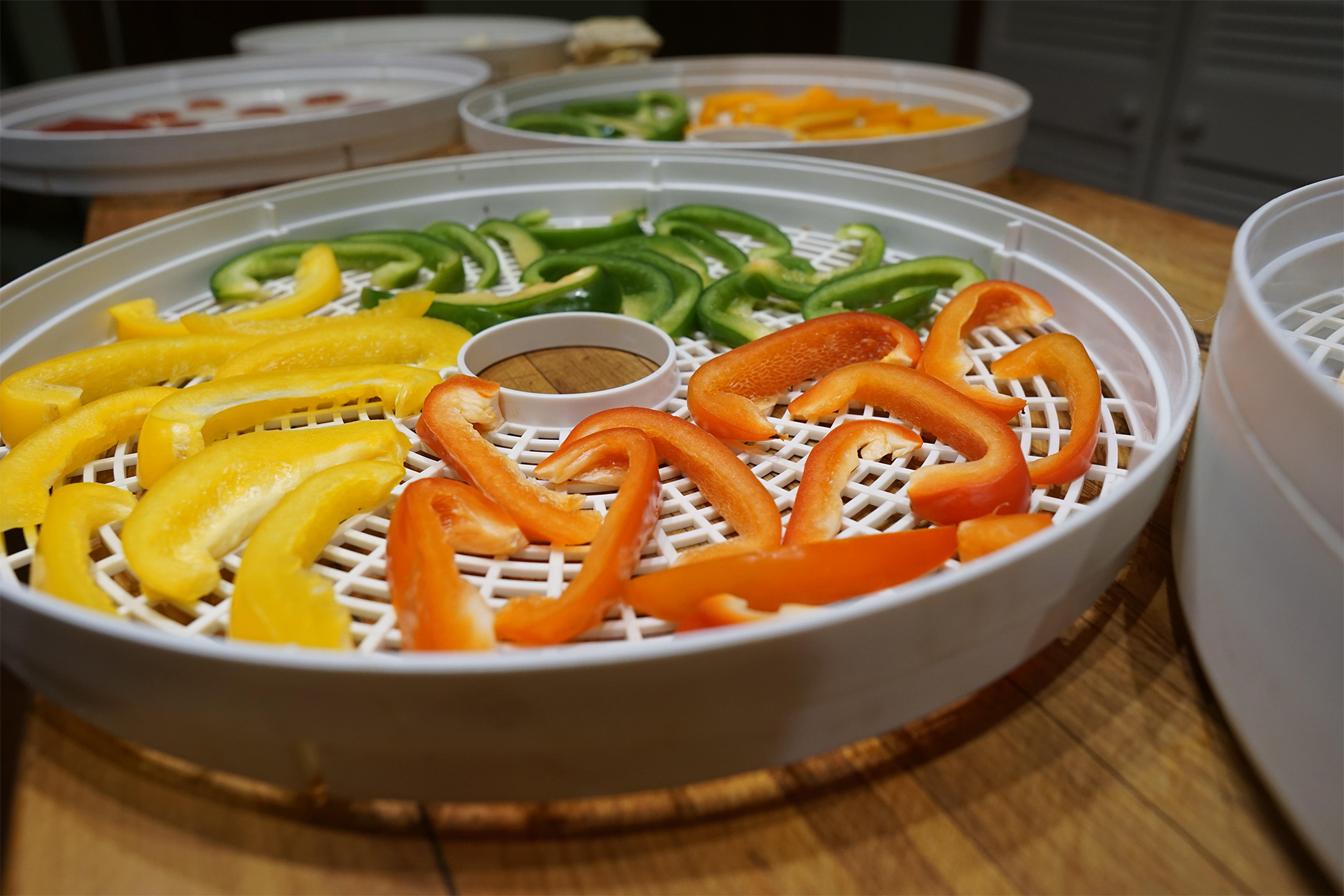
The second method is to dehydrate separate ingredients. This is an easy way to add flexibility and vegetables to your meals. Raw ingredients like capsicum, fruit or mushrooms (sliced thinly) work well. You can also dry blanched vegetables like broccoli, kale or what- ever takes your fancy.
The third option is to dehydrate a home-cooked meal. This is definitely the most time-consuming but is easier to handle when on a tramp. Vegetarian pasta, curries and anything slightly mushy and water-based will dehydrate well.
Foods that don’t dehydrate well
→ Anything oil-based or high in fat like cheese, avocado or peanut butter. The oils and fats can go rancid and the food can be hard and chewy
→ Fresh tofu (see below)
→ Eggs
→ Soup … for obvious reasons.
Foods that need to be dehydrated well
→ Meat – needs to be lean and trimmed of any fat
→ Tofu – drain the water and pop it in the freezer until it becomes stringy like chicken (typically about 24 hours). Then thaw it and squeeze out the water. At this stage it will easily pull apart into chunks that can be dehydrated.
→ Chickpeas and beans – if these are dried whole, it’ll take hours for the meal to rehydrate. To get around this, use a potato masher to break up beans and peas before dehydrating.
Don’t bother (in my opinion)
→ Mashed potato or peas – the store-bought options are cheap and delicious.
Go for gold
→ Vegetarian curries, dahls and thick stews (serve with quick-cooking rice or mashed potato)
→ Pasta – one of my favourites is creamy mushroom pasta with spinach
→ Refried beans
→ Desserts
→ Baby food
→ Fancy porridge
FAQs and troubleshooting
How long will dehydrated food last?
Some of my meals have lasted more than 12 months – even up to 24 months – if they’ve been properly dried. To be on the safe side, aim to eat your meal within six months of making it. Store meals or ingredients in ziplock bags. A vacuum sealer is even better.
How much water do I add?
The ratio for one adult (moderately hungry) is 100g dried food to 250ml boiled water. Weigh out portions at home and label the bags as it can be difficult to distinguish meals once they’re dried. Start by adding less water than needed – you can always add more but it’s tricky to take it out.
Help! I added too much water, what can I do?
Add some dried mashed potato, chia seeds or sago balls to soak up the excess.
Help! My meal is flavourless!
Take a small flavour pack to rescue bland food. Stock cubes, salt, dried medallions of your favourite sauce, spices or sugar are all good additions.
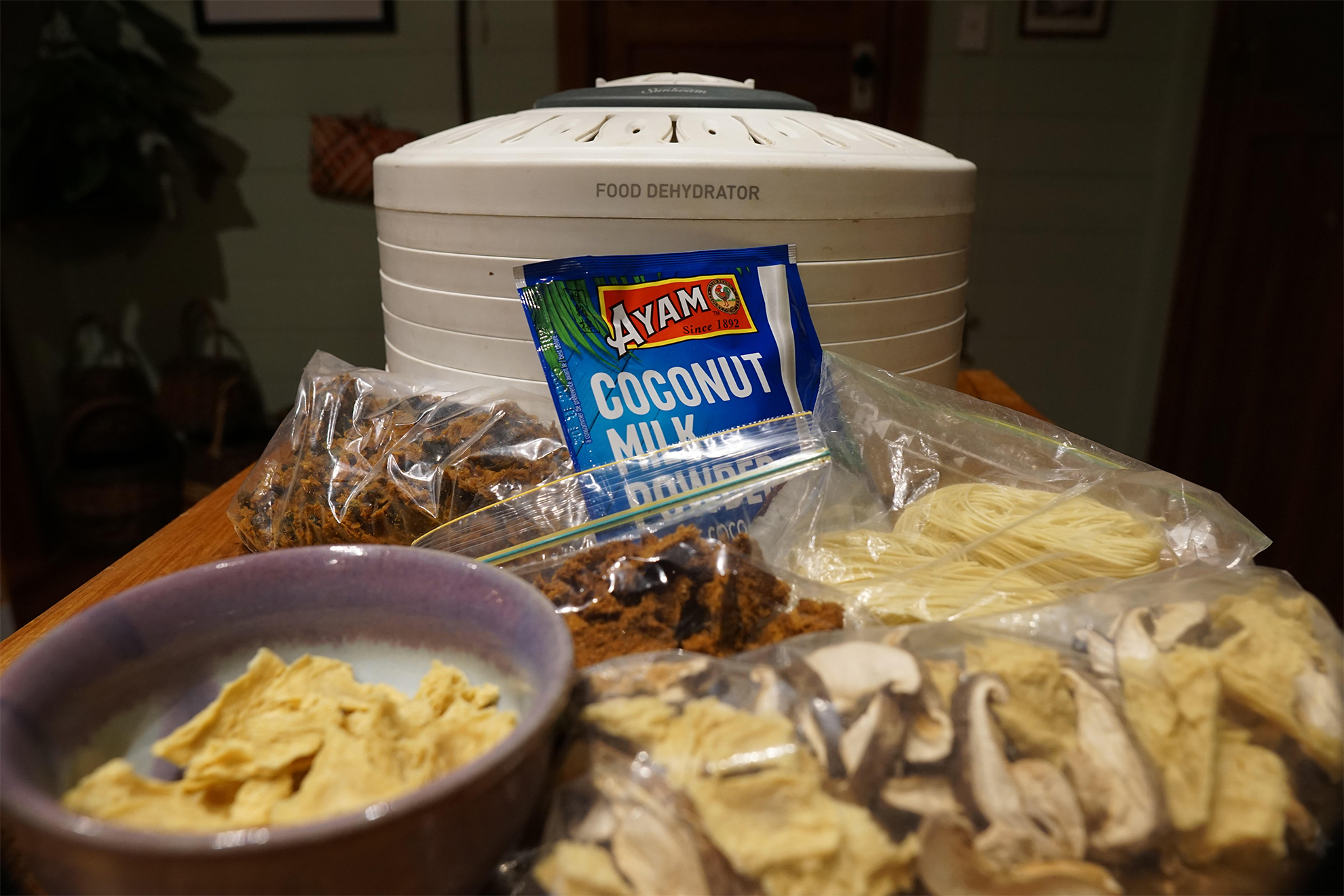
Serves 2
Ingredients
20g dehydrated laksa paste
50g dried peas
1 block tofu, frozen, squeezed
to remove water and then
dehydrated (about 60g)
1x sachet of coconut milk powder
2 servings of quick-cooking noodles (vermicelli work well)
20g shiitake mushroom slices
Small handful of dehydrated veges (capsicum, broccoli, pumpkin, whatever you have)
Method
In a pot, add all the ingredients except the noodles.
Cover with boiling water, place a lid on top and let it sit for 5–10 minutes.
Cook the noodles according to the packet instructions.
Dish out the noodles and pour over the laksa.
NB: Curry pastes vary a lot. Add a little at a time and test for flavour and spice levels.
Makes 440g (fresh)
Ingredients
1 can chickpeas (substitute cannellini
beans for a bean dip)
Juice of 1 large lemon
¼ cup tahini
1 small garlic clove
2 tbsp olive oil
½ tsp ground cumin
2–3 tbsp water or aquafaba
(canned chickpea water)
Salt to taste
Optional: roasted capsicum/carrot/pumpkin etc for flavour
Method
Add chickpeas, lemon juice, tahini, garlic, olive oil, cumin and salt to a food processor and process until smooth and creamy. The sides may need scraping down a few times.
If the hummus is a little thick, add water or aquafaba until it’s a creamy consistency.
Spread the hummus over the dehydrator trays – don’t use baking paper as it will stick.
Dehydrate for 6–12 hours on high or until completely dry.
NB: Blitz the hummus in a coffee grinder to turn it into a fine powder. This makes it super easy to rehydrate when you pull it out at lunchtime – just add a little water at a time, stir and voilà! Instant hummus.
Serves 4
Ingredients
1 tbsp oil
1 large onion, finely chopped
45g fresh ginger, peeled and finely chopped
4 cloves garlic, finely chopped/crushed
1 red chilli, finely chopped (optional)
15 fresh curry leaves (in the freezer/fridge at most Asian supermarkets)
1 large carrot, finely chopped
½ cup frozen peas
1 tsp black mustard seeds
2 tsp ground cumin
2 tsp ground coriander
1 tsp ground turmeric
2 tsp curry powder
2 tbsp tomato paste
200g split red lentils
1 x 400ml tin coconut milk
1 bunch spinach, chopped
600ml water
1 tsp salt
Method
Heat the olive oil in a large pan on medium-high and fry the onions for 5–10 minutes until golden and translucent.
Add ginger, garlic, chilli and curry leaves and cook for a couple of minutes.
Add the spices and lentils and cook for one minute, stirring the whole time.
Add tomato paste, water, coconut milk, carrot and salt and bring to the boil.
Reduce heat and simmer for about 20–25 minutes until the dahl has thickened, stirring occasionally.
Add spinach, stirring until it has wilted.
Turn off the heat and wait for the dahl to cool completely before spooning into the dehydrator.
Dehydrate on high heat for 12 hours or until totally dry. It’s best to check it regularly as many factors will influence drying time.
The dehydrated dahl should come out in crispy chunks and flakes.
When cooled, store it in a ziplock bag. Serve 100g dried per person with rice or mashed potato.
34 years of inspiring New Zealanders to explore the outdoors. Don’t miss out — subscribe today.

Questions? Contact us



