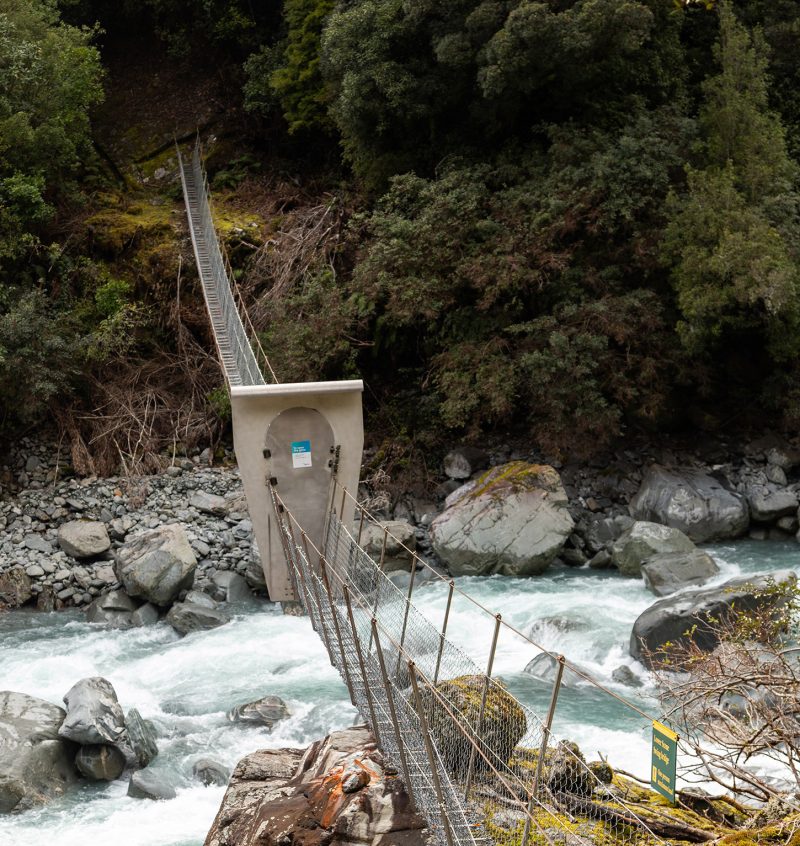
Deep in the forest of South Westland there’s a suspension bridge with an odd-looking door. It looks like a portal into another world. And in some ways, at one time it was.
The metal suspension bridge crosses thundering Scone Creek (‘creek’ is a bit of a misnomer on the West Coast) in remote Perth Valley. The door is a relic from the early days of restoring this valley – a time when rats, stoats and possums were rife on one side of the creek and native plants and animals were reclaiming the other. The predator-proof door helped to hold that fragile boundary.
Today, both sides of the creek are predator-free. The door stands as a reminder of how far this place has come over seven years of intensive predator eradication.
The bridge sits in the core area of Predator-Free South Westland, the flagship project of Zero Invasive Predators (ZIP).
Perth Valley (12,000ha) is where the team first tested their ‘remove and protect’ approach in South Westland: eliminate every predator, then hold the line using long-term virtual barriers and an evolving suite of technology to catch reinvasions.
Virtual barriers combine the brute force of nature – steep mountains and roaring rivers – with technology. Think of them as giant mainland sanctuaries, protected not by expensive steel fences but by nature and innovative equipment.
And it’s working. Seven years on, the original 12,000ha zone has grown to more than 100,000ha. Possums, rats and stoats are gone from over 90 per cent of the project area, which stretches from the Southern Alps to the sea. Much of the land is now in protect mode: the team monitors constantly for reinvasions.
The Predator Free 2050 mission – the goal to remove rats, mustelids, possums and feral cats from the entire country – needs other such scalable mainland projects. We know how to wipe predators from uninhabited offshore islands, and we’re world-class at it. But ZIP’s work is an ambitious attempt to see whether its approach can apply to the mainland using natural features, and with the added complexities of people, farms and more varied habitats. Predator Free South Westland is one of three elimination projects that ZIP is leading operationally; the others are in Aoraki Mount Cook and on Rakiura Stewart Island.
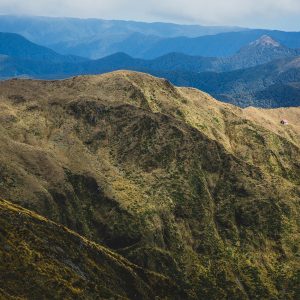
The only way to appreciate the sheer size of the South Westland effort is to fly over it.
I joined Predator Free South Westland field rangers Chad Cottle and Ethan Perry at HeliServices in Franz Josef and we lifted off over snowy peaks, huge glacier valleys, farmland, wetlands and small clusters of houses.
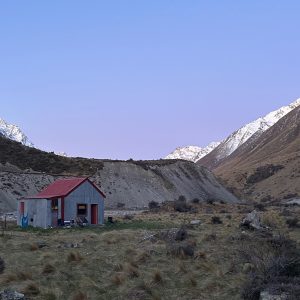
We landed near Scone Hut, a six-bunker that was used as a home base for field staff in the project’s early years.
Back then the work was pretty low-tech and heavy on manual labour. Perry and Cottle chuckle about how they deployed 2000 chewcards (little squares of corflute filled with lure) to figure out which predators were around. Great for a backyard, but wildly inefficient for such huge and remote bush country.
Today, the operation is part primeval, part sci-fi. We do a reccy around the hut, check out the old predator-proof door on the bridge and look at some of the newer tech up close.
The initial knockdown of predators relied on the precise aerial application of the biodegradable pesticide 1080. But as anyone in the predator-free game can tell you, it’s the last few wily survivors and the potential reinvasions that require the most vigilance. To find and remove them, ZIP uses an increasingly sophisticated toolkit, constantly refined by scientists at a lab in Lincoln, Canterbury.
Cottle has been with the project from the start and has seen the evolution of technology.
He fondly remembers nine-day stints in the bush, cutting tracks, setting up trail cameras and “being the fittest I’ve ever been”. Now, with the use of AI, technology, helicopters and an expanding focus into front-country habitat (farms, wetlands and the coast), there’s less bush time and more smart surveillance from headquarters.
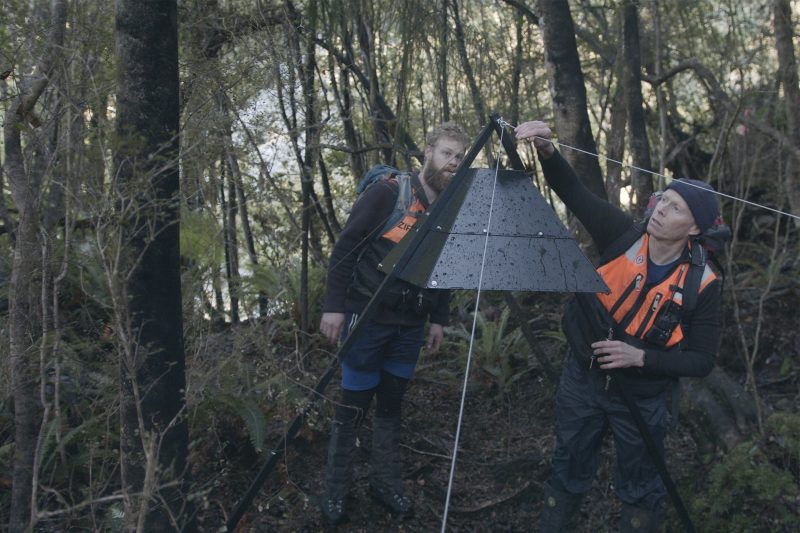
We trek a little way into the trees to look at an AI thermal camera that’s lured with mayonnaise and connected to a 4G network. It looks like a space pod, peering down at the forest floor.
“It sends us a little snapshot of an animal’s heat signature within 24 hours. We used to have to service trail cameras every six weeks and classify the images manually, which takes hours – and by that time it’s already six weeks too late and the animal has moved on,” Cottle says.
Instead, the AI cameras can go nine months between visits. Their on-board AI identifies predators and the remote reporting functionality pings the results back to headquarters in Franz Josef, where the team decides on the next move.
“We always put on a layer of human judgment when using the AI tools, and always double-check the results,” says Cottle. “I don’t think we will ever not do that, no matter how good the tech gets.”
For ‘remove and protect’ to scale across large landscapes, labour and costs need to stay low, which is why AI cameras are phasing out older, labour-heavy trail cameras.
“It used to take one hour to service one trail camera. Now it takes one hour to check all 1000 AI cameras,” says Perry. The team estimates they save about $50 per hectare per year compared to more traditional trail cameras.
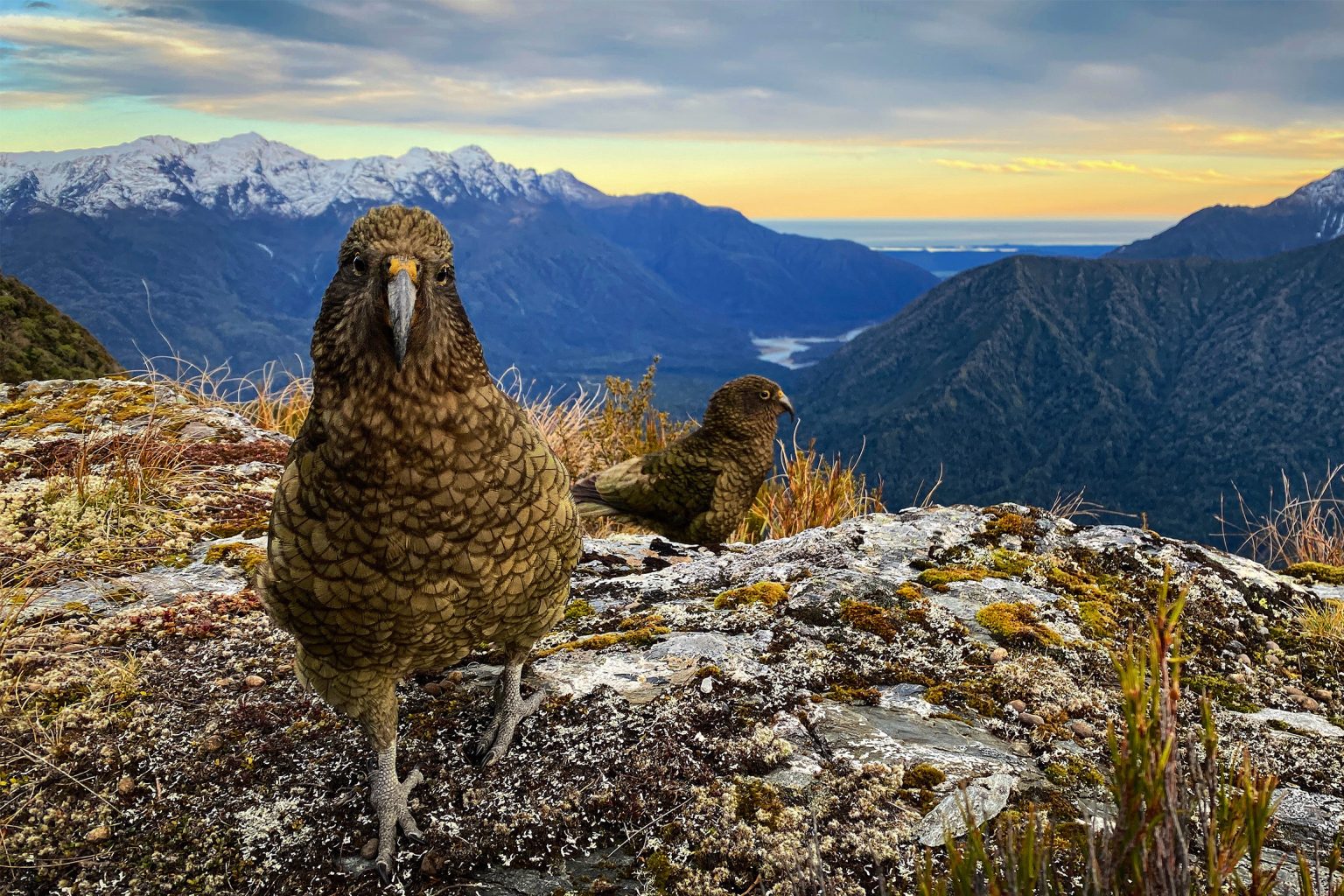
Any gear also has to survive the notorious West Coast weather conditions. The team has lost equipment to lightning strikes and slips, and then there are the kea: as the forest recovers, more kea means more curious beaks and claws.
“The hood on the camera is kea-proof,” says Perry. “We’ve learned and are still learning a lot about protecting gear from kea. Another ranger found a stash of trail cameras – all stolen by kea.”
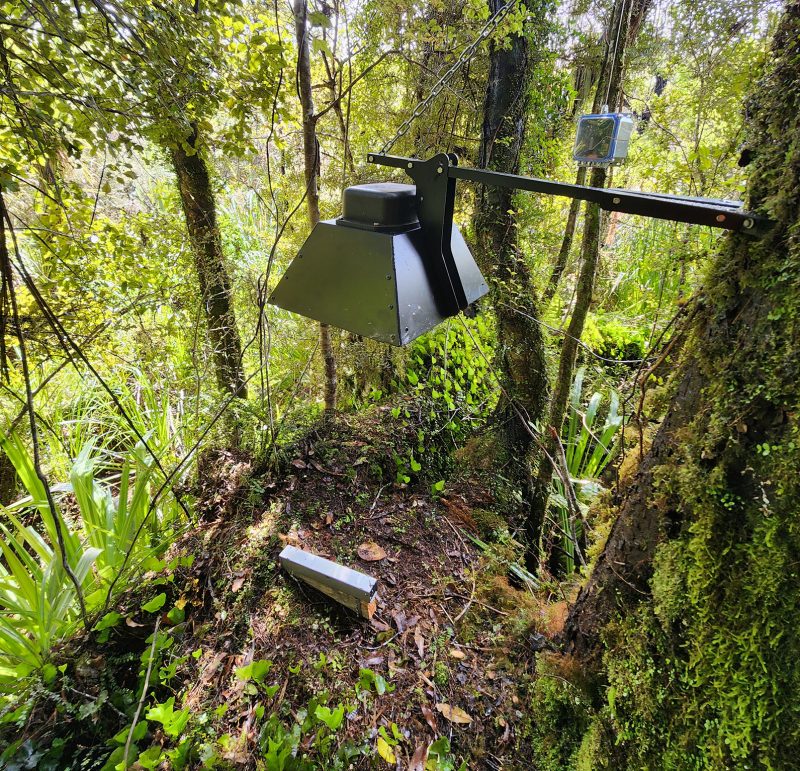
We move on to check out a ‘ZIPInn’, a specially designed tunnel trap for trap-shy animals. When an animal enters, the doors slam shut instantly. A measured dose of carbon dioxide is released and the animal slips into a permanent sleep.
“It’s a guaranteed catch, which matters when every individual counts. If a rat or stoat triggers a trap without being caught, it may learn to avoid traps in the future,” says Cottle.
Attached to both the trail camera and the ZIPInn is what they call the ‘H2Lure’. The little canister contains a tiny hydrogen-generating cell that pressurises a cavity behind a plunger, pushing out a glob of fresh lure at a controlled rate for up to one year without servicing.
The same technology powers the ‘H2Zero’ device, which dispenses doses of Rodenthor (brodifacoum) gel over several months. It’s a major efficiency gain: fresh bait, minimal ranger visits, and rats get only what’s intended rather than carrying poison away and stashing it.
When we hear a kākāriki chattering in the canopy above us, the field rangers smile.
“In my first two years working in the backcountry, I never heard a kākāriki,” says Cottle. “Then we started to notice more, and have been seeing flocks of up to 16 birds.”
Other birds are thriving noticeably, too. Kea sightings are on the rise, with field rangers spotting raucous mobs of up to 29 birds. Their population estimate has rocketed from fewer than 100 to roughly 450. And for the first time, the remote camera network in South Ōkārito is detecting more rowi kiwi than rats. From a desperate low of just 160 birds in the 1990s to over 600 in 2022, they are now enjoying unprecedented chick survival in the wild.
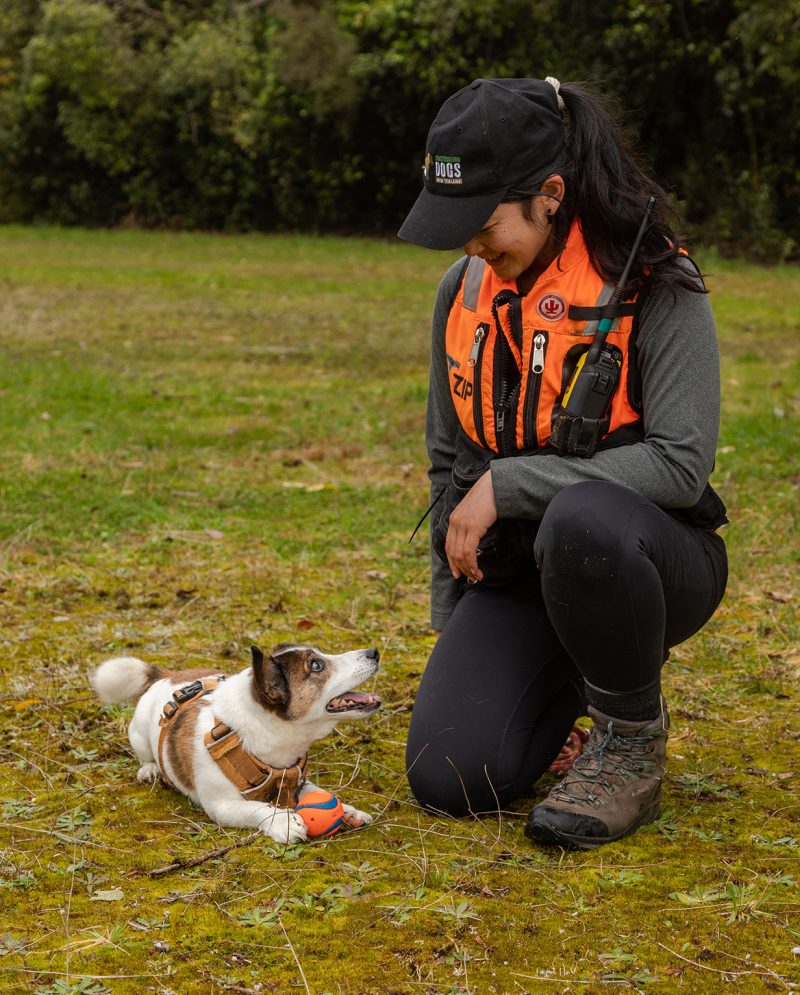
Back in Franz Josef we meet dog handler Chelsea Price and her two extraordinary pooches, Baxter and Kaia. Energetic bundles of joy, they become laser-focused as soon as their special working harnesses and muzzles are strapped on. Baxter shows us his superior sniffing skills, bee-lining to a hidden rat nest and exploding into tail-wagging when given a reward, his favourite ball.
“A lot weighs on you and the dog,” Price says. “You have to be able to read your dog well. You have to have the confidence to trust the dog has found something, because it sets off a major response, getting the team in with traps, bait stations or even an aerial response.”
Predator Free South Westland has four canines on staff: a possum dog and three rat dogs. They are crucial for detecting the locations of surviving individuals and further proving that an area is truly predator free.
It’s easy to imagine this as a remote wilderness project with field rangers, dogs, choppers and gadgets. But the community buy-in is what helps it work. The locals of Franz Josef, Whataroa and Ōkārito support the work, volunteer, give open access to land and share the vision.
Trust has been developed through years of relationship building and cups of tea.
ZIP staff have embedded themselves locally, too, employing residents, leasing an entire motel in Franz Josef for long-term accommodation, buying homes, starting families, and joining local sports teams and the fire and emergency service.
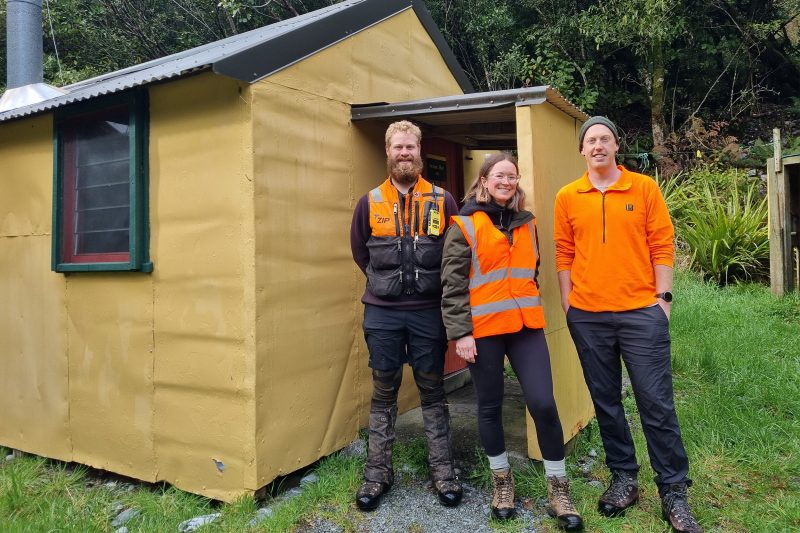
As the focus has shifted to farmland in recent years, relationships with property owners have been vital, says Pouri Rakete-Stones, the rural elimination team lead.
“We work with the farmers, making sure we’re not in the way of their operations and that they are comfortable with the work we’re doing.”
Tourism operators have emerged as some of the project’s loudest cheerleaders. With the glaciers receding, healthy forests and thriving wildlife aren’t nice-to-haves; they are the future for the West Coast economy.
At Waitangiroto Nature Reserve, White Heron Sanctuary Tours managing director Dion Arnold walks us beneath tall kahikatea. I expected the highlight to be seeing the rare kōtuku white heron colony gathering in their lacey finery to breed. But as we walked through the reserve, it was the birdsong that struck me. It was incredibly loud.
Arnold’s family-run business trapped introduced predators in the area for about 40 years, but it wasn’t until Predator Free South Westland came in and eliminated them that the change became obvious.
Arnold stops every few metres to point out plants enthusiastically.
“We’re seeing plants and birdlife come back into the reserve that we didn’t even know lived around here,” he says. “All around us we hear tūī, bellbird, grey warblers, fantails, tomtits. We see a lot of filmy ferns, liverworts, orchids … all sorts of things coming up that just never had the chance before because they were being nibbled away.”
Arnold sees the predator-free movement as a massive opportunity for domestic tourism.
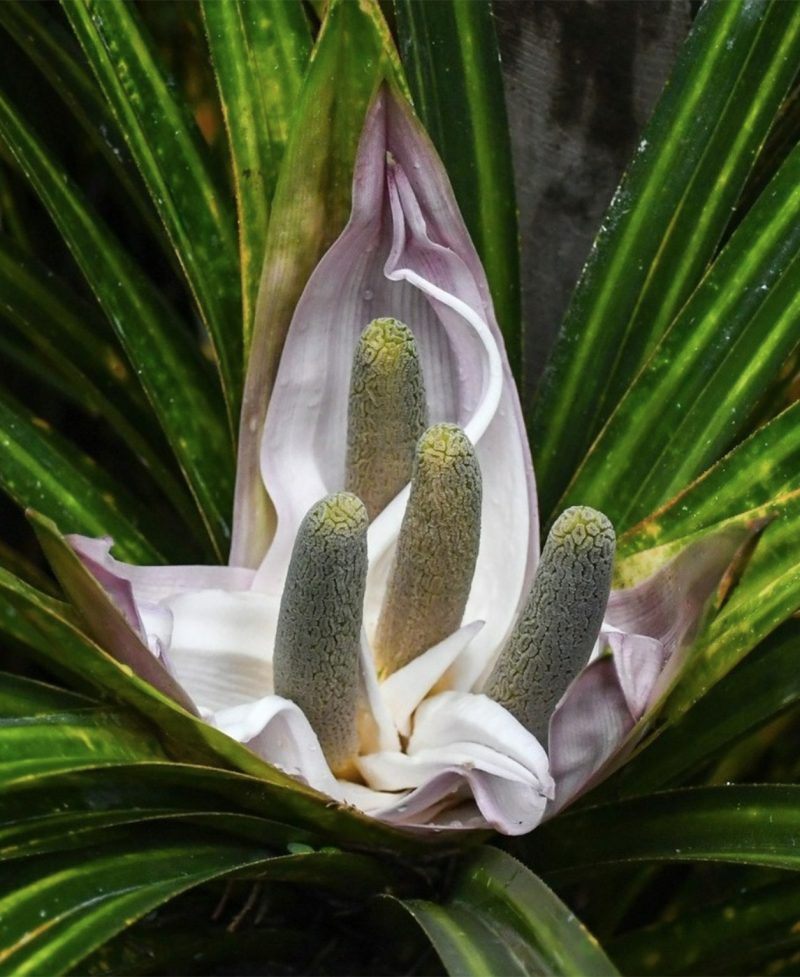
Across Lake Mapourika in South Ōkārito, Franz Josef Wilderness Tours takes us on a track through the rowi kiwi sanctuary. Owner Dale Burrows recalls seeing a bit of eggshell next to a burrow, which spurred him to set a trap. He caught six stoats in the first month. Since Predator Free South Westland has come through the area, his traps, much like the predator-proof door on the bridge, are now mostly props for telling the predator-free story to his visitors.
He is most amazed by the regeneration of the forest.
“We’re seeing seeds on the floor that have always been eaten, and now they’re not. I’m seeing kiekie flower, and I’ve never seen that before because they were always eaten by rats and possums.”
In a place where nature is the main drawcard, a forest that’s coming back to life is an economic lifeline.
For now, Predator Free South Westland remains a test case – one that is being watched closely. The long-term question is whether a ‘remove and protect’ model can become a blueprint for the rest of the country. But in the mountains, forests, wetlands and farms of South Westland, the early signals are hard to ignore: more birds on camera, more song in the canopy and more seedlings on the forest floor.