Aotearoa’s native fly species are important pollinators of alpine plants. Some also recycle bat guano and slay large spiders.
“My favourite thing about tramping is the flies!” said no one, ever. When you think of flies and tramping, your mind probably jumps straight to long drops and sandflies – two of the least glamorous aspects of the outdoors.
Flies regularly rank alongside cockroaches, rats and spiders as some of humanity’s most reviled creatures. But Aotearoa is home to some truly fascinating native flies.
Many species help break down dead creatures, aiding the vital process of decomposition. Some are important pollinators for our unique native flowers, and others provide company for bats. We have flies to thank for the otherworldly displays of glowworms, and the jewelled spider fly is here to help those with arachnophobia.
Bloom and buzz
Have you ever wondered why so many (77 per cent) of our native alpine flowers are white? It’s all to do with conserving energy and attracting the right pollinators.
Bright colours are a plant’s way of appealing to specific pollinators. For instance, blue and ultraviolet shades attract long-tongued bees like the introduced honeybee (Apis mellifera). But alpine flowers in Aotearoa generally don’t rely on specialist pollinators, so they save their energy and opt instead for a simple white.
In harsh, high-altitude environments, pollination is handled by lizards, and insects like moths, beetles, flies and others. Most have short tongues and prefer open blooms, like daisies, which offer easy nectar. The flowers often double as handy shelters from wind and drizzle in unpredictable mountain weather.
Flies aren’t just keeping our mountainsides beautiful. Some of our native orchids depend on endemic fungus gnats (Mycetophila) to reproduce, and plants like clematis and mānuka can also benefit from fly pollination.
Jewels of death
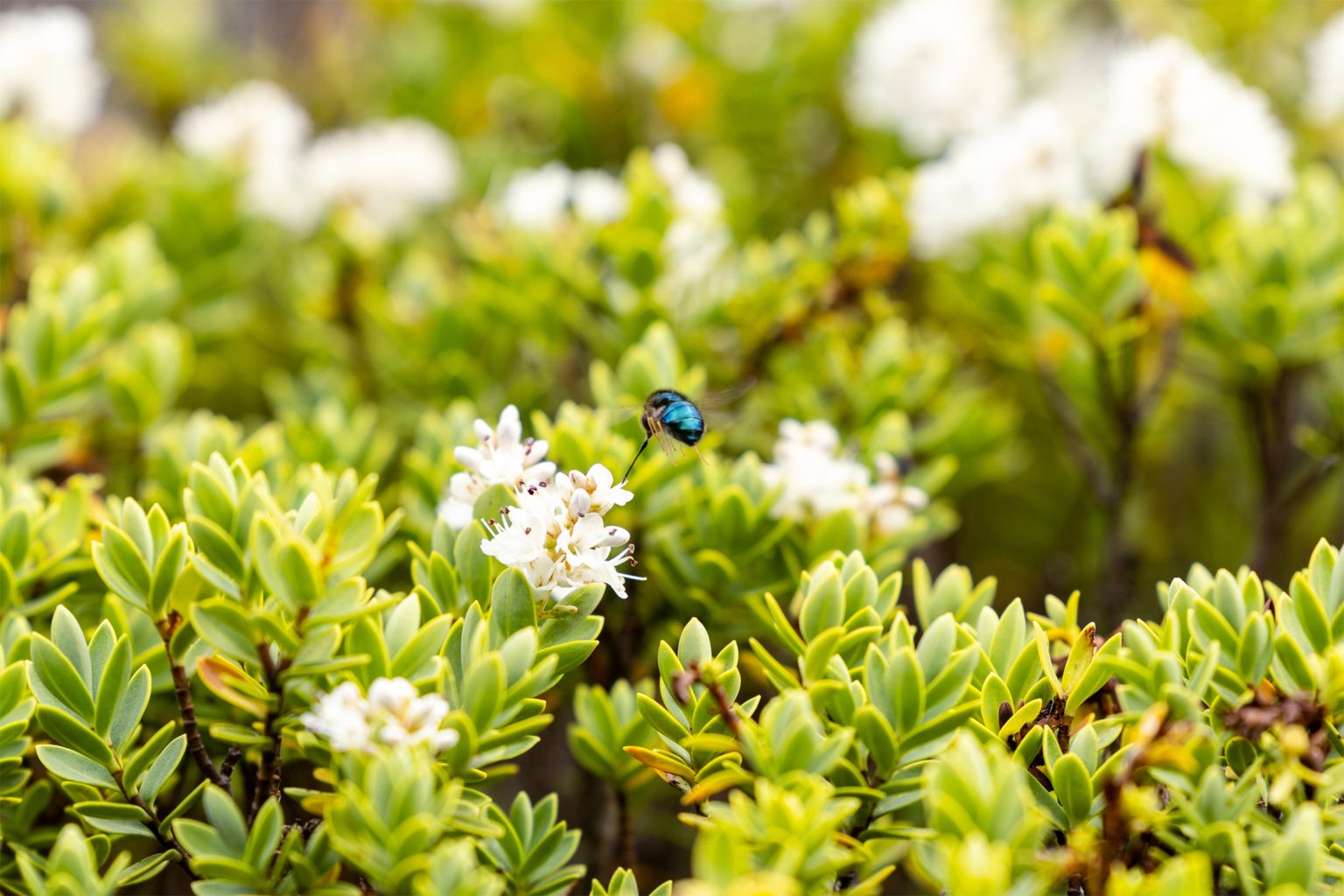
Some fly pollinators have a dark side. The most glamorous – and gruesome – fly on the trail is undoubtedly the sapphire spider fly (Apsona muscaria).
These iridescent blue insects are no bigger than a grain of rice, and they live throughout Aotearoa, especially in subalpine tussocks and scrublands like those in Arthur’s Pass. Experts believe they help pollinate native daisies, trapping pollen in the fine hairs on their bodies as they sip nectar.
But behind the shimmer lies a sinister life cycle. Female spider flies lay their eggs near large spiders, such as the New Zealand tunnelweb. When the eggs hatch, the larvae crawl to their unsuspecting host, climb a leg and burrow into the spider’s abdomen, heading straight for the book lungs, a quiet, oxygen-rich chamber perfect for developing.
Once there, the larva consumes its host from within, and the next summer it bursts from the spider’s body, devours the remains and pupates before turning into an adult fly.
A tramping mascot?
The New Zealand bat fly (Mystacinobia zelandica) has things in common with trampers. For starters, it’s wingless and has to walk everywhere. Its long, hairy legs might remind you of someone who’s been in the bush for a while. And, like a tramper looking for a lift at the end of a long walk, it’s an expert hitchhiker.
Not only do they have no wings, they’re also blind and live quietly in the tree roosts of the New Zealand lesser short-tailed bat. Unlike their parasitic overseas cousins, they live symbiotically with the mammals, feeding on the bats’ guano. Their bristly legs end in special claws that help them ‘swim’ through bat fur.
True to fly form, bat flies are prolific breeders. A single roost can host thousands of eggs, larvae and adults. They rely on bat body heat to survive, so when a colony relocates, pregnant females hitch a ride to the new roost on a bat’s back. And they’re brave. Bat flies are at constant risk of being eaten by their insectivorous hosts. Scientists believe elderly male flies protect the colony by emitting a high-frequency buzz that deters the bats.
There are between 2500 and 4500 fly species in Aotearoa, many only found here, and each has a story worth telling. So the next time a fly photobombs your view or buzzes around your lunch, pause before you swat. It might be a pollinator, a recycler of bat guano or even a secret spider slayer.