A wrap of the biggest stories and best writing about the outdoors from New Zealand and around the world.
Heading into winter, tramping adventures might be quite daunting for most people, but writer Tsewang Nuru Sherpa says it’s a rewarding experience with the proper knowledge and preparation.
Tsewang says hiking in early June, surrounded by the stark and serene landscape under the snowy blanket, absolute stillness, and an absence of fellow hikers, got him immediately hooked on winter tramping.
Tsewang says the cardinal rule for winter tramping is properly planning a trip. Whether you’re heading out for a day hike or an overnight stay, planning is essential to estimate the length of the trip, distance, elevation as well as your own fitness level. Read his full article on Stuff to learn how to be prepared for winter tramping.
Four best island hiking holidays around the world
If winter tramping isn’t your thing, the NZ Herald has compiled a list of the four best island hiking holidays around the world.
On their list is South Catalina Island in California, the Outer Hebrides in Scotland, Waitukubuli National Trail in Dominica, and Hinchinbrook Island in Queensland.
If you’re ready for an unforgettable island adventure, lace up your tramping boots and check out one of these multi-day island hiking adventures.
How to reach flow states while hiking
The first to coin the term and one of the first to study flow states in-depth, Mihaly Csikszentmihalyi based his research on the Zen-like states that artists, athletes, and musicians slip into when they reach peak performance.
States of flow are often associated with laser-sharp focus, creative thinking, and spurts of superhuman productivity. When you drop into a flow state, your brain triggers a rush of dopamine, serotonin, and other feel-good neurotransmitters. Basically, your brain catapults you into a rainbow ball pit of neurochemical bliss.
If you’re prepping for a big tramping trip or summit push, mastering flow could give you an edge. Read Backpacker’s tips to help you get into the zone.
Mt Everest sherpa disgusted by climbers’ rubbish
Tenzi Sherpa, a sherpa working on Mt Everest, has shared shocking footage exposing the mess left behind by climbers camping on Mt Everest. Sherpa posted footage showing scores of abandoned tents, empty oxygen bottles, sanitation pads, paper, steel bowls and other piles of scraps that left Mt Everest looking like a rubbish dump.
He wrote: “The dirtiest camp I have ever seen. Clean mountain campaign has been begun from many years ago, although the campaign did a good effort to clean [the] mountain … companies leave their trash on the mountain, so it’s going to be hard to clean.
Nepal issued 478 climbing permits for the current season, surpassing the previous record of 408 permits set in 2021. Read the full story in the NZ Herald.
How a movement started to save our mountain huts
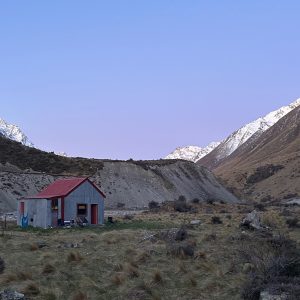
Lou Sanson, a former Director-General of the Department of Conservation, has written an article for the Waikato Times on the history of groups pushing since the late 1990s to save NZ’s mountain huts.
On the West Coast, where 40 remote huts were getting minimal maintenance, emerged a group of mad keen remote hut enthusiasts led by Andrew Buglass from Hokitika. He started a website, www.remotehuts.co.nz. to provide route instructions and what needed to be done to the hut to repair it. No fundraising was ever needed as enthusiastic supporters donated small amounts throughout the process.
The work is gaining international recognition. A Canadian filmmaker is completing a film for the International Mountain Film Festival circuit on how a conservation movement started to save one of New Zealand’s most valuable recreational assets – the 1000 backcountry huts no other country has.