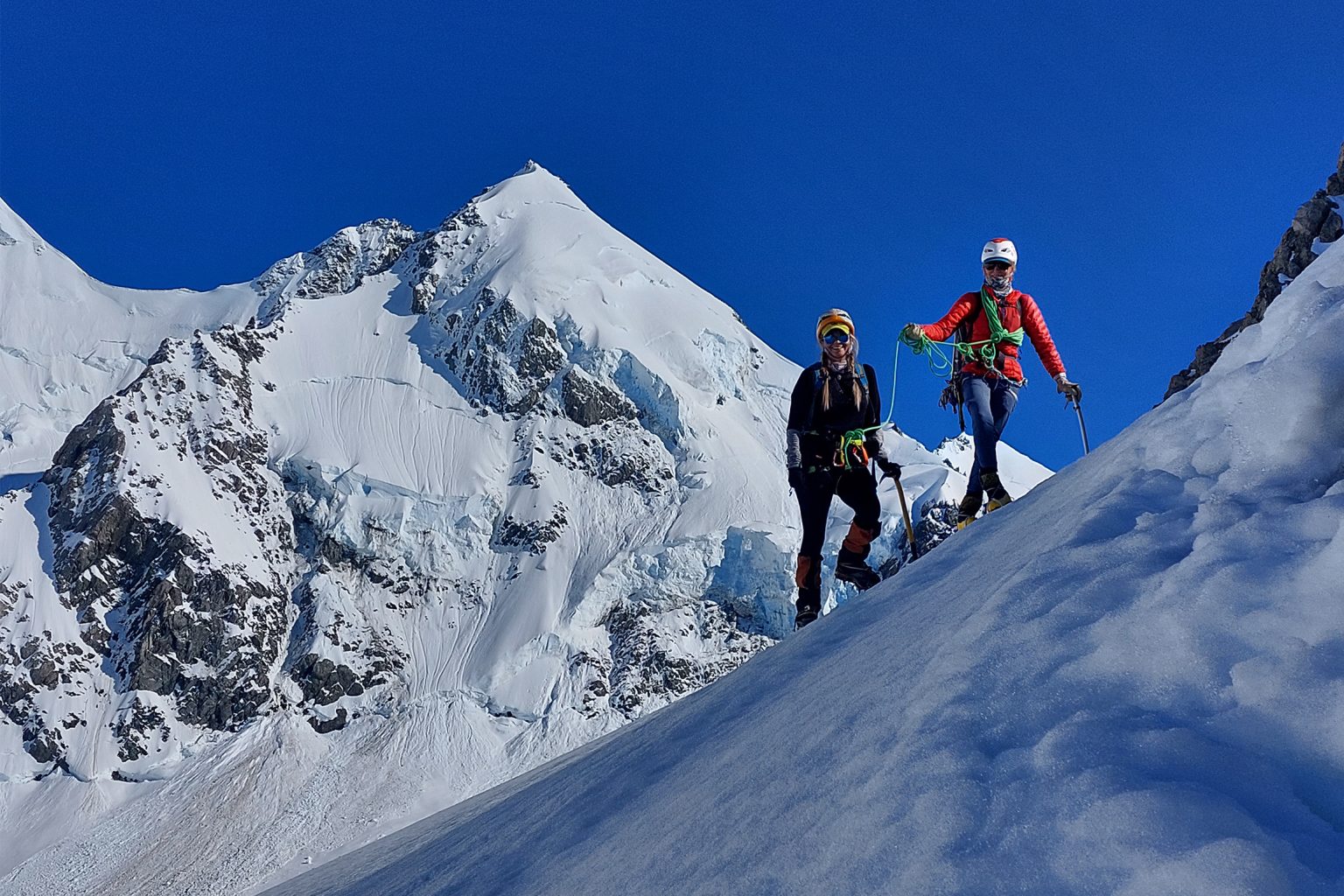
A research project involving mountaineers and mana whenua is tackling the issue of human waste in Aoraki/Mount Cook National Park.
Climbers are being encouraged to pack out their poo this alpine season, and to consider the implications of not doing so.
Te Whare Wānanga o Waitaha University of Canterbury researchers and partners have created a new video, Climb It Clean.
“We hope this video taps into people’s love of the mountains and makes them think about simple steps to reduce their impact. We know people want to do the right thing, environmentally and culturally, and this video shows them how,” says associate professor Chris North.
Human waste does not break down above the snowline, polluting the environment and causing sanitation problems downstream.
It is also culturally inappropriate to leave it behind.
In the video, Te Rūnanga O Arowhenua upoko (head) Tewera King explains that Māori view Aoraki Mt Cook as a living entity. “We view it as a tipua (revered being), as a tupuna (ancestor), and as the big daddy … We don’t like people crapping on it. Would you really want to crap on one of your ancestors or one of your close relations?”
Climb It Clean stems from a research project, co-led by North and senior lecturer Toni Torepe (Ngāi Tahu), which is investigating the issue of human waste in Aoraki/Mount Cook National Park. Torepe traces her whakapapa to Arowhenua, which has kaitiakitanga (guardianship) of Aoraki. The project has a kaupapa Māori (Māori values)-led research approach and, in a quest to find a solution, has brought together Te Rūnanga o Arowhenua, mountaineers, behavioural psychologists and product designers.
The researchers are currently working with mountaineers to better understand their needs and behaviours and to trial a waste disposal product. New Zealand Alpine Club (NZAC) and Canterbury Mountaineering Club members can sample the pack-out kit, donated by US company Pact Outdoors, then complete a survey.
“We’re trying to work out how many people are taking the free product with them, and how many are willing to use it,” says North. “We really want people to respond to the survey, even if they take the product with them and don’t use it.”

In an earlier phase of research, 461 NZAC members responded to a survey about their waste disposal habits, where they climb, and their knowledge of mana whenua and cultural practices. Just 12 per cent of respondents mostly or always carried out their solid waste, and only 11 per cent had a sound understanding of Māori culture in the areas where they mountaineered. But there was a desire to learn more and do the right thing, North says.
“Many mountaineers mentioned that they didn’t have a huge amount of knowledge about mana whenua and their aspirations for the mountains, but there was real interest there.”
The project came about after the NZAC discovered it was spending more on flying out human waste from its huts than it was collecting in hut fees. North, who founded the New Zealand branch of Leave No Trace, got involved, and reached out to Torepe.
Early on, a week-long exchange of knowledge programme saw four mountaineers and four Arowhenua whānau members travel from Plateau Hut on Aoraki to Arowhenua pā, visiting sites of cultural significance on the way. Based on the tuakana–teina model (older/more experienced sibling–younger/less experienced sibling), both groups had the chance to lead and share skills and knowledge.
“The more we’re able to talk about different issues and kaupapa, the greater the understanding in our community,” says Torepe.
One outcome of the trip was the need for a practical, sustainable and culturally appropriate product that would enable mountaineers to remove their waste.
But finding a solution is not straightforward. No product yet exists that is both leak-free and biodegradable, and many mountaineers are concerned about putting more plastic into landfill.
The video is part of the next steps: sharing findings to date.
“Sharing what we’re learning is our next hot priority,” says North. “We owe it to mana whenua and to mountaineers who have given so generously.”