Troubled waters

January 2016

Read more from

January 2016

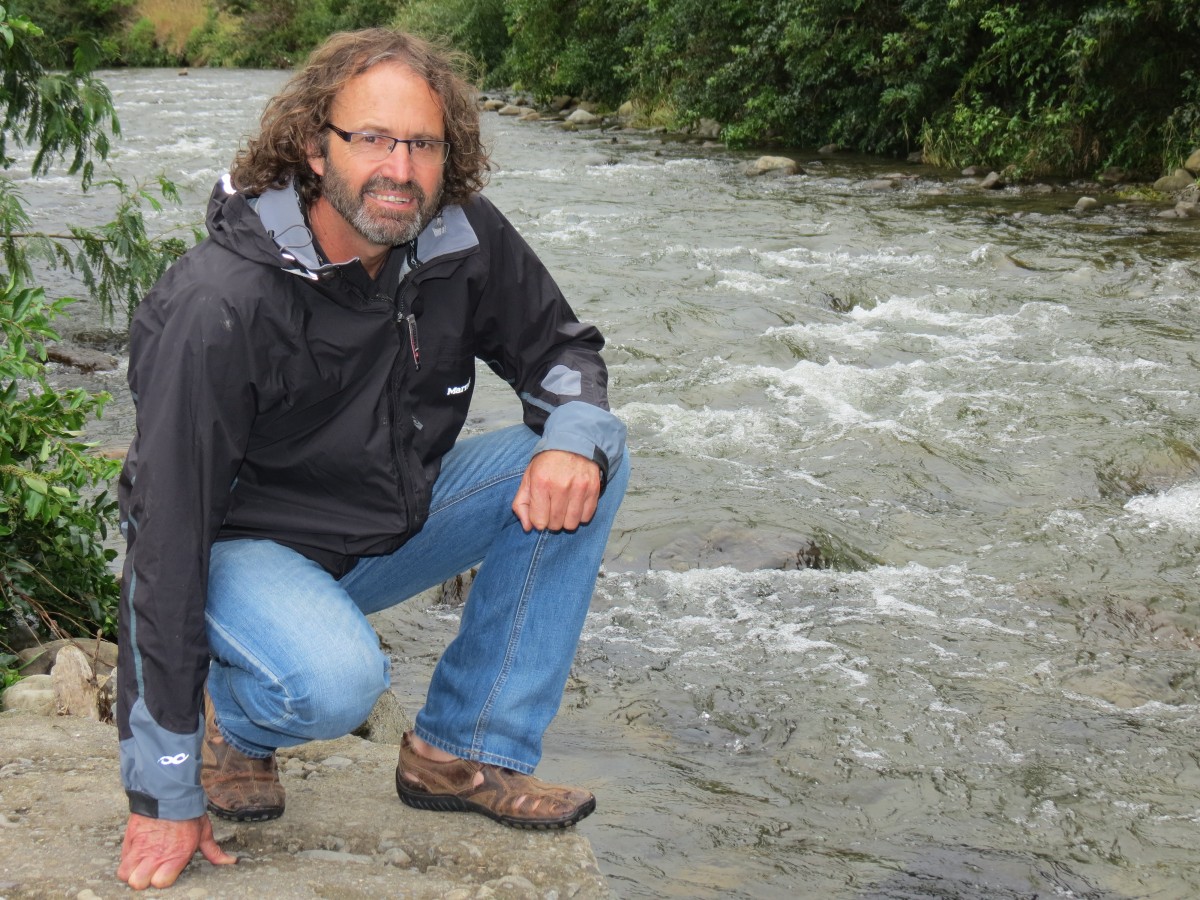
Mike Joy says the government doesn't want us to know what’s going on with our waterways.

Mike Joy, author and senior lecturer in ecology and environmental science at Massey University

It’s like the neglected child of our environment. While the state of our birdlife and forests are at least on the government’s radar, the condition of our rivers is a far murkier story, says Mike Joy.

Mike says the state of lowland rivers is getting progressively worse. He describes the latest legislation as “the biggest backward step on freshwater protection possibly ever in this country”.

He says successive governments are to blame, but none worse than the current government. “They believe in property rights and the idea of doubling agricultural production, but aren’t thinking how this might affect the environment.

“There’s a lot of PR and spin – they don’t want people to know what’s going on.”

Mike says the major contributor is intensive farming. He says that milk production has quadrupled in the past 20 years using only a small increase in land, meaning an artificially high number of cows, thus a huge increase in urine and fertiliser going into the ground and, subsequently, the waterways.

Mike’s book, Polluted inheritance – New Zealand’s freshwater crisis, is an attempt to get his message out to everyday people by giving them something quick and easy to read (it’s just 60 pages).

He writes of the increasing threat to our rivers and the need to remove political ideology from determining how the environment is managed and focus instead on sound science.

The extent of river quality decline first hit home when he took his young niece and nephew swimming at the Oroua River near Palmerston North; both subsequently fell ill, one needed hospital treatment. “I talked to the locals and they said ‘you don’t swim down there, it’s polluted’.”

Mike, age, remembers when swimming in lowland rivers was perfectly safe. He recalls school picnics to Coes Ford in Canterbury’s Selwyn River which, like 90 per cent of lowland rivers, is now no longer safe for swimming. He’s also seen the rapid rise in the percentage of freshwater species considered threatened from two per cent when he started studying to 74 per cent today.

Although he hoped strong, enforced, legislation would help the situation, Mike believes the decline in dairy prices is doing the job instead. “This is not the way I wanted it to turn out. Now we have the situation where farmers have huge levels of debt. It’s very hard on them, their families, rural contractors – all people in deep shit at the moment. It’s having the restriction on expansion that I wanted, but not for the right reasons.

“What a sad, horrible way for it to happen.”

Matthew Pike

About the author

Matthew Pike

More From Wild People

Similar Articles

Hiking the length of Aotearoa in traditional Japanese sandals

Former Bivouac owner farewelled

The three trips that changed my life: Nic Low

Trending Now

Green Point Hut, Gamack Conservation Area

Every Tararua hut reviewed and ranked

The possibilities of packrafting

Ministry of Works Historic Hut, Kahurangi National Park

The Tararua’s forgotten traverse

Subscribe!
Each issue of Wilderness celebrates Aotearoa’s great outdoors — written and photographed with care, not algorithms.Subscribe and help keep our wild stories alive.

Join Wilderness. You'll see more, do more and live more.

Already a subscriber?  to keep reading. Or…

34 years of inspiring New Zealanders to explore the outdoors. Don’t miss out — subscribe today.

Your subscriber-only benefits:

All this for as little as $6.75/month.

1

free articles left this month.

Already a subscriber? Login Now