A loop comprising three tracks that climb from Hūnua Falls through lush forest to Cosseys Dam and back.
A highlight of this walk, the 30m Hūnua Falls, is within sight of the car park, itself an easy one-hour drive from the CBD. It was quite different in Victorian times, when visitors travelled by steamer to Clevedon then walked to the waterfall.
To view the falls from below, take the short path over the footbridge to the right of the cleaning station in the Hūnua Falls parking area in Falls Road.
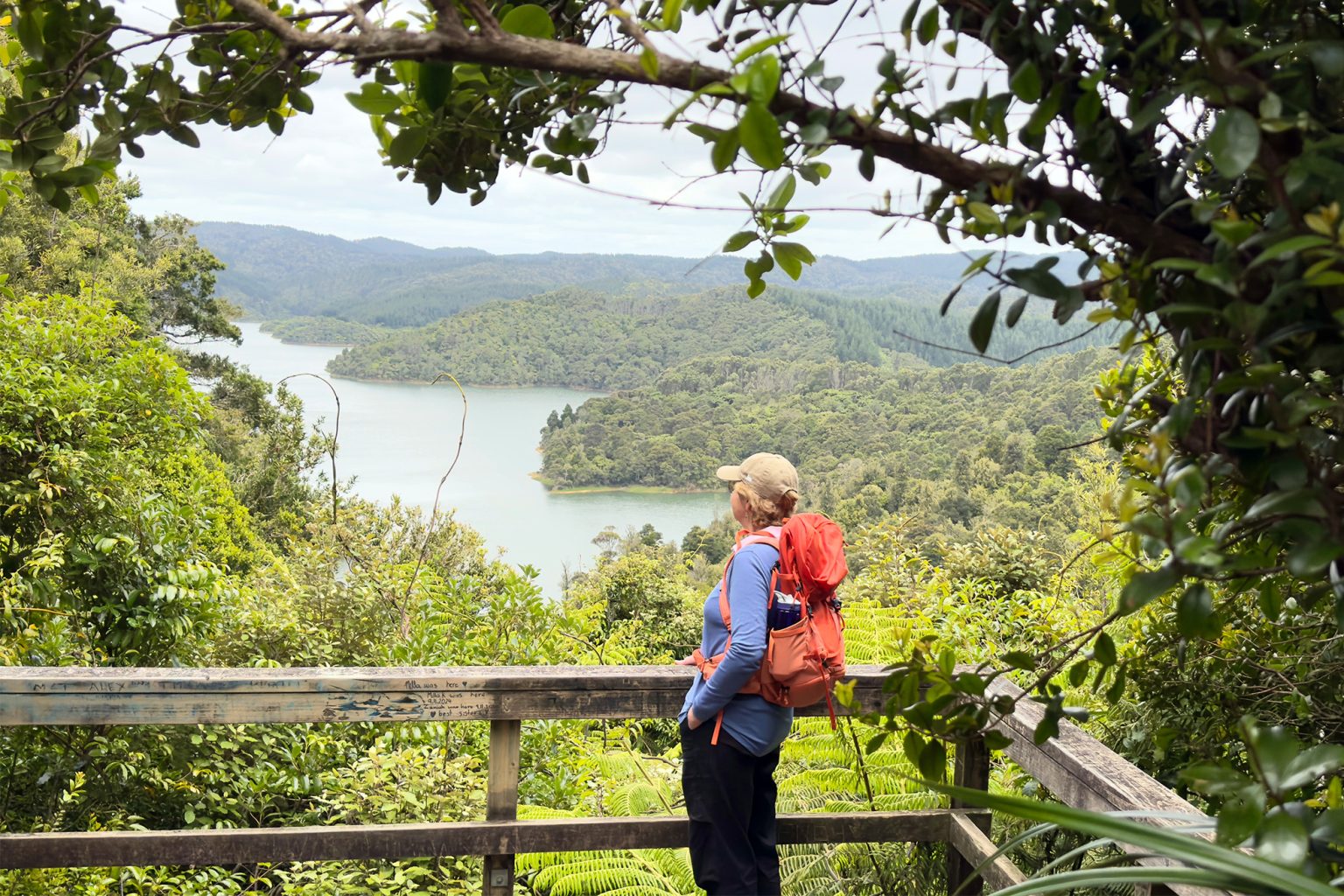
For the loop track, return to the car park, pass through the cleaning station and cross the bridge over the Wairoa River to Cosseys Gorge Track on the left. After 480m turn right onto the Hūnua Falls Loop Track to a lookout and a panoramic view of the forest and the falls.
Return and continue on Cosseys Gorge Track past the intersection with Massey Track and cross Cosseys Stream.
Cosseys Gorge Track now leads to Cosseys Dam (30min) where there is an information board and, two minutes further on, a toilet block and seating. Signage explains the dam’s construction and management of the tuna (freshwater eel) population.
Turn right down the path leading to the crest of Cosseys Dam, one of four dams in the Hūnua Ranges that together provide around 60 per cent of Auckland’s water supply.
The path rises gently from the end of the dam. At 3.5km take Wairoa Cosseys Track to a lookout to enjoy expansive views of the dam and native and exotic forest blocks in the distance. Bird calls are frequent during the steep and stepped climb to the highest point on the loop (308m).
At 5.1km take the Massey Track to the right. There are views of the forest and undulating farmland beyond as you begin the long and gradual descent to the intersection with Cosseys Gorge Track. Turn left to return to the car park.
In one of the largest revegetation projects in Aotearoa, Watercare, Auckland Council and volunteers are gradually replacing exotics with natives in the Hūnua Ranges. This will help safeguard the quality of the water supply and, when combined with other conservation efforts, especially predator control, will help preserve habitats for resident native species, such as the critically endangered kōkako and elusive Hochstetter’s frog.
The track can be walked in either direction.