This tiny bird has a unique behaviour that allows identification from a distance
The grey warbler is New Zealand’s most widely distributed endemic bird species, occurring everywhere on the three main islands where there are trees or shrubs. Alpine tussock is about the only habitat you’re unlikely to find grey warblers.
Typically, they are found only in woody vegetation, in mid to high levels of the canopy, making them difficult to observe.
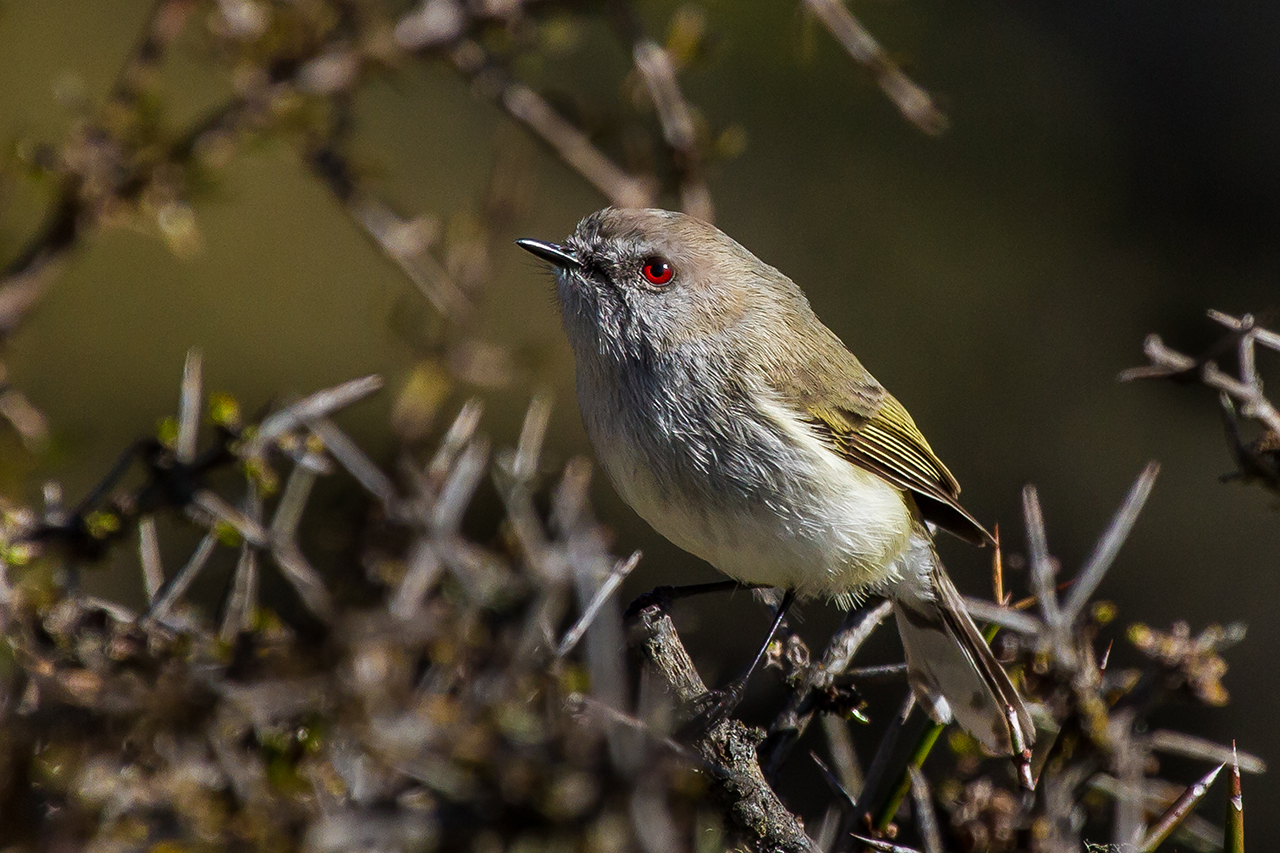
Grey warblers have an olive-grey back, a grey face and off-white under parts. The tail is a darker grey, getting darker towards the tip. Contrasting this, the tail has white tips which show as a prominent white band in flight. The bill is black and finely pointed. The blood red eye is its most distinguishing feature.
The male has a long trilled song which, given the bird’s size (6g, 11cm), is louder than expected. Females give short chirp calls, usually as a contact call to the male.
The breeding season runs from August to January, when a hanging, dome type nest is built in the outer branches of the canopy, 2-4m off the ground. North Island grey warblers raise one brood per season whereas South Island birds are typically double-brooded.
Usually associating as a pair, the grey warbler is the only New Zealand bird that is able to hover, making them identifiable from a long distance by behaviour alone.
Their diet is entirely insectivorous, feeding mainly on caterpillars, flies, beetles, moths and other small invertebrates often gleaned from outside the canopy using their unique hovering technique.
– Matt Winter is a Marlborough-based nature photographer
An ethical guide to visiting the Muriwai gannet colony
Trending Now
The possibilities of packrafting
The Tararua’s forgotten traverse
Every Tararua hut reviewed and ranked
Mt Somers via Te Kiekie Route, Hakatere Conservation Park
Green Point Hut, Gamack Conservation Area
Subscribe!
Each issue of Wilderness celebrates Aotearoa’s great outdoors — written and photographed with care, not algorithms.Subscribe and help keep our wild stories alive.