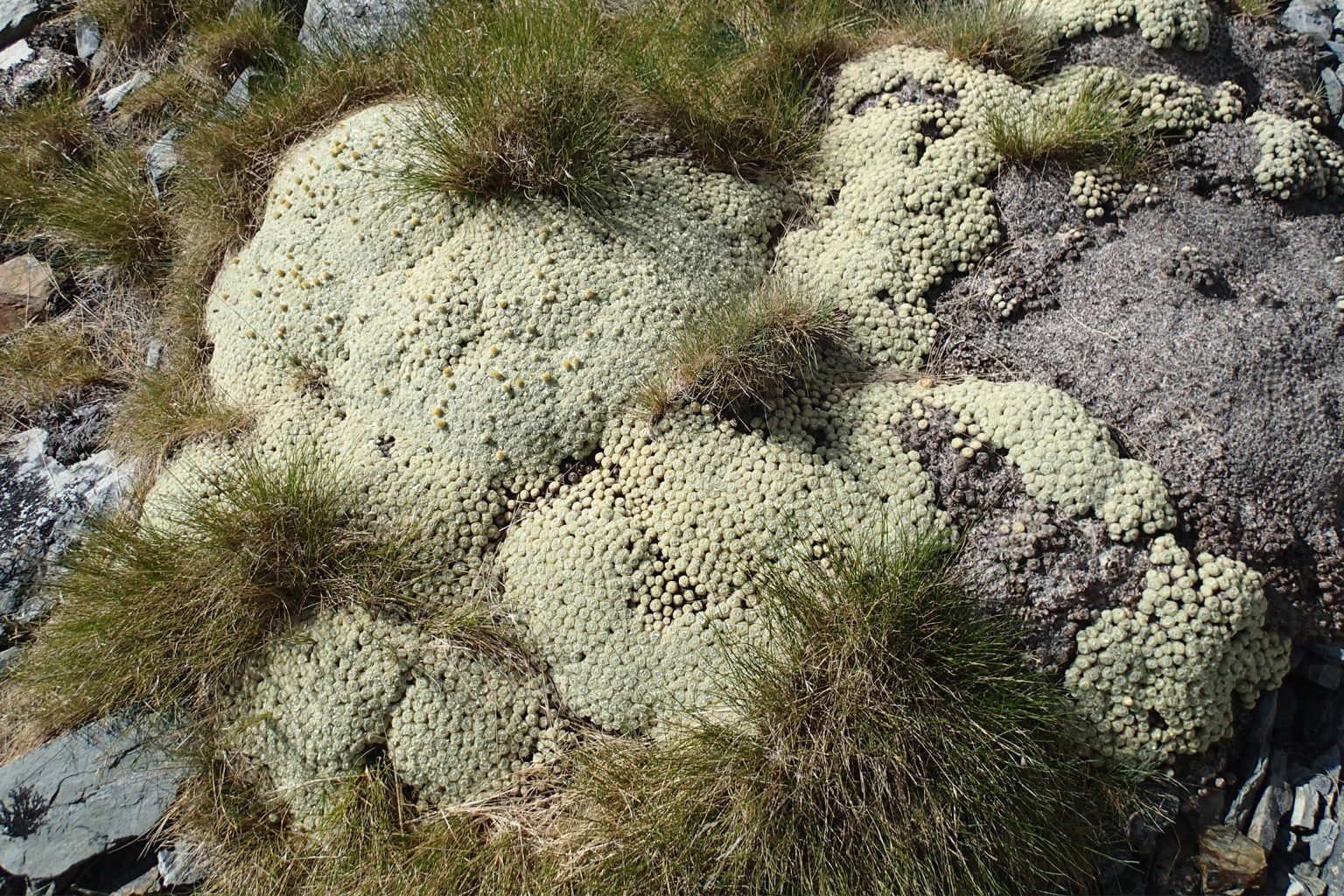
All is not as it seems with the unique plant, the vegetable sheep. Neither vegetable nor sheep, they’re daisies.
New Zealand is famous for having over 20 million sheep, but that’s only the mammalian ones. High in the mountains and in some river beds we also have vegetable sheep. These extraordinary plants belong to the daisy family and occupy an interesting niche in both the ecosystems and the ethnobotany of Aotearoa.
When kea were first recorded attacking sheep in the 1860s, people theorised that the alpine parrots were mistaking the mammals for vegetable sheep. This theory had some glaring holes, however. First, vegetable sheep did not grow in places where kea were seen harming animals. Second, no one had ever recorded a kea tearing apart a vegetable sheep. The only solid fact in the link between kea, sheep and these large alpine plants is that the plants really do resemble sheep – at least when viewed from a distance.
Vegetable sheep can be big. So big, that when a specimen was collected for the 1906 International Exhibition held in Christchurch, a large stretcher was built to cart the plant down from the Torlesse Range. The largest vegetable sheep – from the endemic genus Haastia – can grow up to three metres across and half a metre tall.
Until recently it was thought Aotearoa had only one species of vegetable sheep in the genus Haastia. However, Callum Nicholls from the University of Canterbury has identified two distinct species in this genus. Altogether, New Zealand has nine species of vegetable sheep; the remaining seven species belong to another endemic genus, Raoulia. These genera are named for the early scientists Julius von Haast and Etienne Raoul.
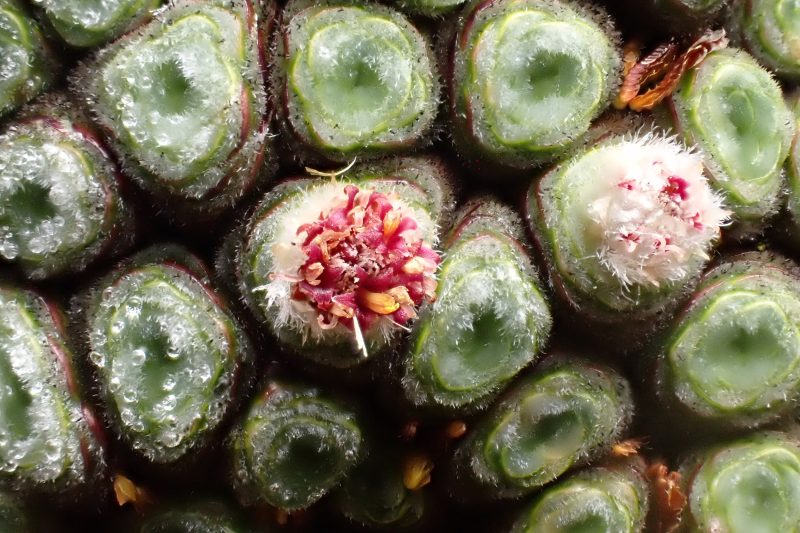
The grey and white forms of Raoulia (four species: R. bryoides, R. eximia, R. mammillaris and R. rubra) and two Haastia species (H. pulvinaris and H. minor) are the ones most likely to be mistaken for sheep. The southernmost species of South Westland and Fiordland (R. buchananii) and Rakiura (R. goyenii) are grey-green and sport magenta flowers that contrast beautifully with their leaves.
Vegetable sheep form cushions of densely packed stems with leaves clustered at the ends of the stems in tight whorls. Together, the stems and leaves form an impermeable surface, creating their own micro-environment beneath the ‘canopy’. Old, decaying leaves trapped beneath the tightly packed surface eventually form a moist humus, providing the plants with an additional source of nutrients and water.
Vegetable sheep forming Raoulia can be found on all three main islands of Aotearoa; those of Haastia are found only in the mountains of the South Island. Raoulia rubra is endemic to the Tararua Range, and Raoulia goyenii is endemic to the alpine areas of Rakiura Stewart Island. All other species are found in the South Island, and the majority occur in the top of the south.
Raoulia haastii forms flatter mats and is especially common in the braided riverbeds of the South Island. The rest exist in alpine herbfields or cling to bluffs and scree. The most spectacular are those of high rocky places.
Get close, give one a pat and feel the soft (even woolly, in the case of Haastia pulvinaris) hairs. If they’re flowering, give them a sniff: some are sweetly scented to attract the moths, flies, native bees and beetles that pollinate our indigenous flora. Tread lightly, however, as these giant daisies are old and slow growing.