

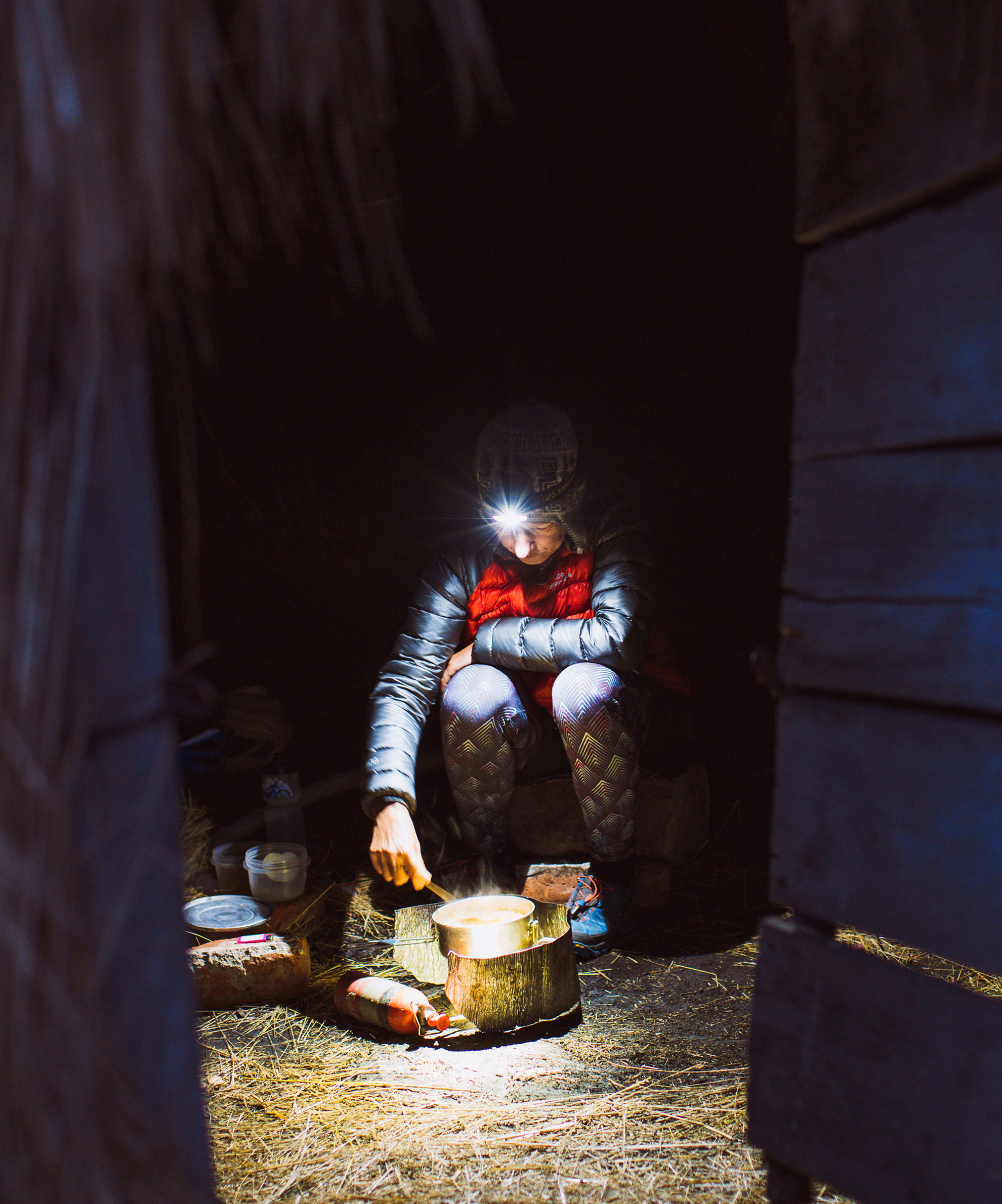
We almost had to eat cold freeze-dry on the first night of that epic journey, though. At the end of day one, after leaving the Arctic coast at Deadhorse and cycling 115km on the Dalton Highway, we set up camp for our first night in the Alaskan wilderness. Out came the stove, and shortly after pumping it up to pressure, out came the fuel, too! Having sat unused for several months, a pump seal had dried and cracked. Our precious fuel was leaking onto the tundra. But any sensible MSR owner carries one of the brand’s nifty repair kits with spare O-rings, so we were able to replace the seal, get the stove cranking, and get back to watching for grizzlies.
While the fuel seal problem served me right for not checking the stove before the trip, I’ll blame it on the fact that the stove had veritably hummed along for so long I’d more or less forgotten they require a bit of attention from time to time.
It’s a miracle the stove had worked so well for so long considering the myriad questionable fuel sources we used in 16 different countries in the Americas. In fact, aside from cleaning the burner jet a few times, we did little maintenance in nearly four years. But one day in northern Argentina it just stopped. The fuel was no longer reaching the burner head. There would be no coffee that morning.
The stove’s reliability in spite of dirty fuel, desert dust, freezing nights and years in a pannier, meant we’d never once cleaned the fuel line. On that day it was all too much and it seized. Whisperlite fuel lines have an in-situ stainless steel cable which can be drawn through the line with the included multipurpose servicing tool, to scour out the gunk. But so gunked was ours, it would not move one millimetre. We went to a workshop where they put the cable in a vice and tried to yank it out. No luck. We poured a different solvent down it. Still jammed.
We rode to another workshop where they had a blowtorch. Two guys opened up a dirty old garage for us. It looked more like a museum than a place where you’d fix anything, but they picked up a small gas torch, like you’d use for paint stripping, and proceeded to scorch the fuel line. After a few minutes of black smoke billowing out of the end, it finally got hot enough to carbonise 16 countries’ worth of fuel gunk, and with a good tug in the vice the cable freed itself from the fuel line along with a lot of black crud. Some vigorous cleaning followed, the fuel flowed again and dinner that night was hot.



