The best advice is to stay put and wait for rescue, but on some occasions you will have to get yourself out – here’s how.
“If someone is rushing they may not be thinking clearly,” says Chris Owens, Mountain Safety Council Bushcraft programme manager. That could lead them to blindly race through the bush and over a bluff or they might suddenly find themselves in an unsafe spot like an avalanche path area or rock fall area. “People think better when they are calm rather than under pressure,” says Owens.
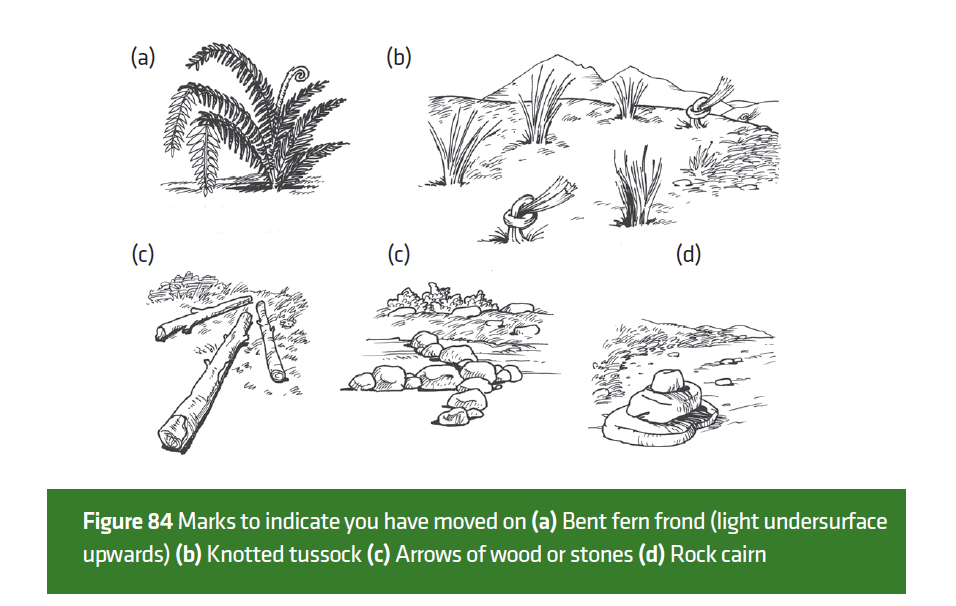
Before heading off make a cairn or an ‘X’ with some sticks so you know your start point. “Maybe you’ve walked in the direction you think is safe and you’re bluffed and you can’t go any further,” explains Owens. “You can return to your start point and you’ll know not to go that way again.”
Diagram D: Mark your start point with a cairn
Eventually, people will come searching for you but how can they tell which direction you might have taken? “If you don’t make a mark, they don’t know you’ve been there,” says Owens. Marking your route is also invaluable if you have to backtrack.
Diagram C: Show rescuers which direction you travelled
- Follow obvious trails and features
Goat tracks and deer paths are like highways in the bush and will help conserve your energy, says Owens: “If something has gone through several times it usually makes travel much easier.”
Animals also know their way around obstacles such as waterfalls and bluffs, so as long as they are heading in the direction you want to travel, follow them.
As you travel you need to constantly check behind you – the view of your route will be completely different and unless you know what it looks like you won’t be able to recognise if you’re going round in circles. “If you take note of where you’ve been, you can recognise if you’ve already been in a certain spot and stop, sit down and think about your next move,” says Owens.
- Don’t leave any equipment behind
You never know what you might need in a survival situation. Something you think isn’t important at the time might turn out to be vital. “You might leave a mug or billy behind and then find you have to transport water over a distance,’ says Owens. “A pack liner can be a shelter or a bivvy.”
- Rest and refuel frequently
Rest is good because you stop, think, look around, drink and possibly eat. “Conserve your energy rather than go for four hours without stopping and becoming addled and breathing fast,” says Owens. “If you pace yourself you’re in more control of the situation.”
Lost? Use the STAR system
- Stop Take a breath, sit down, remain calm
- Think Look around you. Listen and brainstorm options.
- Assess Evaluate the options and their potential consequences.
- Respond Take the best alternative.