Walking the Tongariro Northern Circuit a couple of winters ago, I met up with an outdoor instructor on his day off in the car park. We walked together and got to talking about his career in the outdoors and I marvelled at his commitment to spend his downtime in the mountains.
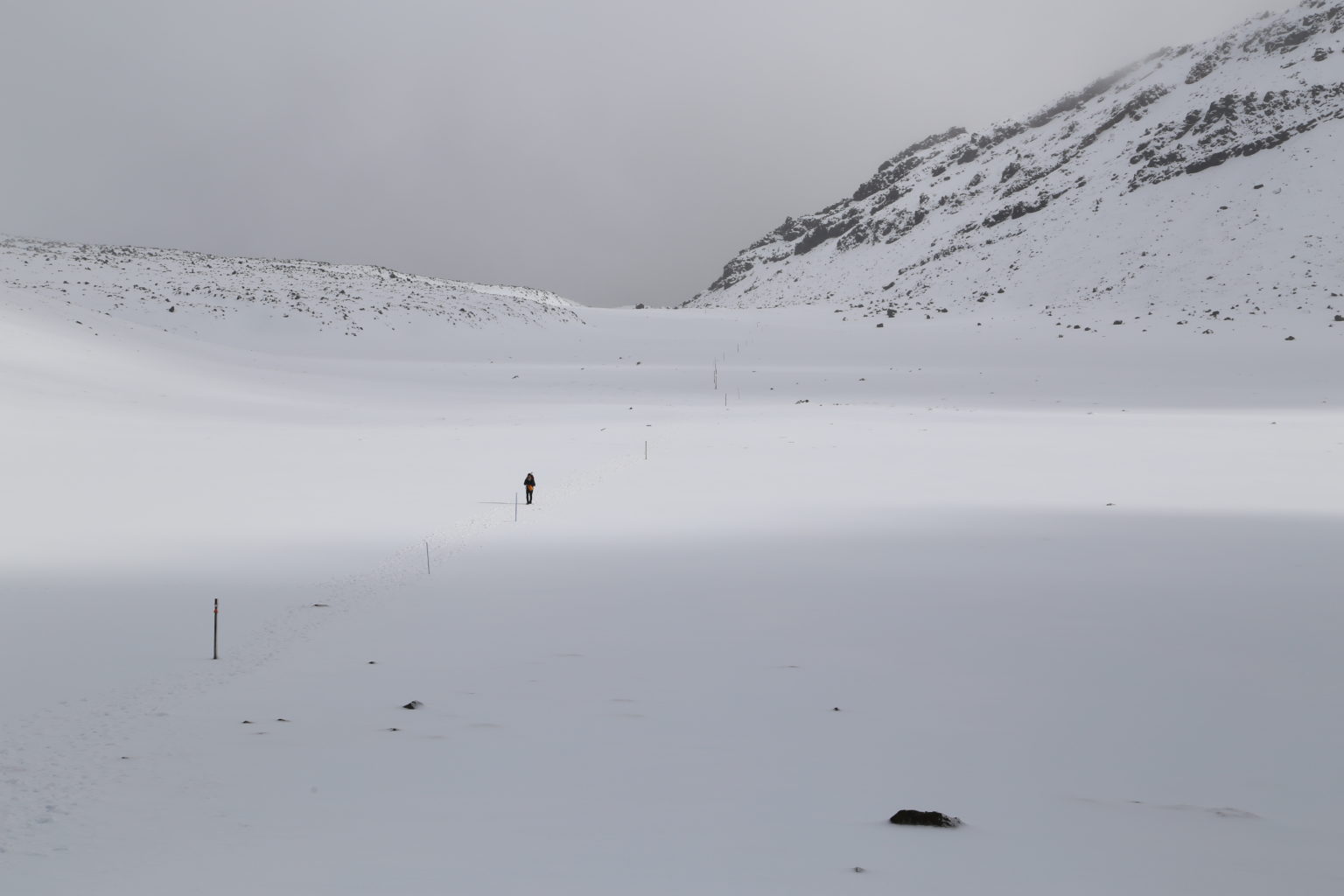
At South Crater, as we stomped through the snow, a lone tramper appeared a few hundred metres behind us. My companion immediately started making comments about the likelihood of the tramper being unprepared for the conditions. Even from this distance, his trained eye could see something wasn’t quite right.
At the eastern end of South Crater, we climbed to the ridge leading to Red Crater and sheltered behind a large rock. It was impossible to walk further without crampons; the soft snow was replaced with concrete-hard ice, it was -9֯ and the wind was howling, throwing ice particles like darts.
The lone tramper arrived and the instructor peppered him with questions. Where are you going? Have you done any winter tramping before? Do you know how to use crampons? Can you self arrest? The tramper responded with vague answers and assurances. With Crocs and other items strapped to the outside of his pack, he looked like he should be arriving at a backpackers, rather than undertaking a serious alpine tramp.
Shrugging off the questions, the tramper continued on, but as if in answer to the more probing questions, he promptly slipped on the ice and skated, cartoon-like while grabbing hold of rock. The instructor also shrugged, as if to say ‘What can you do?’, and then returned back to the car park.
While the tramper put on his crampons, I suggested we walk together, to which he gratefully agreed.
Together, we easily made it to Oturere Hut. But I was given a lesson in care for others that day. In the outdoors, we have to be self-reliant but we also need to look out for one another.
There’s no harm in speaking up and asking a tramper their intentions. It’s something we delve into in greater depth in the feature, ‘I think you should turn around’ on p44. Several people recount instances of ‘speaking up’ and how their actions helped save lives.
If you meet someone on a trail who seems unprepared for what lies ahead, gently suggesting they turn back or try a different route might be just the nudge they need to pause their trip and reconsider their options. Ultimately, they may be glad of your suggestion.