Only found in the South Island, the southern crested grebe has an interesting method of disposing of bones.
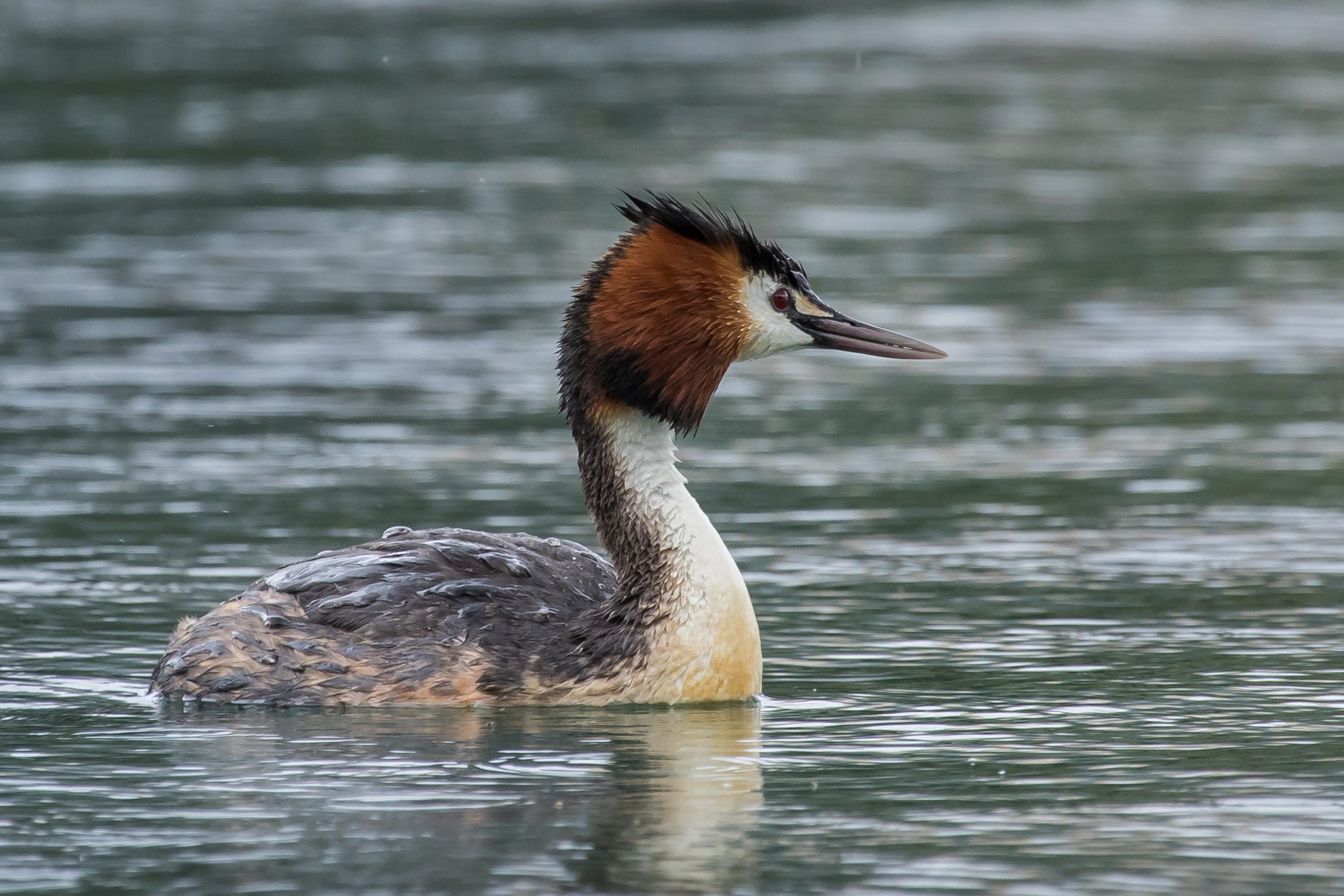
The southern crested grebe (puteketeke) would undoubtedly be one of our most majestic and elegant birds, with its distinctive bright chestnut and black cheek frills, used in its complex and bizarre mating displays.
A moderate-sized water-diving bird, it can be mistaken for waterfowl or shags when seen at a distance. The upper plumage is a dark chestnut-brown, the underparts are silvery-white and the wings have distinctive white patches that are only seen in flight. The neck is long and slender, as is the fine black bill. The feet possess a peculiar lobed structure, which increases the efficiency and speed of diving, and are set relatively far back on the body. Young and juvenile birds look completely different, with a black and white striped head and neck and grey body plumage. Adult birds are generally 48cm-61cm tall and weigh 1100g.
Puteketeke are found in about 100 lakes in the South Island, ranging from small tarns to large glacial lakes, but are now extinct in the North Island. Their strongholds are in the Canterbury and Otago high country. In Nelson, Marlborough, West Coast and Fiordland they are rarer and have declined significantly.
They breed between September and March and construct floating nests, made of sticks and water weeds, which are often attached to willow branches or reeds.
They lay between five and seven eggs, which are incubated by both parents (eggs are covered with weed when not being incubated) and they both also care for the young, which are carried on their backs when small. The incubation period lasts 26 days. Interestingly, the young can swim after just two days and can dive after a week.
The puteketeke mainly eat fish and occasionally aquatic invertebrates (especially larvae) and weed, which they forage for at depths of two to five metres. By swallowing feathers to help form ejectable pellets, sharp bones are prevented from entering the stomach and damaging the intestines.
An ethical guide to visiting the Muriwai gannet colony
Trending Now
Green Point Hut, Gamack Conservation Area
Every Tararua hut reviewed and ranked
The possibilities of packrafting
Ministry of Works Historic Hut, Kahurangi National Park
The Tararua’s forgotten traverse
Subscribe!
Each issue of Wilderness celebrates Aotearoa’s great outdoors — written and photographed with care, not algorithms.Subscribe and help keep our wild stories alive.