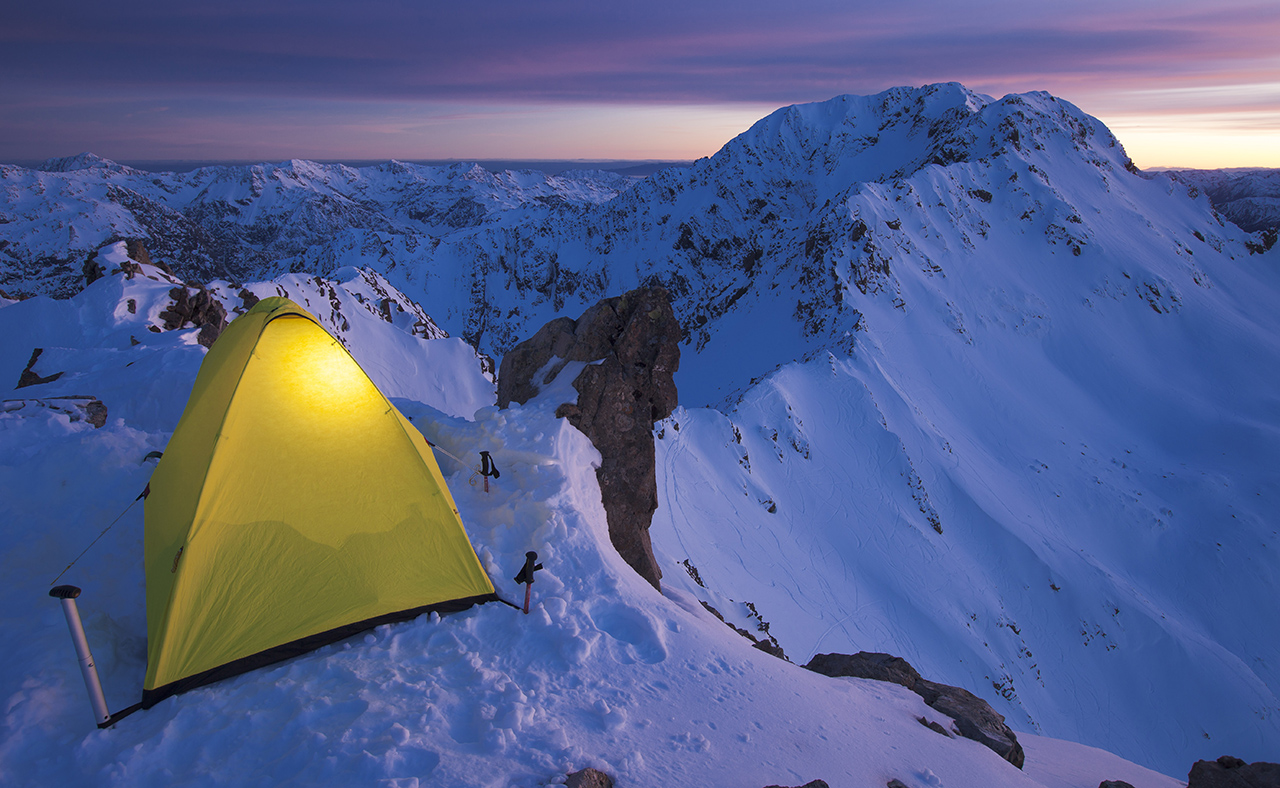
Trips into the alpine zone will sometimes necessitate snow camping, which is a novelty in itself and requires quite a bit more consideration than summer camping; avalanche risk, site exposure and secure pitching of your tent all need consideration.
Room with a view
The three main considerations when picking a site are avalanche exposure, shelter from the wind and making sure you have an awesome view – right from the door. While some may think the latter is of prime importance, it’s not much use if you get buried in the middle of the night. So read up on avalanche hazards and check avalanche.net.nz before you go into the hills. Ideally you’ll find a site that has natural protection from prevailing (or potential) wind, but if not it’s a quick job to build a snow wall with the shovel that you kindly asked your partner to carry up. While natural wind shelter is great to find, be aware that if you camp too close to a rock wall spindrift buildup or heavy snow fall can fill in the gap between your tent and the wall, so it’s good to have a bit of space.
Anchor it
If you’re going above the snowline, leave the tent pegs at home. You’ll be using rocks, ice axes, crampons and walking poles to anchor your tent. It’s a good idea to tie some 1.5m lengths of cord to the peg anchor points for tying off to rocks or anything else you bury to anchor the tent. Don’t forget to make sure it’s solidly anchored if you head out for a day trip. Buried stuff sacs filled with snow make good anchors.
Water
If there isn’t a flowing stream or tarn nearby, you’ll be melting snow for water. This uses considerably more fuel, so take extra and try to only melt what you need. Snow melts faster if there is already some liquid in the bottom of the pot. To get going more efficiently in the mornings it’s a good idea to melt at least the water you will need for breakfast the night before and stash it in your sleeping bag. Wide-mouth water bottles (Nalgenes) are much more useful than soft drink bottles. It’s a good idea to find a flat rock to run your stove on; it’ll stop it from melting into the snow and make butane/propane stoves run better.
Hygiene
Think about taking a poo pot with you, as frozen ground or a deep snow pack will mean you can’t bury your number twos. Don’t be the person who leaves behind a stinky treat for others when the snow starts to melt.
Comfort
There’s a good chance your boots will freeze overnight, so it’s worth carrying a couple of plastic bags for stashing the boots in your sleeping bag. Keeping the ventilation on your tent open (if there’s no spindrift) will help keep the inside from freezing up due to your exhaled breath.
About the author
Mark Watson
Wilderness gear editor Mark Watson divides his workdays between graphic design, writing and photography. His passion for tramping, climbing, cycling and storytelling has taken him all over Aotearoa and the world in search of great trails, perfect moves and epic light. He has published four books and his photographs have featured in numerous publications. Especially motivated by long distance travel, he has tramped Te Araroa and cycled from Alaska to Tierra del Fuego.
The 2026 Wilderness Outdoor Photographer of the Year competition
Dirt bike trial on Tongariro Northern Circuit gets approval
A majestic coastal walk
Knockin’ on heaven’s door
Subscribe!
Each issue of Wilderness celebrates Aotearoa’s great outdoors — written and photographed with care, not algorithms.Subscribe and help keep our wild stories alive.