A stately tree that is almost everywhere
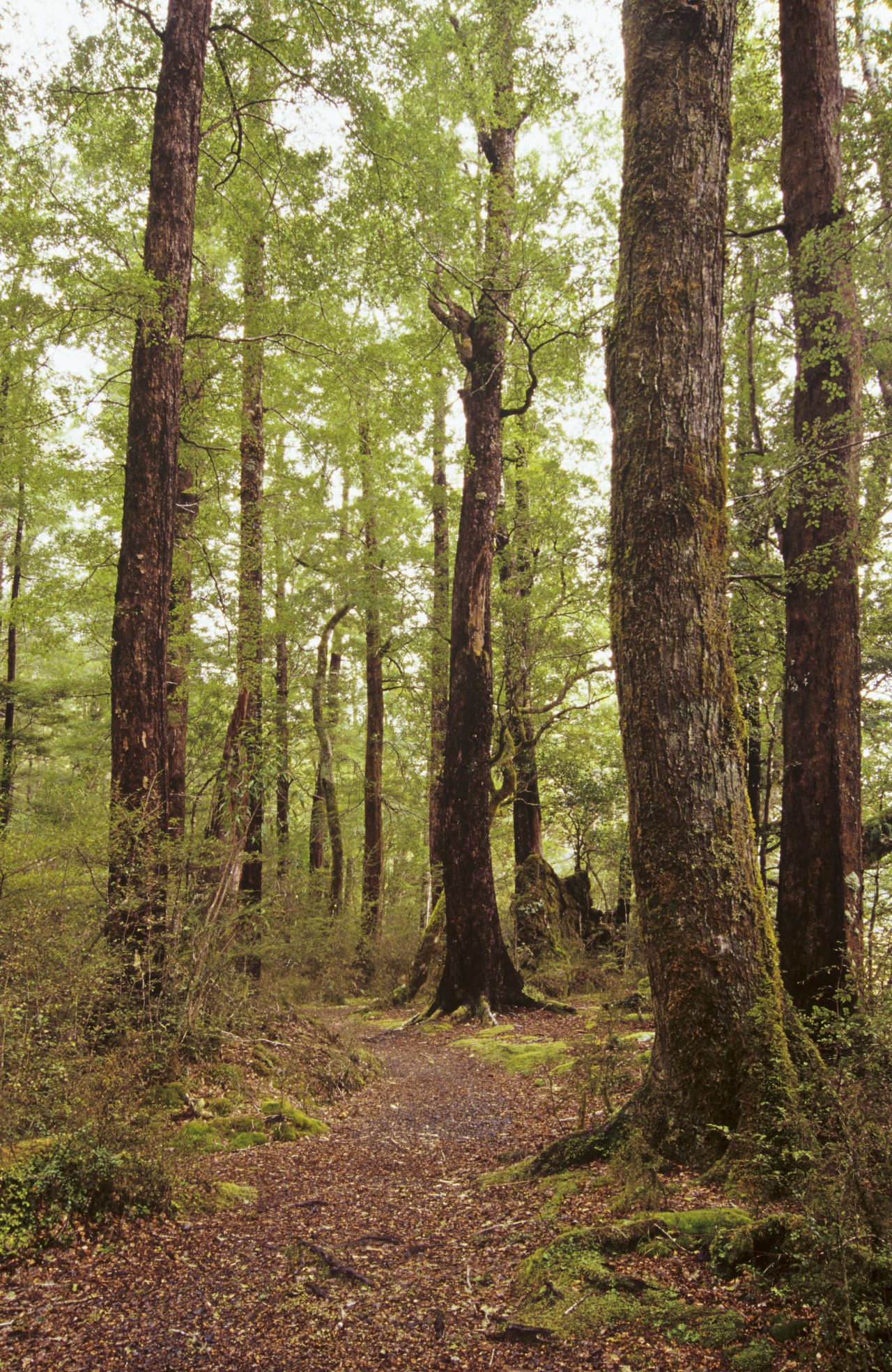
Few trampers can be so unobservant as not to know and appreciate beech trees. They are the often-stately trees that form pillars on either side of the track, the spreading canopy under which you seek shelter for your camp, or, occasionally, the tree you curse when pushing through a thicket of pole saplings almost woven together.
Beech forests are almost ubiquitous in the New Zealand mountains, with only a few notable areas having no beech trees at all: Northland, Taranaki, Stewart Island and central Westland.
Back in the late 1980s, when I was studying botany at Massey University, the taxonomy of New Zealand’s beech trees was pretty simple. All were placed in the Gondwanan genus Nothofagus, meaning ‘false beech’.
Although considered distant relatives of the Northern Hemisphere beeches (Fagus), New Zealand beeches were grouped Nothofagus, along with a couple of dozen species found in South America, Australia and the Pacific, as well as extinct Antarctica ones known from fossil records. New Zealand had four separate species: red, silver and hard, with the last divided into two sub-species, black and mountain.
Recently, taxonomists have given the beeches a bit of shake-up, and New Zealand now has five distinct species, placed in two genera; red, hard, black and mountain are grouped in the genus Fuscospora, while silver occupies its own genus, Lophozonia.
Red beech (Fuscospora fusca), the largest of our species, often grows between 24-30m high, and can be up to two-metres in diameter. It frequently forms stands on lower, more fertile river flats, which it prefers. Here are six locations to see it.
Te Iringa Track, Kaimanawa Forest Park
This delightful, benched track, accessible from Clements Mill Road, passes through some fine stands of red beech.
Whangatawhia Valley, Whirinaki Forest Park
Whirinaki may be famed for its podocarp forest, but large areas of the forest are dominated by beech. There’s particularly fine stands along the Whangatawhia Valley.
Turere Bridge, Rimutaka Forest Park
The Orongorongo Track passes through a splendid variety of forest types, but when you reach the river, just before the arch bridge over the Turere Stream, there is a fine stand of red beech. It’s a nice place to pause before carrying on to your camp or hut.
Lake Daniell Track, Lewis Pass Scenic Reserve
Red beech dominates much of the forest surrounding Lake Daniell, near Springs Junction, but from the Marble Hill parking area, you only have to walk as far as the Sluice Box to see plenty of it.
Hurunui Valley, Lake Sumner Forest Park
Red beech dominates the flats of the Hurunui Valley, on the five-day Harper Pass Track across the Southern Alps, now part of Te Araroa.
Routeburn Track, Mt Aspiring National Park
The start of the Routeburn Track passes through some of the finest stands of red beech in the country. ‘Grand’ and ‘stately’ are not hyperbole for these fine forests.