Three places to see this endemic bush parrot
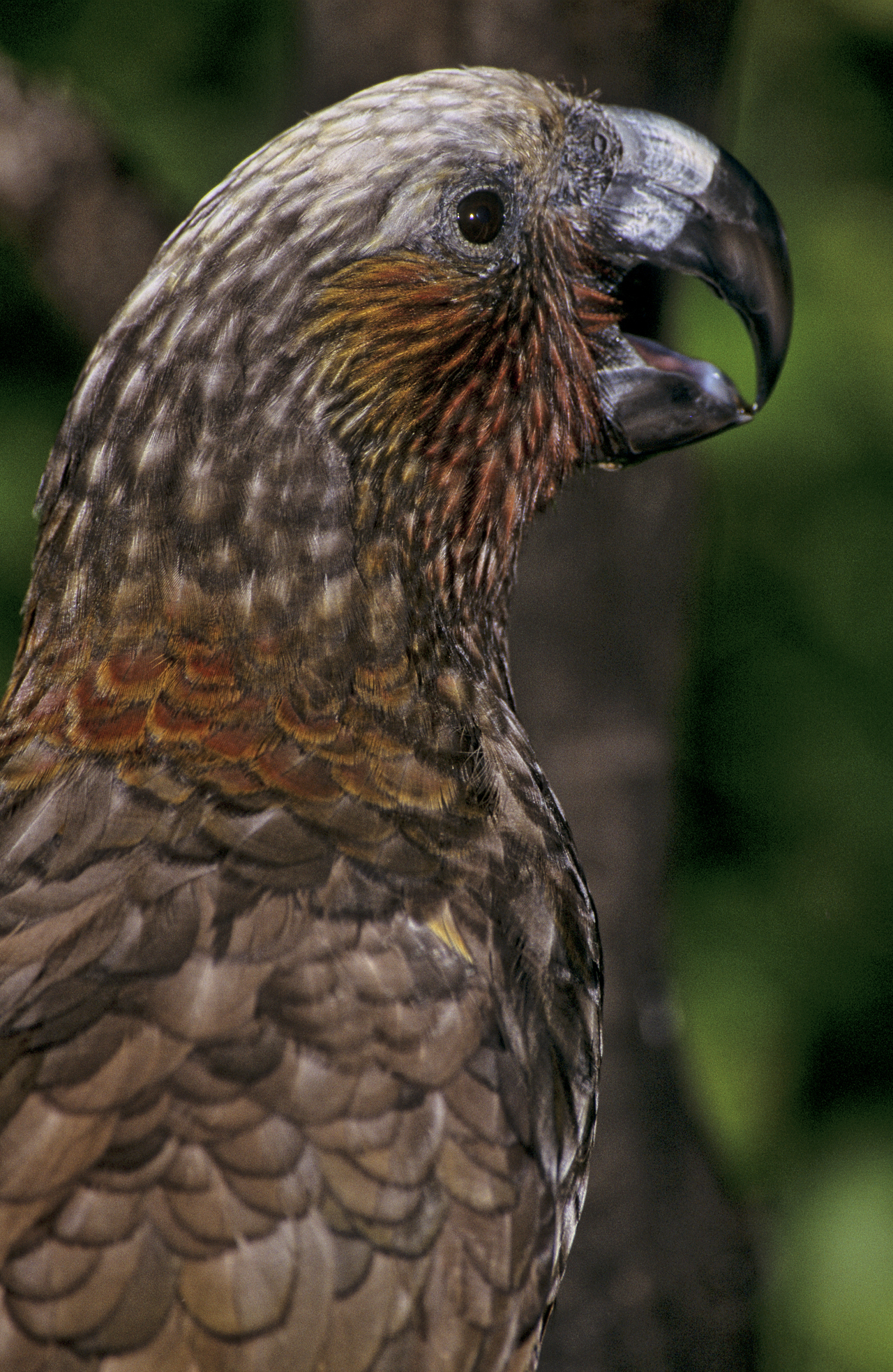
When approaching Kapiti Island by boat, you can often hear the resident kaka even before you land. A raucous, unconducted symphony of screeches and whistles, which, like its name, is loud, staccato and unmistakable.
These large, red-brown bush parrots, closely related to kea, have strikingly-coloured underwings that flash when the birds fly over the forest canopy.
On offshore islands, kaka scream, chatter, clown-around and will sometimes even land on the heads of human visitors. Yet on the mainland, the behaviour of kaka is noticeably different. The birds are rare, more often heard than seen, and in no way trustful of humans.
In pre-European times, kaka were the undisputed aristocrats of mainland forests. Good fliers, they swept across vast tracts of forest in flocks of hundreds, their harsh croaks reverberating. It seems impossible today to imagine a forest with tens of thousands of kaka living in it, but skilled Maori hunters could catch a hundred or more in a single day.
Even in the early 1900s, West Coast explorer Charlie Douglas wrote: ‘Caw Caw’ (as he called kaka) were ‘very easily tamed, and when caught young can be taught to speak – in a sort of way – but it is not a desirable bird about a house, being much addicted to mischief, tearing everything it gets hold of, giving vent to fearfull yells, if disturbed in its amusements, and in the still hours of the night they liven up the place by whistling their national melodies with the power of a locomotive.’
Mainland kaka have been in decline since human occupation, due to predation and competition from introduced animals, forest destruction and hunting pressure. Without ongoing management, we will lose them from the New Zealand’s remaining forests.
These endemic parrots are divided into two sub-species: the North Island kaka (Nestor meridionalis septentrionalis) and the South Island kaka (Nestor meridionalis meridionalis). North Island kaka are rare on the mainland apart from the forests of Pureora, Whirinaki and Te Urewera. South Island kaka still survive in moderate numbers in Fiordland, Mt Aspiring and Westland.
Happily ‘mainland islands’ – areas where DOC controls predators – offer great hope for the birds, notably the large one in the northern part of Te Urewera National Park. Wellington’s bird sanctuary Zealandia is another excellent place to experience North Island kaka on the mainland, as are several accessible islands like Kapiti.
Kapiti Island Nature Reserve, Wellington
Kapiti Island is only twenty minutes by boat from mainland Paraparaumu. To book a trip to the island, contact DOC (P: 04 384 7770). Being large and vocal birds, kaka have a dominant presence on the island.
Zealandia, Wellington
Watching a kaka fly past your house, or even having one land in your garden, is not such an uncommon experience these days thanks to predator-free Zealandia, formerly known as the Karori Wildlife Sanctuary. The fenced-off sanctuary is easily reached from the city via bus, and offers a myriad of tracks from which to encounter numerous birds, including kaka.
Great Barrier Island, Hauraki Gulf, Auckland
Great Barrier is one of New Zealand’s largest islands to remain free of stoats or other mustelids and as a happy consequence, kaka still abound on the island. Great Barrier offers excellent tramping, mountain biking and camping, with kaka often forming background chatter to these activities. Getting to the island from Auckland is simple by plane or ferry.