See more… Karearea

December 2012

Read more from

December 2012

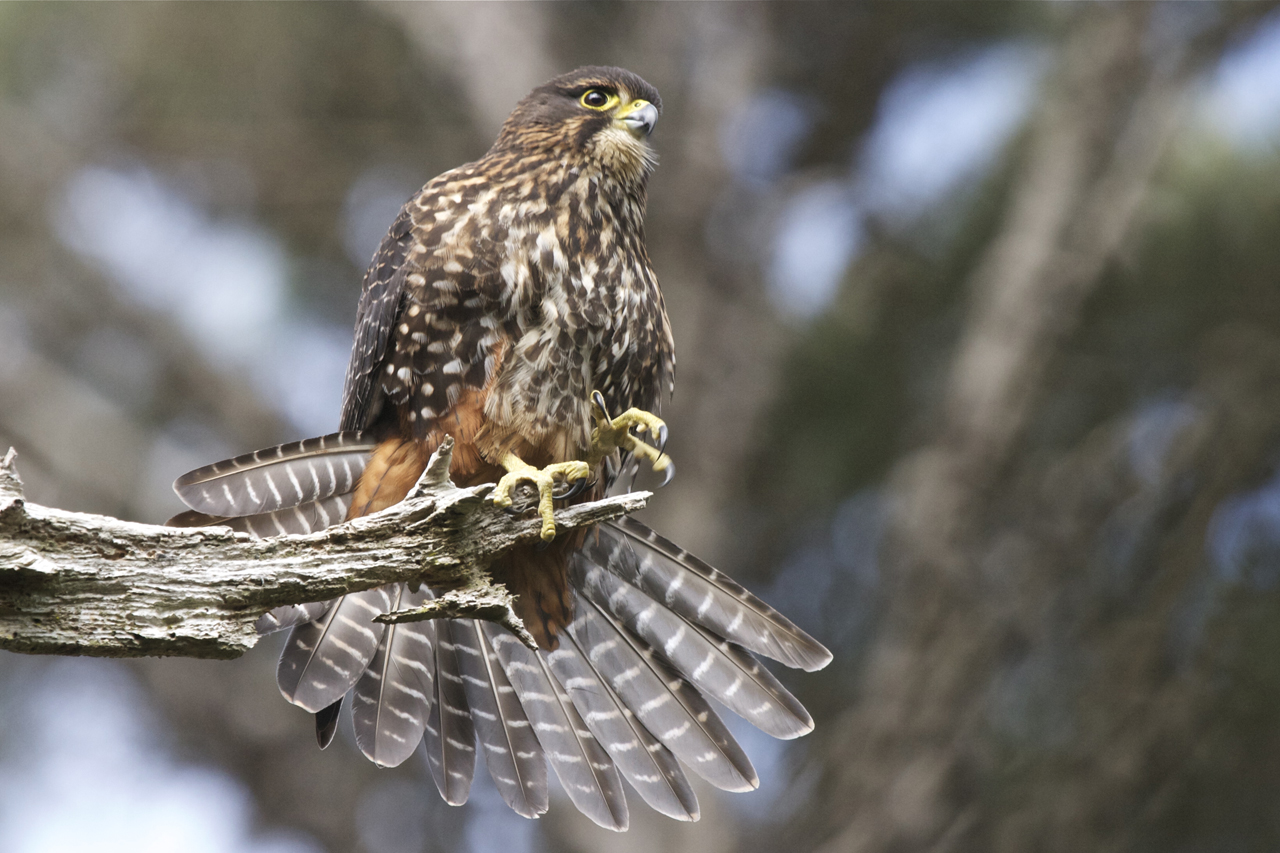
Karearea at Zealandia. Photo: Steve Attwood
Three places to see New Zealand’s only native falcon

Quick, sleek and ruthless, the karearea is New Zealand’s best-known bird of prey. Also known as the sparrow hawk, the bird features on the twenty-dollar note, and recently won top spot in Forest and Bird’s annual ‘Bird of the Year’ poll.

This year, the conservation group engaged local celebrities to support their favourite bird, with comedian Raybon Kan as the falcon ambassador. Kan’s slogan for the bird was ‘New Zealand’s got talons’. The karearea trounced its nearest rival, beating it by nearly 300 votes. Kan quipped that the second-place kokako ‘just represents birds that are more of a stuffed toy, or more of a busker than the leader with libido – that’s what the karearea is.’

While not as large as harrier hawks, another native bird of prey, the endemic karearea are faster and meaner, snatching prey from the air at speeds of up to 230km an hour. Unlike harrier, they don’t scavenge, preferring fresh meat. Falcon will defend their territory vigorously, especially when nesting. Many trampers have experienced a karearea dive-bomb, or at least heard their distinctive ‘kek kek kek’ warning call.

Photographer Steve Attwood offers this advice: “Like magpies, they don’t like attacking front on, so if you’re in falcon territory a pair of sunglasses on the back of your hat can help ward off attacks. They aren’t stupid enough to risk catching their talons in such a large animal, so they usually hit with the back of their knuckles – it still hurts and draws blood though, so best to leave nesting falcons in peace!”

Like other falcon species, karearea can be trained and have been used to frighten birds away from aircraft flight paths near airports.

Despite their formidable speed, aggressive nature and razor-sharp talons, karearea nests are vulnerable to attack from wild cats, stoats and weasels. The New Zealand falcon website (www.nzfalcon.org.nz) gathers falcon records and helps promote their conservation. The site says that ornithologists recognize three different forms of the falcon according to area: ‘The bush falcon is found in the forests of the North Island and the north-western South Island, the eastern falcon habitat is the open country of the eastern South Island whilst the southern falcon is of coastal Fiordland, Stewart Island and the Auckland Islands.’

I’ve observed falcon on more than 70 occasions, and twice been dive-bombed by nesting pairs. The central North Island, Wellington, Canterbury and Otago offer your best chance of seeing these birds of prey.

Zealandia, Wellington
When a pair of falcon set up shop in Wellington wildlife sanctuary Zealandia, some concern was raised that rare birds like saddleback and stitchbird could be on the menu. But sanctuary experts say native birds like saddleback are quite adept at avoiding the predator and, regardless, falcon serve a valuable purpose weeding out weaker or sick prey from the population. Falcon find easier prey in the many introduced birds, which seem to be more susceptible to the various hunting strategies employed by karearea. Aside from Zealandia, falcon are commonly seen around the capital, especially in the bushy suburbs of Eastbourne, Ngaio and Seatoun.

Mt Arthur, Kahurangi National Park
I’ve seen falcon in this popular tramping area on two occasions, both on the Mt Arthur-Gordons Pyramid route. The Flora Valley is also a likely spot and, with the whole area now being heavily trapped for stoats, numbers of birds including karearea will hopefully increase.

Motatapu Track, Otago
In the open tussock country of this interesting track, falcon have all the sky space they need for broad surveillance. During my walk over the Motatapu, which connects Wanaka with Macetown, we saw falcon in both the Highland Creek and Fern Burn catchments.

Shaun Barnett

About the author

Shaun Barnett

More From Bird Spotting

Similar Articles

Getting Technical

The three trips that changed my life: Celia Hogan

Five ways to Lake Angelus

Trending Now

Green Point Hut, Gamack Conservation Area

The possibilities of packrafting

Every Tararua hut reviewed and ranked

The Tararua’s forgotten traverse

Leaning Lodge, Rock and Pillar Conservation Area

Subscribe!
Each issue of Wilderness celebrates Aotearoa’s great outdoors — written and photographed with care, not algorithms.Subscribe and help keep our wild stories alive.

Join Wilderness. You'll see more, do more and live more.

Already a subscriber?  to keep reading. Or…

34 years of inspiring New Zealanders to explore the outdoors. Don’t miss out — subscribe today.

Your subscriber-only benefits:

All this for as little as $6.75/month.

1

free articles left this month.

Already a subscriber? Login Now