Plusses: Supportive and comfortable, anti-slip surface Minuses: Valve difficult to fine tune for deflation
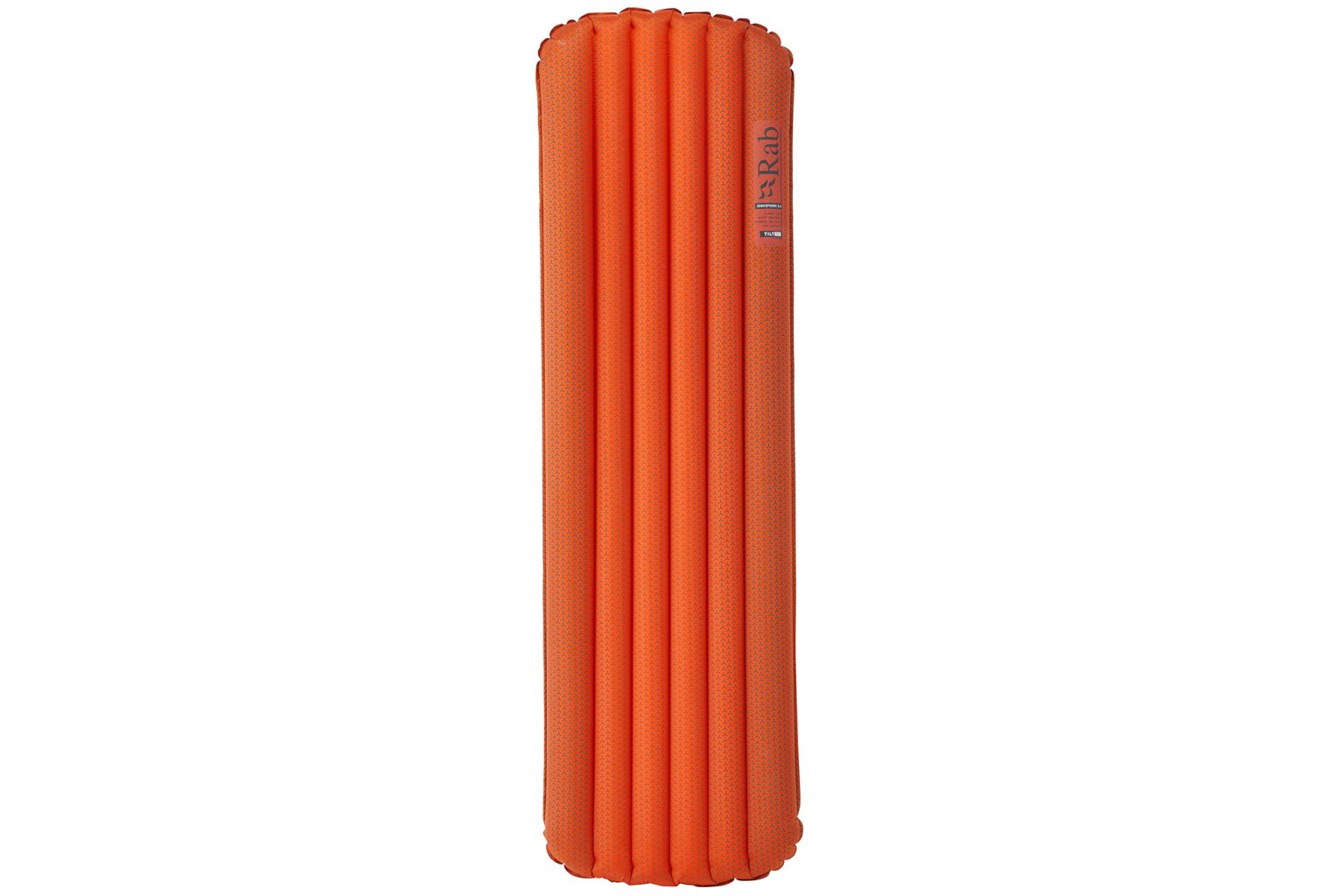
Features: Synthetic Stratus R insulation and a reflective film within the insulation make this the warmest of Rab’s mats. It’s thick at 8cm, with generously oversized outer air chambers to keep you centralised. The upper surface is grip-printed. The face fabric is a tough-feeling recycled 20D polyester, and the 200gsm insulation is also recycled. The large pump bag doubles as a roll-top dry bag.
Shape: This mat is rectangular and covers a lot of surface. The regular is 183 x 51cm and the long-wide is 196 x 64cm. Place two side-by-side in a tent and you’ll avoid cold spots.
Comfort: I’m 1.76m and this mat was long enough that my feet didn’t fall off the end and I didn’t lose my down jacket pillow. The consistent width means you can lie in various positions and still be insulated.
Inuse: The pump bag has a long nozzle and mat inflation is really efficient. A combination valve allows inflation mode or full deflation. However, this mat was the fiddliest when it came to fine-tuning air pressure by controlled deflation. Strong finger pressure is required on the valve (enough that it hurt my fingertip to do it). But aside from that it’s an excellent mat. The anti-slip texture is mapped to be least grippy in the middle of the mat and most grippy on the edges. This worked well. It’s quiet, and in cold conditions stood up to its R5.5 claim with consistent comfort. I’m used to using minimal mats with low R-values in freezing conditions and the difference here was significant. The repair kit includes a large self-adhesive patch and a spare valve seal.
Value: It’s the most expensive mat in this review and the heaviest, but it also has the most features.
Verdict: It’s not the lightest mat for its R-value, but the Ionosphere is replete with features. It’s a go-to for frequent alpine users looking for a durable snow camping mat.
About the author
Mark Watson
Wilderness gear editor Mark Watson divides his workdays between graphic design, writing and photography. His passion for tramping, climbing, cycling and storytelling has taken him all over Aotearoa and the world in search of great trails, perfect moves and epic light. He has published four books and his photographs have featured in numerous publications. Especially motivated by long distance travel, he has tramped Te Araroa and cycled from Alaska to Tierra del Fuego.
Each issue of Wilderness celebrates Aotearoa’s great outdoors — written and photographed with care, not algorithms.Subscribe and help keep our wild stories alive.