At a glance Plusses: Super light, durable, comfortable with minimal loads Minuses: Limited sphere of use, expensive
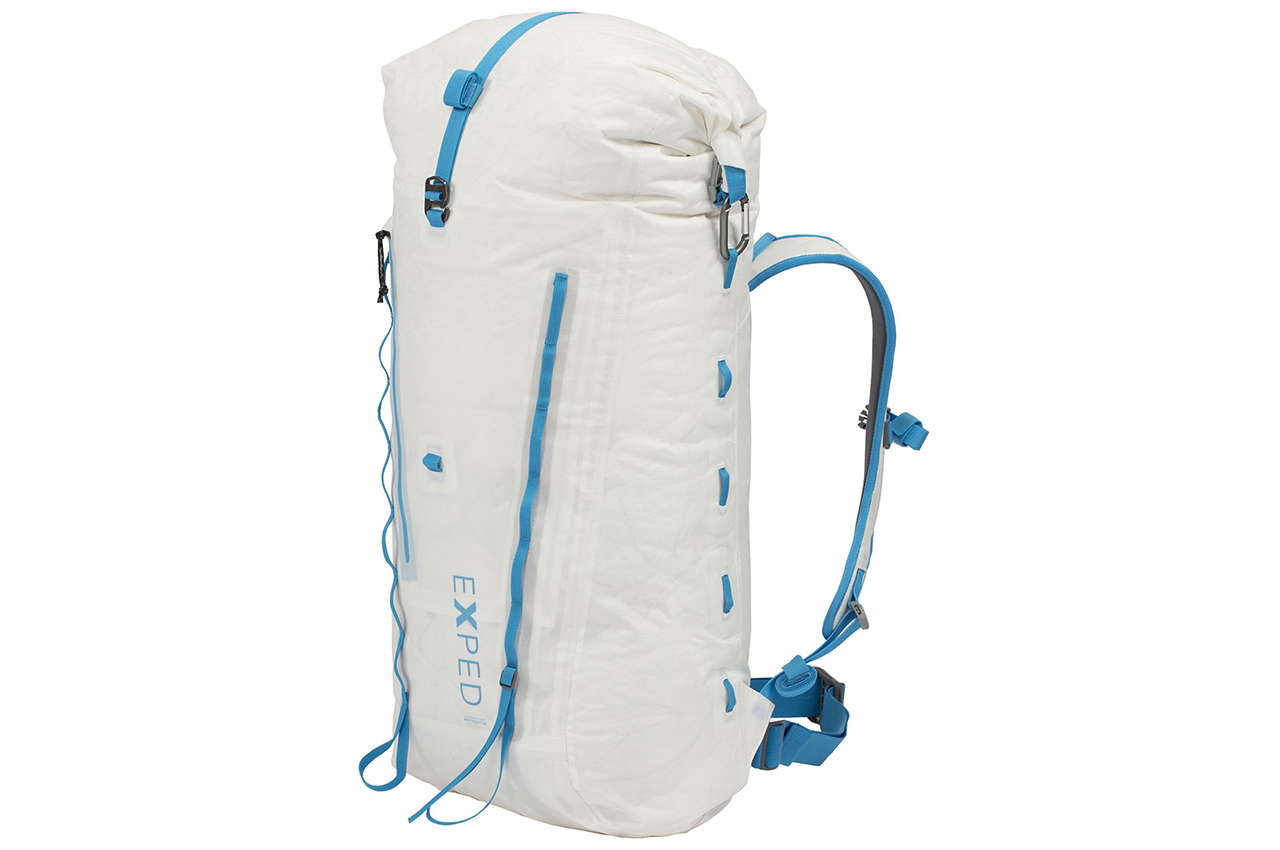
Features: This is an ultralight alpine pack and its hallmark features are more what it doesn’t have than what it does. Simply put, it’s a pack-shaped drybag, with alpine tool attachment points, daisy chains, two 2D pockets, a simple rolltop closure and a very basic harness and hip belt. It’s simple, light and strong and there is little to go wrong with it.
Fit: I’m 177cm and the harness on the medium fitted perfectly. The sternum strap has plenty of vertical adjustability and the shoulder strap adjustments stayed where I set them. The hip belt has an easy-to-use crush-proof aluminium and plastic buckle.
Comfort: I used the pack over a few days carrying basic overnight necessities along with either photography or climbing equipment. I had no complaints about the pack’s comfort, in fact it was not something I noticed. The harness itself is simple and durable: removable dense foam padding protects the back and gives the sack shape. The shoulder straps have thin padding but are wide. The minimal hip belt (unpadded webbing) was fine for my moderate load, but with weight closer to the pack’s recommended 15kg limit, it might become uncomfortable.
In use: I liked the pack immediately. The dyneema composite sac is seam-sealed and the fabric has a reassuringly bombproof feel to it. The lid rolls down drybag style and is held closed with two mini-biners that attach to a daisy chain on the side – simple, strong and clever. Crampons can cinch down under a single compression strap. The 2D pockets (one internal, one external) require a bit of forethought to use because they are not good for bulky objects. The ice tool attachments require a carabiner each to attach modern technical tools, which climbers will usually have with them.
There’s a big benefit to the pack’s complete seam sealing and waterproofness; it negates the need for a pack liner, saves weight and keeps things simple.
Value: This is an expensive pack for 55-litres capacity – nearly double the cost of Exped’s ultralight Lightning 60. But, it’s a specialist product constructed with the latest in durable fabrics.
Verdict: Ultralight kit has a reputation for lacking durability, but this product feels like it will last the distance which helps justify the high price.
About the author
Mark Watson
Wilderness gear editor Mark Watson divides his workdays between graphic design, writing and photography. His passion for tramping, climbing, cycling and storytelling has taken him all over Aotearoa and the world in search of great trails, perfect moves and epic light. He has published four books and his photographs have featured in numerous publications. Especially motivated by long distance travel, he has tramped Te Araroa and cycled from Alaska to Tierra del Fuego.
Ministry of Works Historic Hut, Kahurangi National Park
The Tararua’s forgotten traverse
Subscribe!
Each issue of Wilderness celebrates Aotearoa’s great outdoors — written and photographed with care, not algorithms.Subscribe and help keep our wild stories alive.