

Last year Ngāti Hikairo contributed to a five-report process run by DOC that aimed to determine whether a cap on numbers should be introduced on the Crossing. The work was part of a bigger investigation, funded by the International Visitor Levy (IVL), to explore how to manage the Crossing in more sustainable ways. The reports covered the social, environmental and cultural, Te Ao Māori implications of such a cap.
One report focused on financial ramifications, measuring the Crossing solely for its economic value to the region. For Ngāti Hikairo, however, economic impacts are not the prime driver.
“Te Ao Māori is determined not by numbers but by tikanga,” says Wanikau. “This means everything done on Tongariro Maunga is based on manaakitanga [encompassing the spiritual, cultural, emotional and physical wellbeing for both mana whenua and manuhiri] and by manaakiwhenua [by what the land can sustain]. If we get these values right, the economic values will fit.”
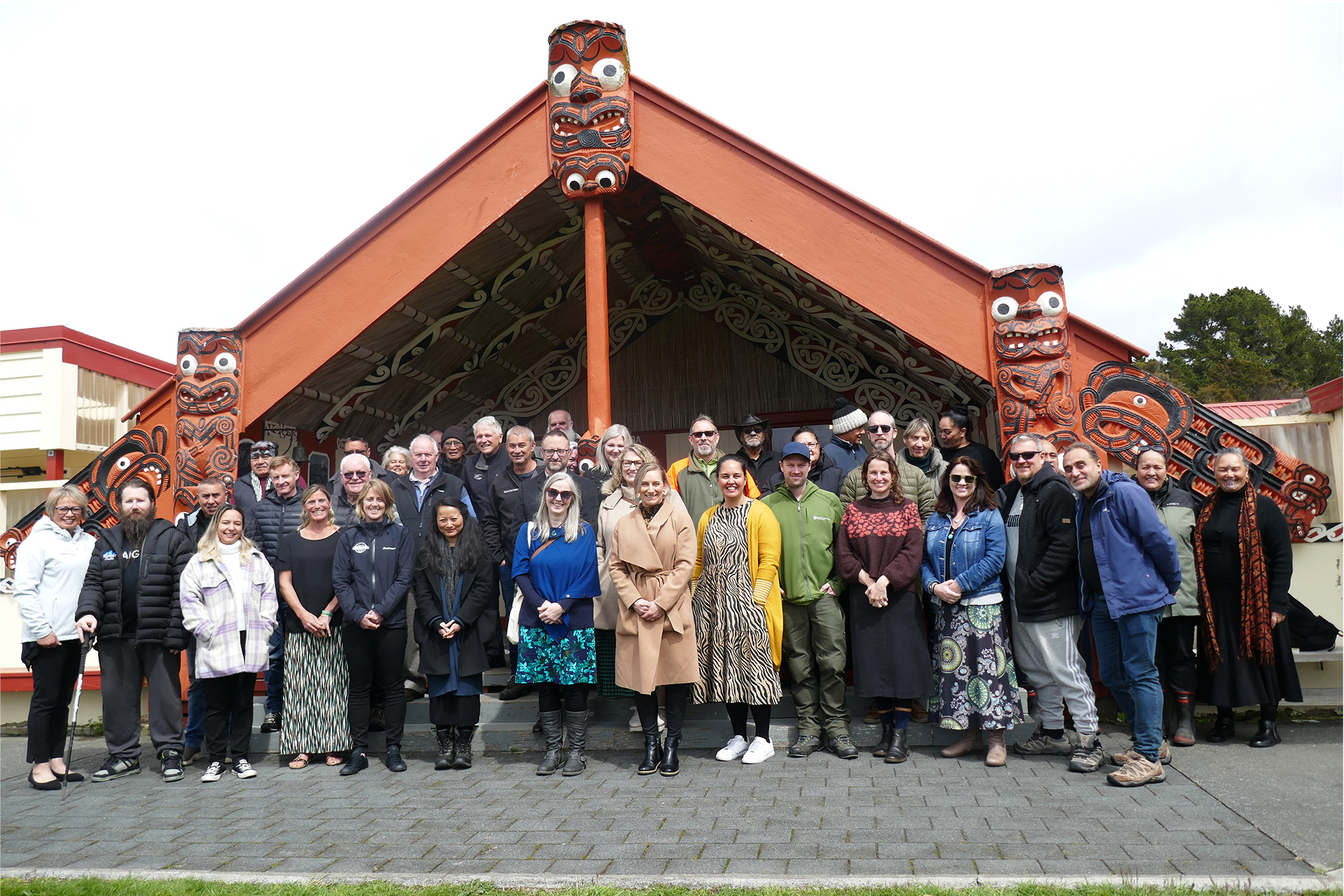
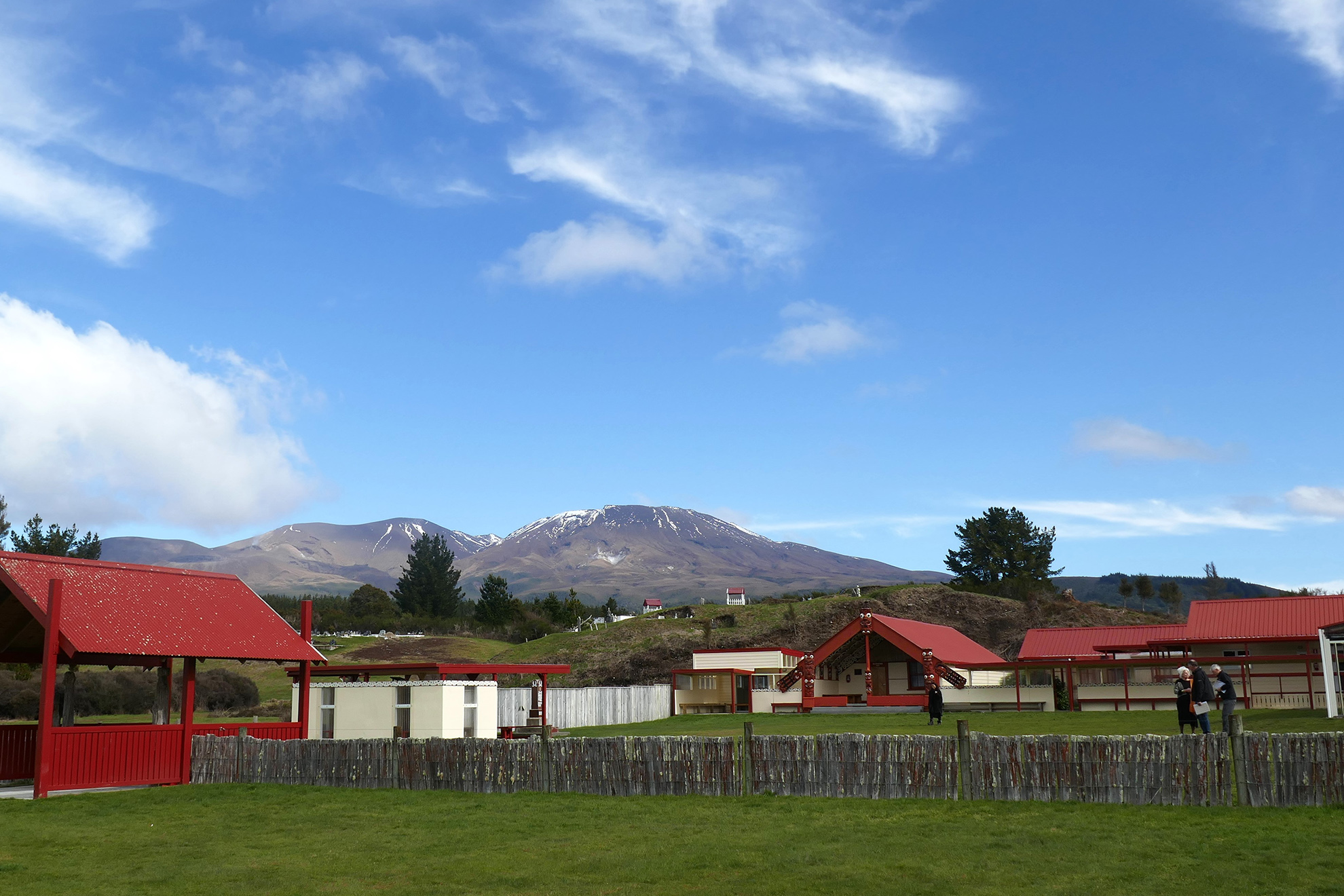
In the end, instead of capping numbers, DOC decided that new management ‘interventions’ could alleviate issues around safety, environmental care and respect for the maunga. With the close involvement of Ngāti Hikairo, some of these were put in place last season. Last September, Ngāti Hikairo and DOC hosted a TAC Concessionaires Wānanga on Otūkou Marae to discuss management developments and learn about Ngāti Hikairo’s place on Tongariro. It was the first such meeting hosted on a Ngāti Hikairo marae. Around 30 shuttle transport operators and guide companies attended, plus local tourism organisations and representative of Te Araroa Trust.
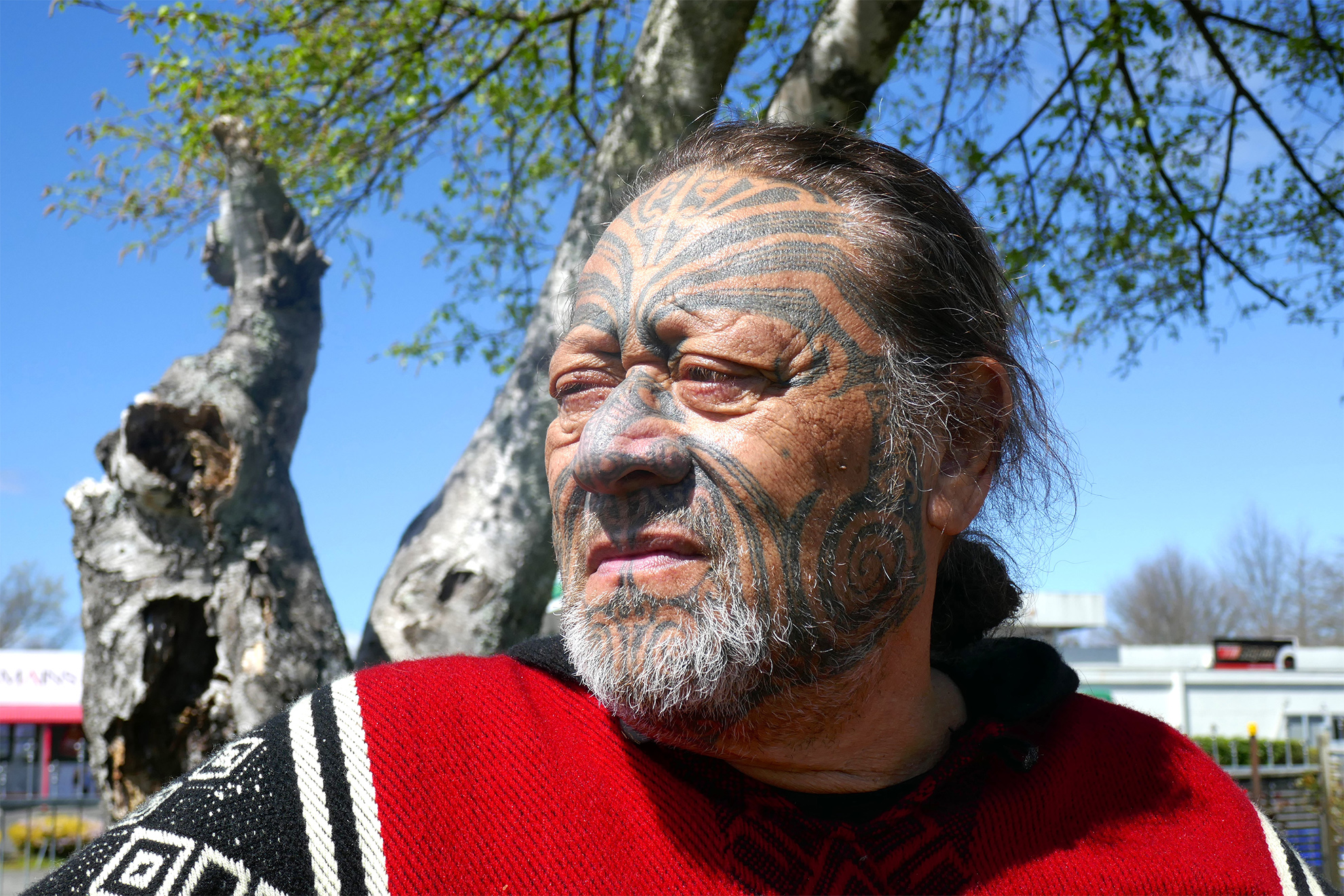
Something elusive was captured, says Wanikau: “For the first time we have a working model, where tikanga, concessionaires and Te Papa Atawhai [DOC] are bringing value to each other. Things before have started and stopped; this time it will have an ending. We all have investments: emotional, spiritual, commercial. Now we have the opportunity to intertwine those, to take the very best of them and develop what I call a ‘Michelin’ model.”
Adventure Shuttles operator Garth London, a local who’s been climbing, cycling and walking in the region all his life, felt privileged to be part of the marae discussion.
“Broadly, my feelings lie with Ngāti Hikairo ki Tongariro around tikanga and the maunga. Their mana and that of the maunga need to be restored and recognised, and education around that is really important. Wanikau spoke about how Ngāti Hikairo want a relationship, and how it’s not about the commercial things, it’s about the people. I really get that and I believe the concessionaires are on board.”
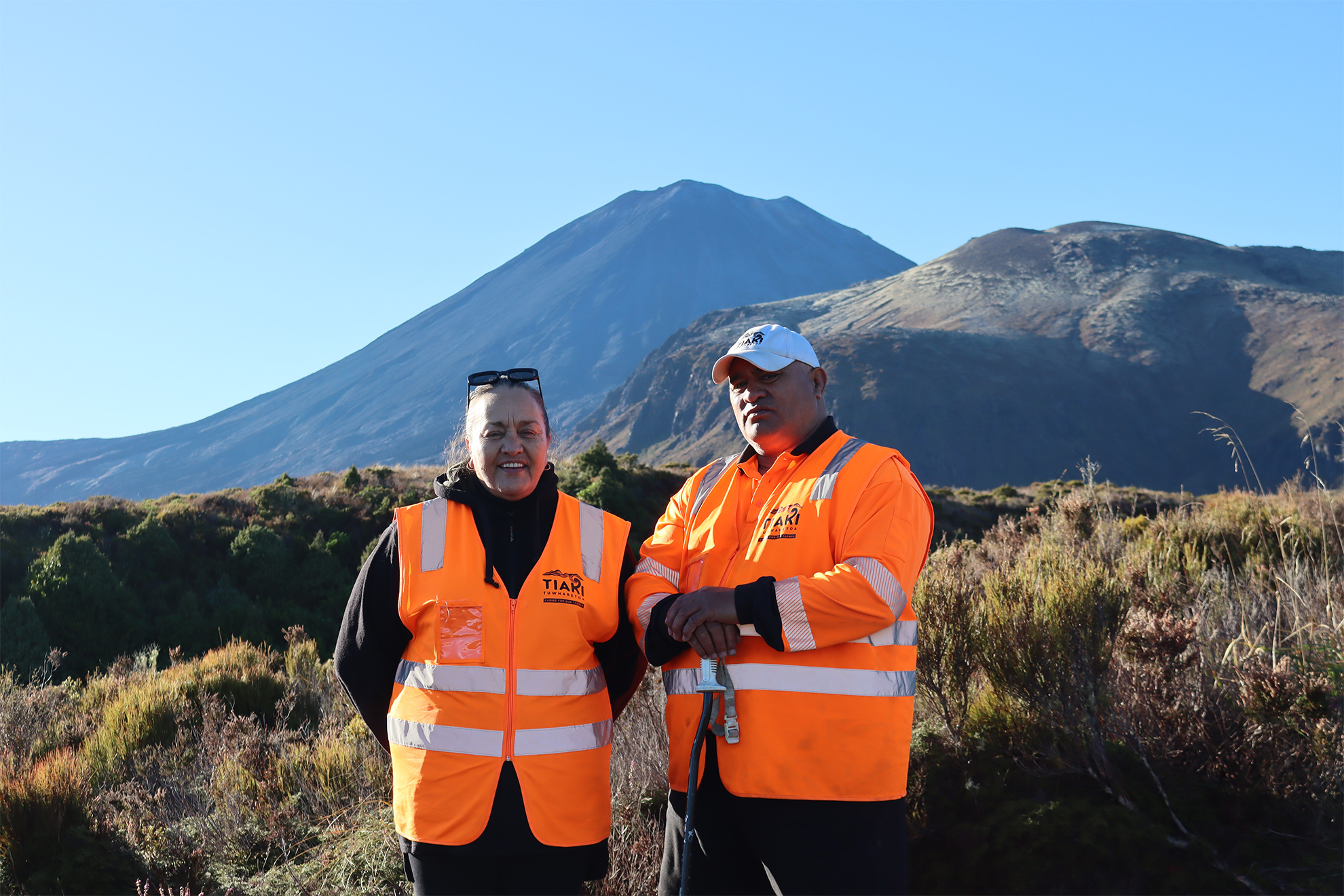
Ngāti Hikairo also now has a physical presence on the Crossing. Manaaki Rangers, representing mana whenua, greet walkers as they arrive and leave the track. Their message includes respecting the maunga and being safe. Mere Turanga worked there last summer and is looking forward to a second season.
“We start at 6am, when we sound the pūtatara [conch] to say good morning to our maunga,” she says. “Then we say our karakia to express our hope that everyone on the maunga has a safe journey. We make sure the car park is running smoothly, and when people arrive we greet our manuhiri. We look to see that they are appropriately dressed and have water and food.
“Sometimes language is a barrier so we take people to the DOC sign with pictures and then they understand. Some people just start walking and others want more insight into our maunga, so we are happy to give them a story. Some days I’ll walk up the track a bit, and I’ll stop and chat for half an hour.
“I love it when international visitors reciprocate with songs and greetings from their own culture. Last year we also had a number of school groups and international people ask for a special karakia.
“Many of them have been to other mountains around the world and comment on how pristine Tongariro is. They say it’s a blessing to be here. We just say we want them to come and experience this place – not just the beautiful landscape but also in a spiritual way.”
Like Wanikau, Turanga feels pain when there is loss of life. “Last season my husband Rodney and I were rostered on the day we lost one. That hurt so much, it was like losing one of our own. We held the bereaved and it was hard.”
Two Manaaki Rangers are rostered daily at Mangatepopo and one at Ketetahi during the summer season, with more on busy days. They are hired by Tiaki Solutions Tūwharetoa using IVL funding through DOC.
Stew Barclay from Adrift Outdoors has been guiding on Tongariro for more than 20 years and says the Manaaki Rangers are fantastic: “Their role isn’t so necessary for my business and shouldn’t be for any concessionaire who should be caring for their own people, but they help with independent walkers. They intervene when people turn up ill equipped, or the weather is bad and they have been dumped up there by a shonky, unlicensed operator or a ‘friend’.
“Overall preparedness and compliance with weather alerts seems to have improved steadily in the past few seasons,” he adds. “Operationally, the triangle of DOC, iwi and the operators is working well … people are being advised of risks and we are all making the TAC as safe and enjoyable as a mountain can be.”
Improved cultural awareness has already resulted in a huge shift in attitudes, adds Wanikau. “People are more understanding. There is more care, more respect.”
Checking track bookings is another Manaaki Ranger role. “If they haven’t booked we ask them to register on the QR code at the shelter,” says Turanga. “It means we have a good idea of how many people are up on the maunga that day.”
Bookings were introduced for the 2023/24 summer, and though not compulsory, the concept has been well received. Data from bookings and track counters show that up to 105,000 visitors used some or all of the TAC last summer; of these, 90 per cent had booked.
“The booking system means we can communicate directly with visitors. For example, we email a cultural and safety briefing once they’ve completed their booking,” says DOC visitor planner Fiona Hall. “The system also provides data to help DOC identify pressure points and improve management of the Crossing.”
Examples of this include identifying ‘peak days’ such as Easter, long weekends and good weather days – especially after a spell of bad weather – so extra Manaaki Rangers can be rostered and shuttles increased, perhaps with staggered start times.
“Looking ahead, we plan to add a new tool that will enable visitors to see which days are already busy so they can maybe change to another day,” says Hall. “There is also potential for some form of capping on bookings. This is not about a cap on access – we know some people will go regardless. However, 75 per cent of walkers use TAC guides or transport operators, who can only take people with a booking.”
Data also shows that 80 per cent of all Crossing walkers are international visitors, although the Easter peak mainly consists of Kiwis. New Zealanders are also increasingly using shuttles to access the walk. Happily, since the four-hour limit at Mangatepopo car park was introduced in 2017, the days of cars crammed on the roadside all the way back to the main road are long gone.
Other improvements completed on the Crossing for this summer include sensor technology to indicate when toilets are full, which will mean fewer helicopter disposal flights and less cost and carbon use. Signage indicating the distance to the next toilet will encourage walkers to wait rather than ‘going’ in nature. The heavily eroded track from Blue Lake towards the bush line above Ketetahi has been repaired, and a proposed new NIWA weather station on Tongariro will ensure more accurate weather forecasting.
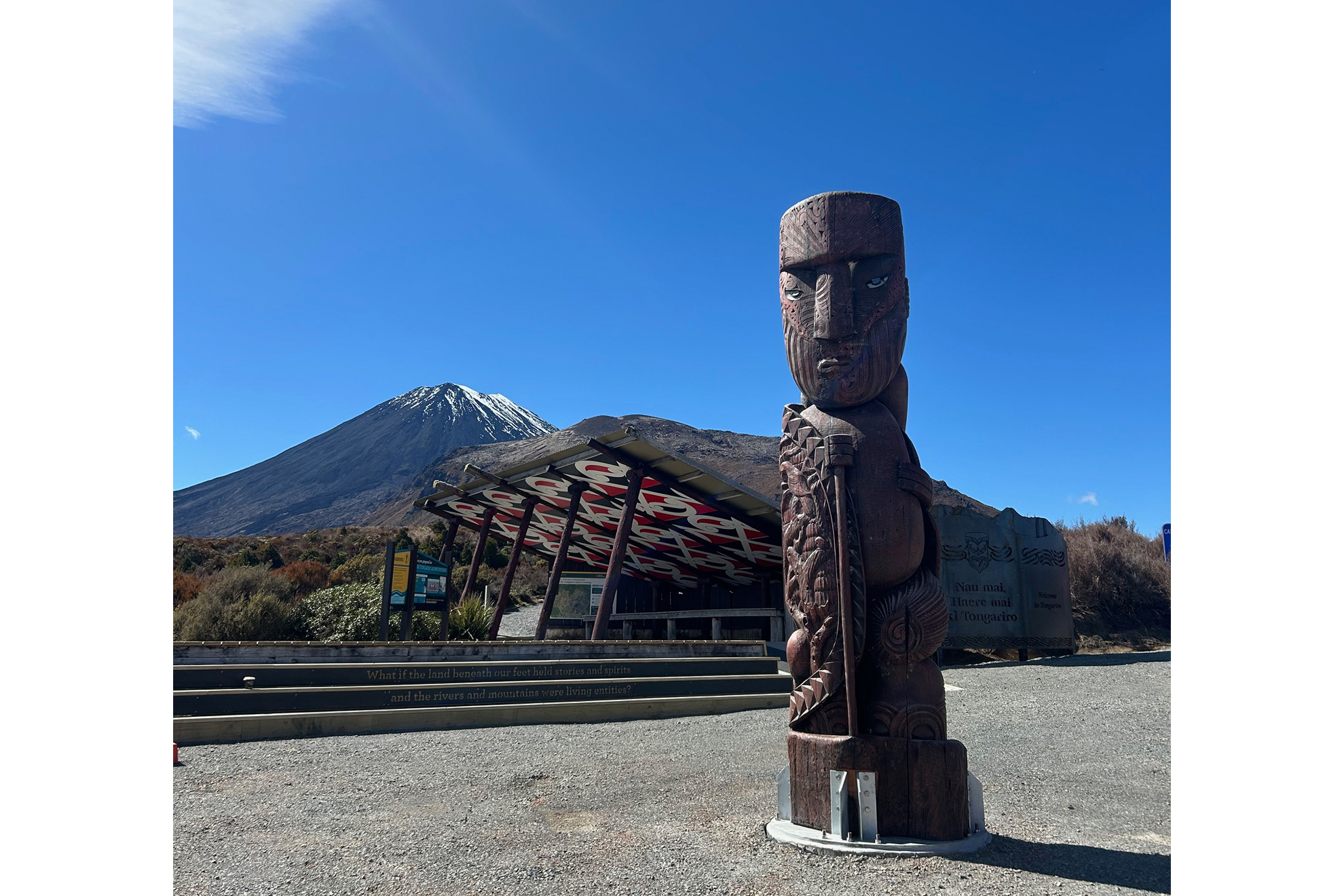
Possibly the most significant new features embodying the cultural significance of Tongariro Maunga, are the pouwhenua that now grace each end of the Crossing. At Mangatepopo stands Te Ririo, High Chief of the Patupaiarehe, the fairy-like people of the mountain and tūpuna of Ngāti Hikairo. With mystical powers, they respond in kind to acts of respect and disrespect within their environs. Also new at Mangatepopo is a stone basin where walkers can wash their hands to cleanse away the outside world before starting their journey. The pouwhenua standing at Ketetahi is Hinetapeka, the revered deity of internal fires whose realm is volcanic dynamism.
Carved by cousins Ted and Kurt Barham, the pouwhenua were unveiled in November. According to Ngāti Hikairo, they honour the ancestors and the maunga and serve as reminders to everyone of the shared responsibility to protect and preserve the land for future generations.
So, what of the future? Mana whenua input and management interventions aside, questions are still being asked around the Crossing and its crowds. Should users pay, numbers be capped or road access be closed? Any of these would require legal changes and would likely face a vociferous challenge from Kiwi walkers. Overarching everything is the fact that major decisions around Tongariro National Park under Te Piringa, the Legislative Partnership Agreement – Ngati Tuwharetoa Settlement 2018, are still under discussion, with no apparent deadline.
For now, though, there’s been a massive shift, says shuttle operator Garth London. “For all New Zealanders, there needs to be an awareness of the relationship with the mountain and with Ngāti Hikairo. We need to give them mana straight up, recognise them.”



