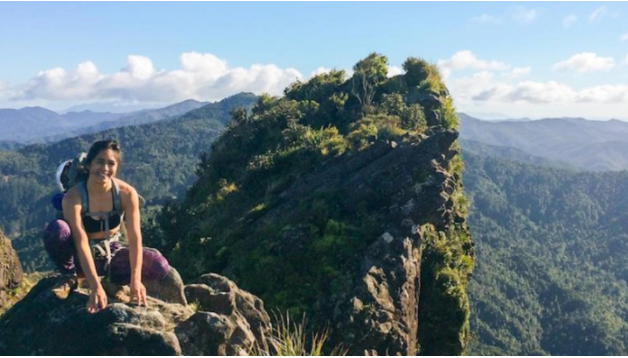
Clipping into a fixed webbing left behind by another climber cost American Lauren ‘Kimi’ Worrell her life when she fell and the webbing snapped under her weight.
Worrel, 28, fell 120m in the fall from Castle Rock Pinnacle in August 2019 and died at the scene.
Coroner Michael Robb said her death could have been prevented had she not relied on damaged equipment that another climber left attached to the rock face.
Worrel had her own equipment, but opted to clip into the “heavily weathered” fixed webbing, which snapped under her weight when she slipped.
Robb adopted a recommendation put forward by the New Zealand Alpine Club (NZAC) for an amendment to the Rock Climbing Access Framework that discouraged the installation and use of fixed ropes and other soft equipment to prevent climbers from being placed in a situation where reliance on weathered soft equipment is an option.
NZAC general manager Karen Leacock said the installation of perishable soft equipment has long been discouraged, but the amendment makes the recommendation more explicit.
“When developing routes, climbers want to be installing hardwear like bolts or chains – they shouldn’t be using perishables to get to and from routes, ” she said.
Leacock hopes Worrell’s death will serve as a safety reminder.
“It was a terrible outcome for Kimi, but it will hopefully help people down the track. It’s good to have learnings, but this is never the way we want to learn,” she said.
Mountain Safety Council chief executive Mike Daisley said the coroner’s findings are a good reminder not to use existing site anchors or attachments, such as ropes, without first checking that they were safe to use.
“It’s really important that all climbers either use their own equipment or be totally certain that the existing equipment is safe,” he said. “It is best not to rely on existing equipment that you don’t know the history or quality of.”
Daisley encouraged climbers to bring their own equipment and not leave anything behind.
“Make sure you take the time to thoroughly assess any equipment you come across and while it may seem faster to use existing setups, it is likely much safer to create your own,” he said.
Ngāti Huarere implemented an indefinite rāhui on the popular climbing spot following Worrel’s death.