Trampers love to hate speargrass, but there’s more to these spiky plants than meets the eye. By Lara Shepherd and Leon Perrie
Speargrass is painfully familiar to any tramper who has blundered into one while being too hasty through the tussock. The leaves of most species are rigid with sharp points that can easily pierce trousers, gaiters and skin. It’s been suggested this is a defence against browsing birds, such as moa. However, some introduced pest animals can overcome these defences. Pigs can uproot entire plants to reach the tasty taproot. And it is the taproot that provides a clue to the relationships of speargrasses – they are in the same family as carrots. Indeed, Māori ate the taproot of smaller plants, called papaī.
There are around 40 species of speargrass, 38 confined to New Zealand and two to Australia. Scientifically they are Aciphylla – needle-leafed. Another colloquial name is ‘Spaniard’.
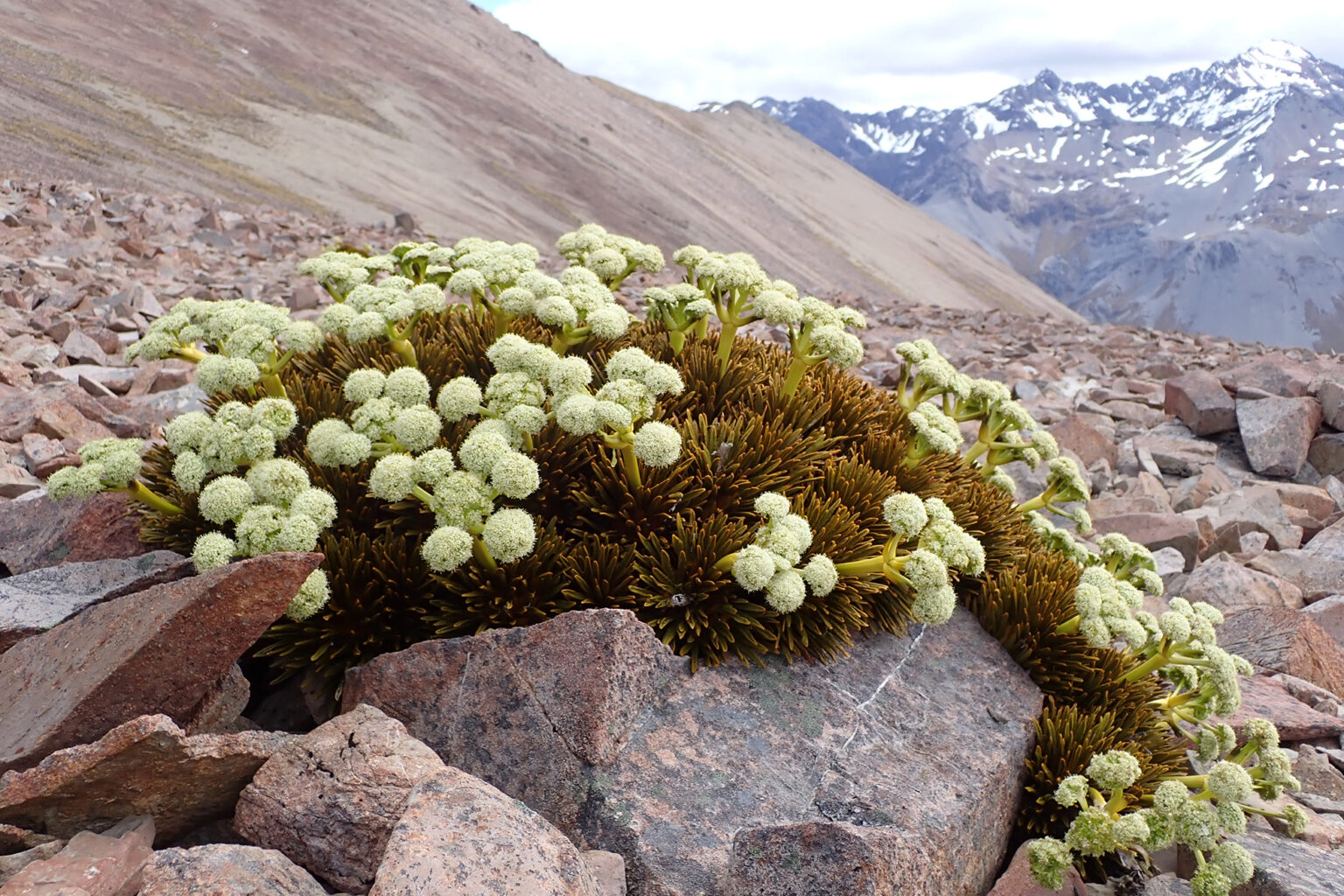
Speargrasses are a diverse group ranging from small, soft-leaved, inconspicuous herbs to cushion-like plants with tightly packed rosettes, to large spiky mounds a few metres across. Māori traded perfume and resin from the large taramea species. One iwi company continues this tradition commercially today.
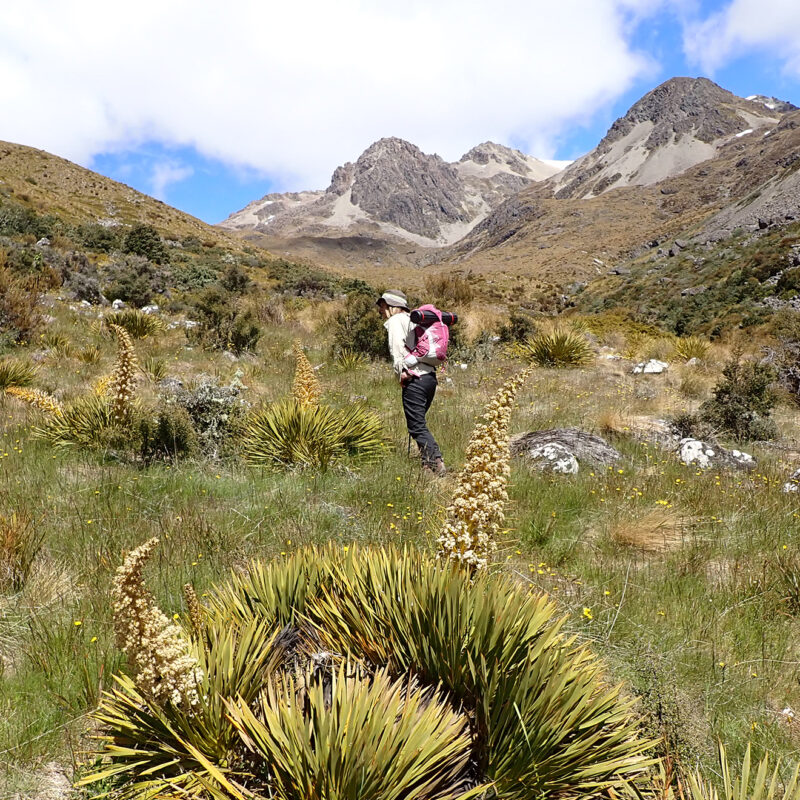
The large speargrasses are iconic features of New Zealand’s high country, especially when flowering, when their flower spikes tower above tussock and subalpine scrub. Male and female flowers are produced on different plants, and only female plants produce seeds. It seems that some species flower en masse only after a favourable preceding summer. This is called mast flowering, and also occurs with tussock and beech, among other plants.
Speargrass flowers are an important source of nectar and pollen, and a close inspection often reveals them to be crawling with beetles, flies and other insects. They are also the main host species for 16 species of the charismatic speargrass weevil, the largest approaching 3cm in length. These weevils are a favourite snack for rats, which leaves some threatened; one is likely extinct.
Some species are widespread. For in- stance, Aciphylla colensoi ranges through the North Island’s axial mountains and into the northern South Island, while Aciphylla aurea occurs through much of the South Island. Other species are far more restricted: Aciphylla leighii is only in the Darran Mountains; Aciphylla trifoliolata is seen only in the Lyell Range and along the Old Ghost Road and three species are confined to Stewart Island. Most are at higher elevations, but Aciphylla squarrosa is abundant around parts of Wellington, even on the coast.
There are naming issues among speargrasses, where it is unclear if a set of plants is one, two or more species. Genetic analy-ses and examination of various samples throughout the motu are helping to resolve this. Trampers and climbers can assist this research by posting photos of intact leaves – watch those spikes! – of speargrasses to www.iNaturalist.nz, which is checked regularly. The leaflets at the base of a leaf are important identifying features, so it’s most useful if photos show these.

34 years of inspiring New Zealanders to explore the outdoors. Don’t miss out — subscribe today.

Questions? Contact us