Alpine invertebrates must adapt to survive the cold. Here are five to pique your interest. By Lily Duval
Life is tough above the treeline. Freezing temperatures and snow are common, and scree, rocks and low-growing plants offer little protection for critters seeking shelter. Despite these challenges, a rugged band of invertebrates calls the mountains home.
The cool customer
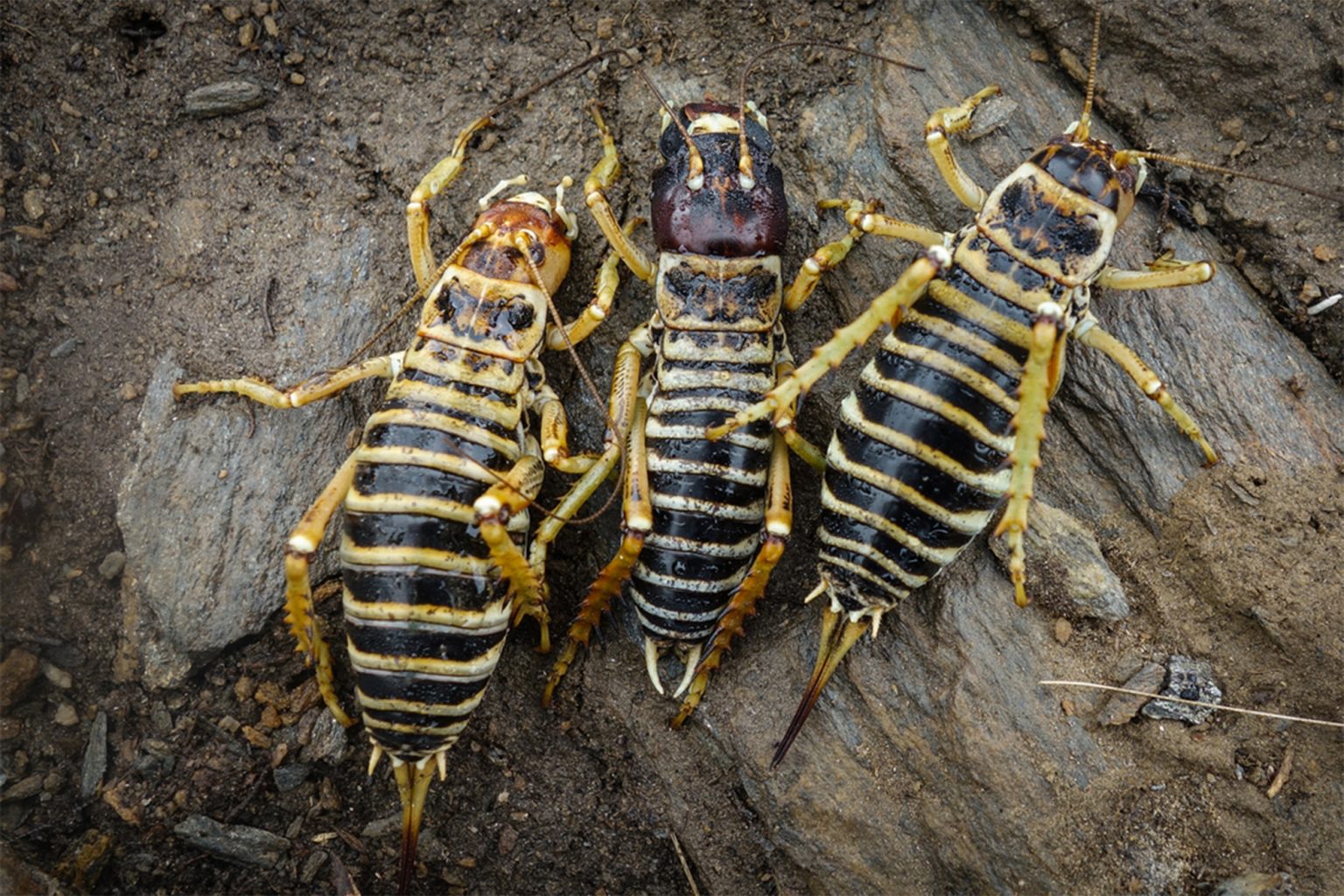
Mountain stone wētā (Hemideina maori) live above the treeline in Te Waipounamu. At 6cm long with bright yellow and black bands and a dark reddish head, they are easy to recognise. You’ll need to be out after dark to spot one as it’s then that they emerge from rock crevices to eat tussocks, moss and other insects.
The mountain stone wētā can cope with temperatures below -10ºC. In fact, it can survive with 85 per cent of its body frozen solid. When the sun returns, it simply thaws out and goes about its business.
The rock star
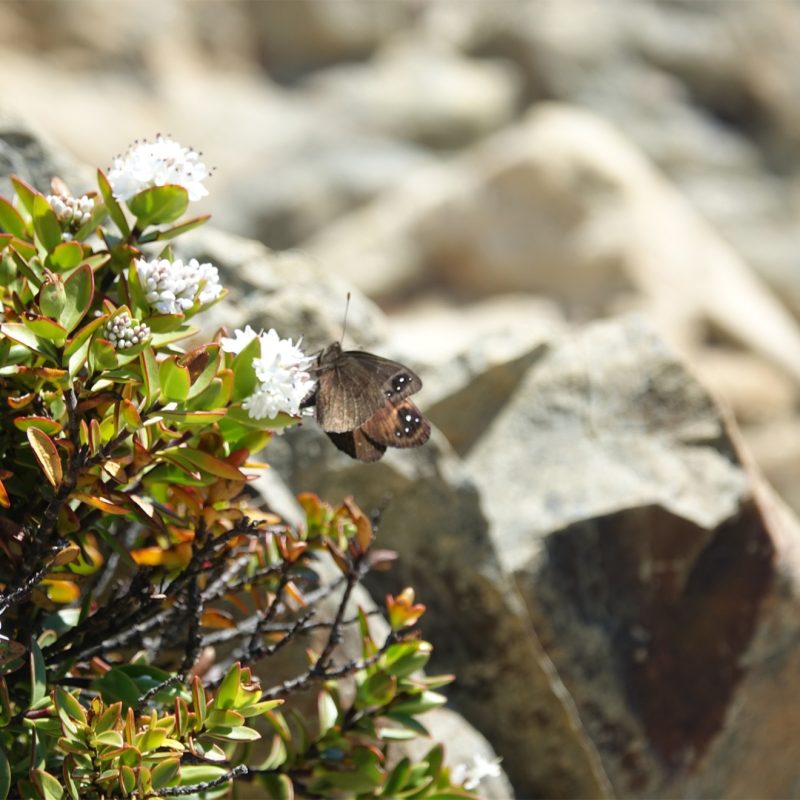
The pepe pouri or black mountain ringlet (Percnodaimon merula) is an alpine butterfly that lives throughout Ka Tiritiri o te Moana, the Southern Alps. These dark brown-black beauties fly low in short bursts and use their wings like solar panels, absorbing heat on warm days.
Pepe pouri lay eggs on sun-warmed rocks, which act as incubators. The larvae mature for one to eight months before pupating to turn into adult butterflies. Their life cycle is surprisingly long at one to three years.
The hunter
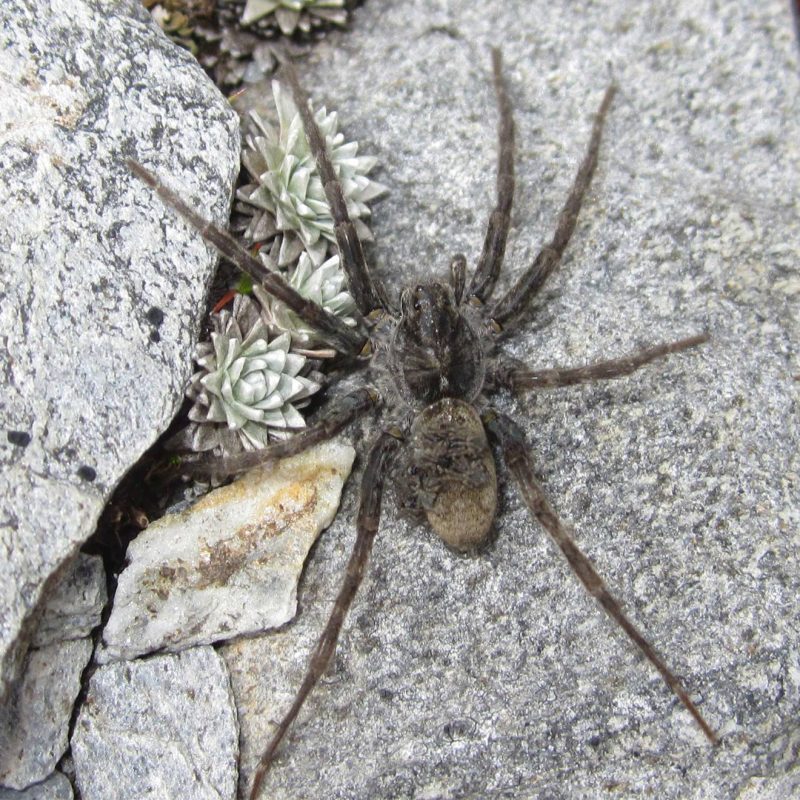
The alpine wolf spider (Anoteropsis alpina) is a high-mountain predator and can hunt down and eat up to 15 invertebrates a day. They live between 600m and 2500m above sea level in Ka Tiritiri o te Moana.
If you’re not keen on spiders, don’t worry; they’re not keen on you either and will skitter away at your approach. If you spot one, look closely at its back: if it’s a female, there might be a cluster of spiderlings hitching a ride. The females have special hairs on their backs for their babies to cling to.
The underdog
Cockroaches get a bad rap, but native cockroaches are not interested in living under your sink – most prefer to hang out in forests where they are vital recyclers of decaying organic matter.
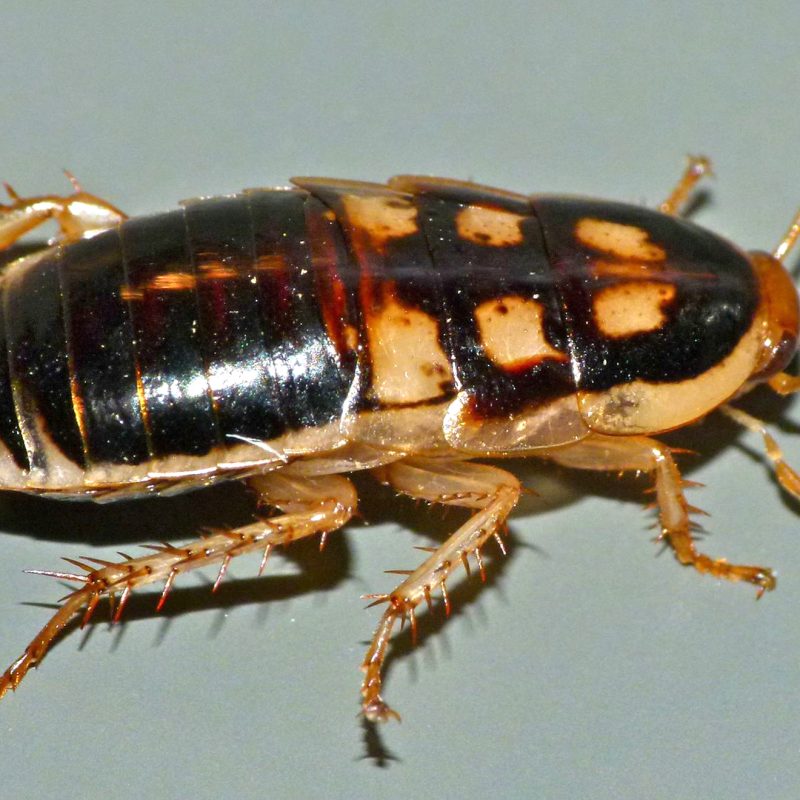
The Otago alpine cockroach (Celatoblatta quinquemaculata) is unusual as it lives among rocks in the Rock and Pillar and Old Man ranges west of Dunedin. It’s roughly the length of a sunflower seed and has a charming golden hue to its flattened body.
For most of the year it shelters under slabs of schist. When temperatures dip below -3.5°C, compounds in the cockroach’s body make ice, freezing it until the weather warms again and it can thaw out.
The peak percussionist
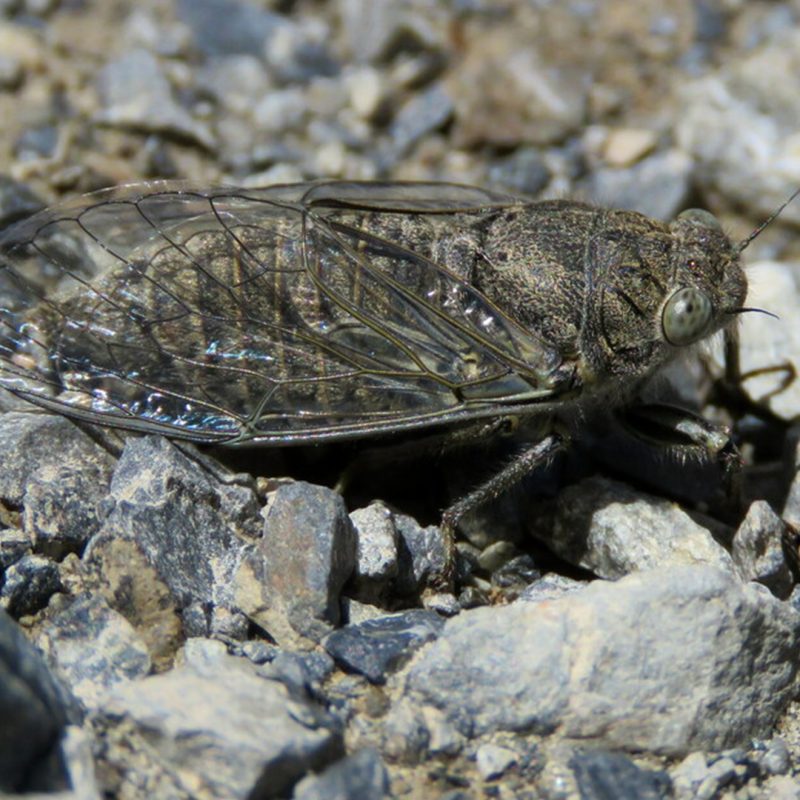
Aotearoa is home to the world’s only alpine cicadas (Maoricicada spp.). About 19 different Maoricicada species live on rocky mountaintops throughout the country. They are smaller than the garden variety and have dark, hairy bodies that absorb and retain heat.
In summer the males sing up a storm, creating a sound like a drumstick rattle on a wooden table. All cicadas owe their singing abilities to two sound-producing organs on the side of their abdomens called tymbals. Males rapidly flex their drum-like tymbals to communicate with fellow cicadas. They might be saying, ‘Don’t eat me!’, ‘I’m looking for love!’ or ‘This is my patch!’
Aotearoa is home to lots of fascinating alpine creatures. Next time you’re in the mountains, keep an eye out for grasshoppers, tokoriro cave wētā, giant snails, moths, beetles and more. New species are discovered all the time, and you can help, so don’t forget to record your observations using iNaturalist.
Lily Duval has a master’s in cultural entomology – how we represent insects in culture – and is a researcher for RNZ’s Critter of the Week. Her book, Six-legged Ghosts: The insects of Aotearoa, examines the lives of insects in nature, culture and history.