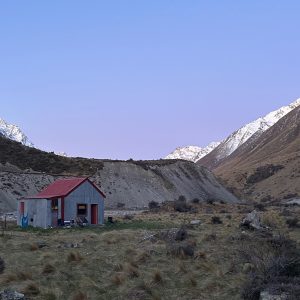
You can learn a lot in a backcountry hut. That’s what I thought while sitting around the dining table of Crosbies Hut, high up in the Coromandel Range. The candle-lit room was warmed by a glowing fire, and around the table sat five Kiwis, an Irish couple and my Dutch partner – a classic hut night was in the making. Brought together by chance, buoyed by the energy of a night with strangers in a hut in the forest, the conversation flowed like the rainwater which drummed on the roof.
“I don’t think we have any native species,” one of the Irish trampers mentioned while reflecting on the verdant forest that lined the tracks to the hut. And the mouths of the Kiwis dropped.
“We don’t have any virgin forest left – only plantations,” they added.
My partner, who grew up in the Netherlands, said she didn’t think Holland had anything native left either. It struck me – the idea of not experiencing, or not knowing, the native life of the land. I began to realise how much our flora and fauna shapes our identity as New Zealanders. As a counterpoint, on the other side of the table, two Kiwi artists said native birds were the subject and inspiration for much of their work.
Hearing the call of a tui, smelling the earthy scent of the forest, seeing ponga, nikau and rimu rising from the forest floor and stretching up to the light – this is what I think of when I attempt to articulate being Kiwi, and these elements also underpin why I tramp.
But here too, this experience is under threat. At least 76 of our birds have become extinct and more than 3000 native species are classified as threatened or at risk of extinction.
Trampers are perhaps more attuned to this than anyone. Heading into wild places, we hear the silence, but we also hear the rebound of birdsong. For a growing number of trampers, this awareness has been transformed into action. Thanks to the efforts of tramping clubs, the call of the North Island kokako now fills forests where their song had been silenced. In iconic tramping spots like the Matukituki Valley in Mt Aspiring National Park and Tararua Forest Park, trampers are returning week after week to walk traplines. And they say it has enhanced their experiences of the wilderness. It is also enriching the bush for all of us, and protecting something that goes to the root of who we are as Kiwis. You can read about the efforts of these ‘trapline trampers’ in our feature starting on page 60.
In Crosbies Hut, I learned how the land and its flora and fauna is a part of us – we need to look after what’s left.
– George Driver, deputy editor