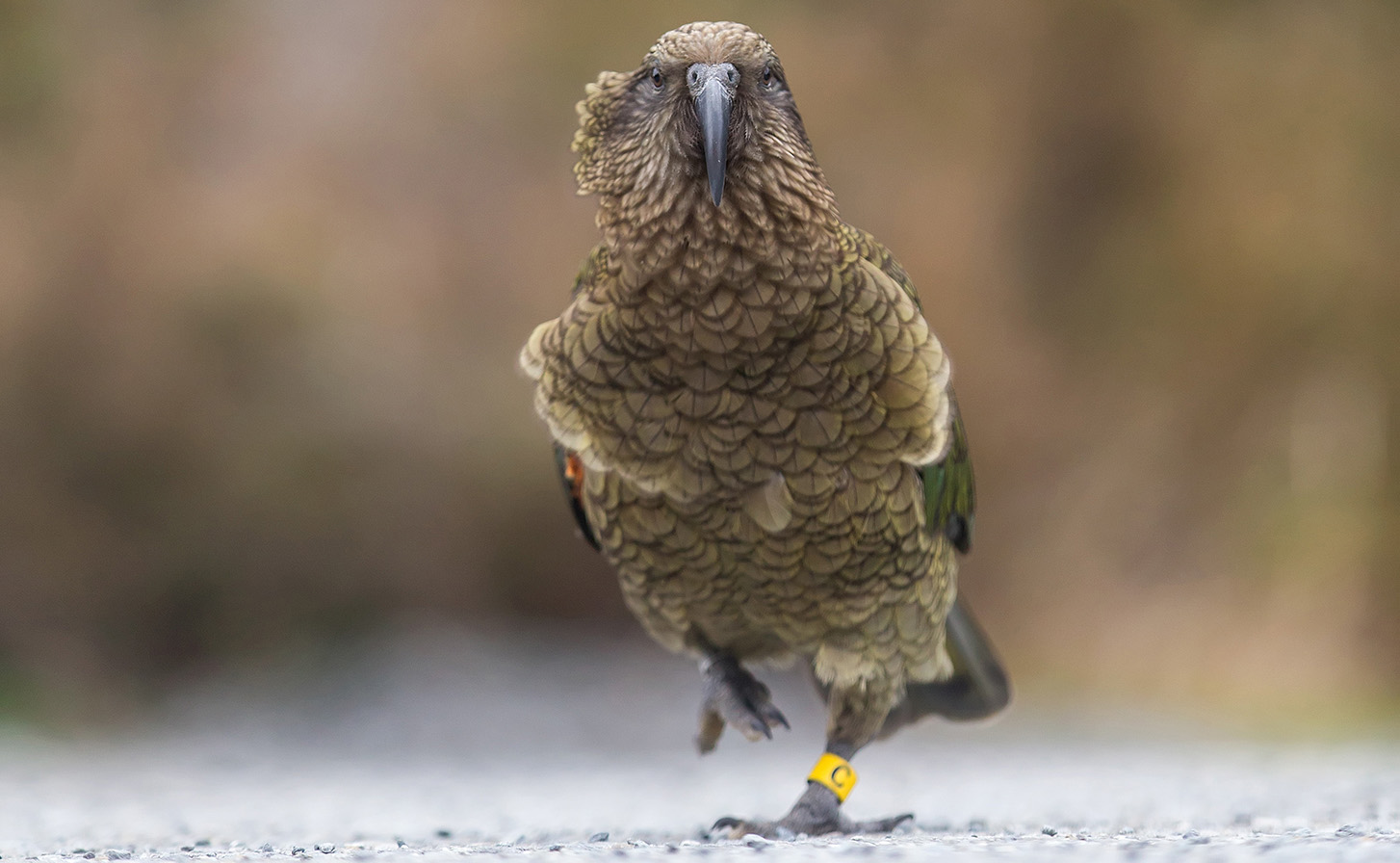
A kea conservation group has launched a new project calling on trampers to help halt the decline of the world’s only mountain parrot.
The Arthur’s Pass Kea Team has created an online kea database, where people can upload kea sightings and help keep track of the birds.
The website lists 120 individual kea – all with names, descriptions and identity bands – which people can follow. People can also upload sightings of unbanded kea, and see where kea have been spotted on an interactive map. So far, nearly 400 sightings have been uploaded to the website.
“It’s a great citizen-science project,” said Kea Team member Mark Brabyn. “We are trying to get everyone involved. Even if you have been on a tramp and haven’t seen any kea, non-sightings are useful for us to know their distribution.”
Historic sightings are also helpful, Brabyn said.
“If you have photos or notes of sightings from the past, you can still load that to the website and it’s really useful to understand any changes.”
The group has built a kiosk at Arthur’s Pass with information about kea. Brabyn is hoping volunteers will take posters and brochures to DOC huts to get more people contributing to the project.
“People still think the numbers are strong because they are easy to see at places like Arthur’s Pass, Homer Tunnel and Aoraki/Mt Cook Village, but we are getting a lot of anecdotal evidence that the numbers have significantly declined in the backcountry,” Brabyn said.
Brabyn started monitoring six kea nests in the Hawdon Valley in 2015 – all of the nests failed, probably due to predation by stoats.
“Seeing that happen was pretty shocking. It made me think, ‘is this happening all over Canterbury?’”
The Arthur’s Pass Kea Team has started a Give-a-little page to raise funds for the programme. So far they have raised $19,000 of their $30,000 goal.
Upload kea sightings at www.keadatabase.nz.
Fact file
- At least 150,000 kea were killed between 1860 and 1970, when the Government paid a bounty for kea beaks in a bid to stop the birds attacking sheep..
- Kea numbers are estimated at between 3000-7000
- Modern threats include predation, lead poisoning and conflict with humans, including being hit by cars and electrocuted by equipment
- Kea have been known to live for over 50 years in captivity