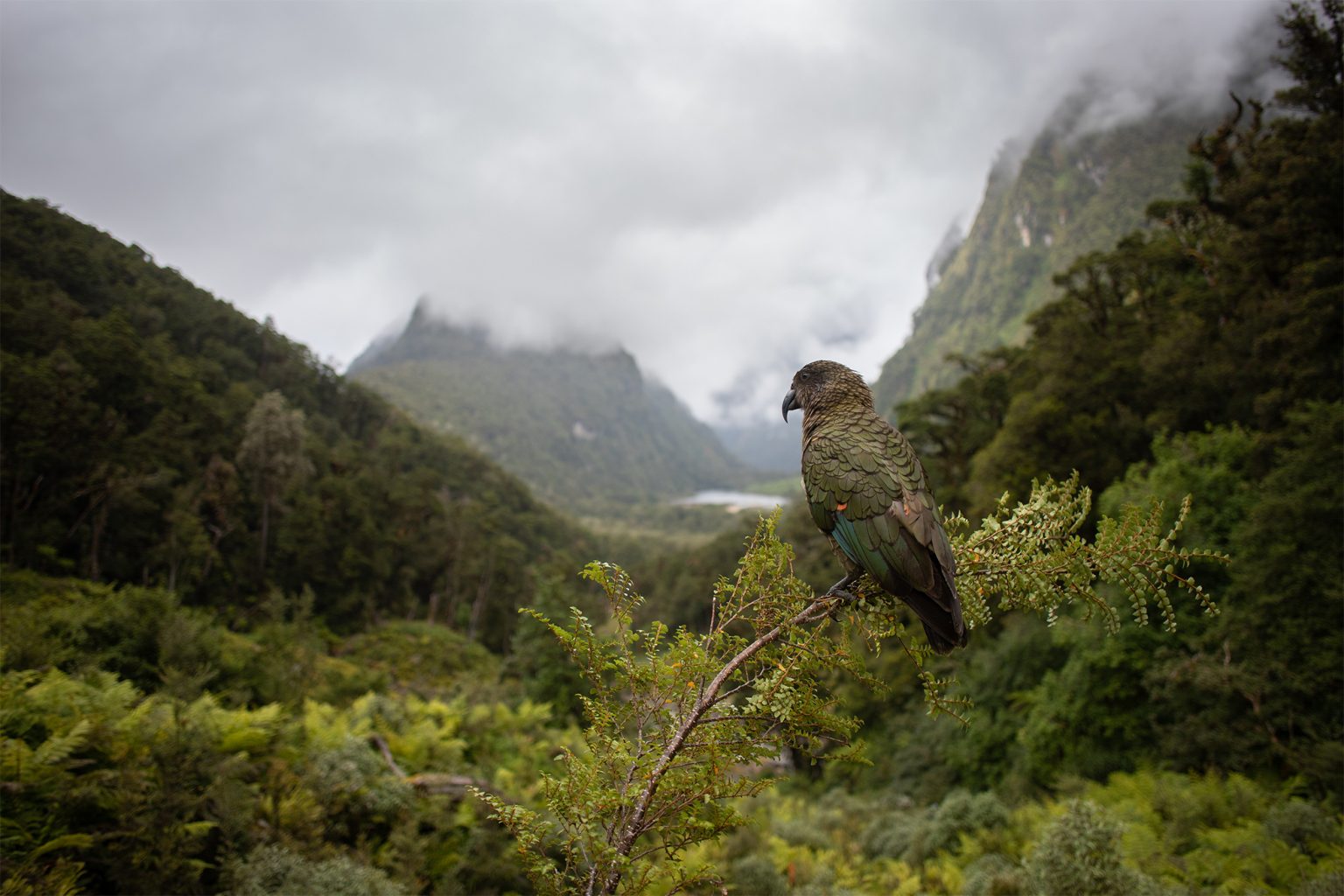
It’s little wonder that the charismatic kea is one of our most treasured native birds.
Last year’s Word of the Year was ‘rizz’, the slang word for charisma that boomed on social media. If ‘rizz’ means the ability to charm and impress, then the kea has it in heaps.
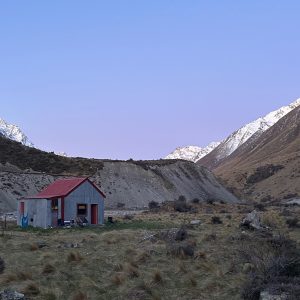
New Zealand’s alpine parrot was once known as the ‘clown of the mountains’ for its playful, quirky antics and an (annoying) urge to sneak off with tramping boots left outside alpine huts.
In 2018, in an attempt to distract the mischievous birds from moving road cones and damaging nearby diggers, DOC built a ‘wild kea gym’ near the Homer Tunnel entrance in Fiordland. The gym frame included ladders and objects for kea to play with, such as bells and hessian bags filled with fragrant herbs.
It’s little wonder then that the charismatic kea is one of our most treasured native birds. It used to have pride of place on the $10 note (now supplanted by the whio) and was voted Bird of the Year in 2017.
More recently, researchers have shown it to be among the world’s most intelligent bird species. A 2020 study by University of Auckland researchers included an experiment to test the kea’s ability to make predictions using statistical, physical and social information in a way similar to that of a human.
The study showed that the kea can make true statistical inferences and integrate different types of information into its predictions of uncertain events – skills that were thought to require language. The results for kea mirrored those of human infants and chimpanzees in similar tests.
Kea are also well equipped for alpine life. The bird’s strong, pointed bill can be used as an icepick and its clawed feet like crampons to clamber up frozen snowfields, or even as ‘skis’ to slide off hut roofs.
Like the kākā, the kea can use its bill as a third ‘foot’ to help it scramble over rough terrain. And like humans, it can be left or right ‘handed’.
Unlike us, they don’t need puffer jackets to keep warm in the snow. They have olive and emerald green feathers with orange and yellow on the underwings. Juveniles also sport yellow eye rings and lower bill.
Adult kea grow up to 46cm and can weigh 900–1100g, a similar size to a pūkeko. Male kea are about 20 per cent bulkier than females and have a longer bill. They’re monogamous and form long-term pair-bonds, and can live for up to 30 years.
Kea are endemic to the South Island. They live mainly in Kā Tiritiri o te Moana the Southern Alps from 600m to 2000m altitude, with smaller numbers at Nelson Lakes and in the Kaikōura ranges. They’re omnivorous, eating nectar, fruits, shoots, insect larvae and sometimes shearwater chicks, which they dig from burrows in the Kaikōura ranges.
Early high-country farmers saw kea land on the backs of sheep in winter and dig into the flesh with their bill to eat the fat deposits. This led to a mistaken belief that all kea were ‘sheep killers’, and in 1860 a bounty was put on the bird. Over 150,000 kea were killed before they became fully protected in 1986. They now remain an endangered species.
Listen out for the loud, high-pitched cry of adult birds, “kee-ee-aa-aa” or “keeeeeaaaa”, or the whooping and squealing calls of juvenile birds.
The Kea Conservation Trust advises trampers not to feed kea as they cannot digest the same foods as us.
Some great wild places to see kea include Mt Arthur, Arthur’s Pass, Treble Cone above Lake Wānaka, Aoraki Mt Cook, Franz Josef and the Routeburn Track.
Just don’t leave your tramping boots outside the hut.