In Aotearoa, dragonflies and damselflies are limited in species but big on fascinating facts.
The dragonflies and damselflies of Aotearoa are a fascinating bunch. With their iridescent wings, vivid colours and impressive hunting skills, they zip rapidly from place to place before hovering in mid-air like tiny drones.
These beautiful creatures belong to the insect order Odonata. One overseas ‘odonutter’ lamented the “woeful paucity of Odonata in New Zealand”. Fair enough, I suppose: there are about 6500 Odonata species worldwide, and only 14 species breed here. But I think this paucity adds a kind of magic – fewer species means every dragonfly or damselfly encounter feels special.
‘Water-snatchers’ and water babies
The Māori name for the dragonfly, kapokapowai or kapowai, means ‘water-snatcher’ – a nod to the formidable hunting skills of dragonfly naiads, the aquatic, larval stage of their lives. The term naiad is borrowed from the water nymphs of Greek mythology and is a fitting name for creatures who spend most of their lives in or around freshwater.
Dragonflies and damselflies are true water babies. The adult insect that we recognise – dazzling, fast and agile – is just the last chapter in a much longer story. Adults only live a few weeks to a few months and spend these in a hunting, mating and egg-laying frenzy. Naiads, on the other hand, may live from six months to five years, lurking underwater in pursuit of other aquatic invertebrates to eat.
Dragonflies and damselflies need freshwater to breed. Whether it’s a river, wetland, tarn or even a temporary puddle, their presence is a sign that the water is healthy and unpolluted.
Crouching naiad, hidden dragon
Of all the insects named after dragons, why these elongated fliers? One theory is that dragonflies got their name because they are the most successful hunters in the animal kingdom.
Dragonflies catch up to 95 per cent of the prey they target – that’s double the rate of a great white shark and four times that of a lion. It helps that their head is basically all eyes, giving them almost 360-degree vision. They can also predict the movements of their prey. They’re the strongest fliers in the insect world and have the uncanny ability to move each of their four wings independently – and can even fly backwards!
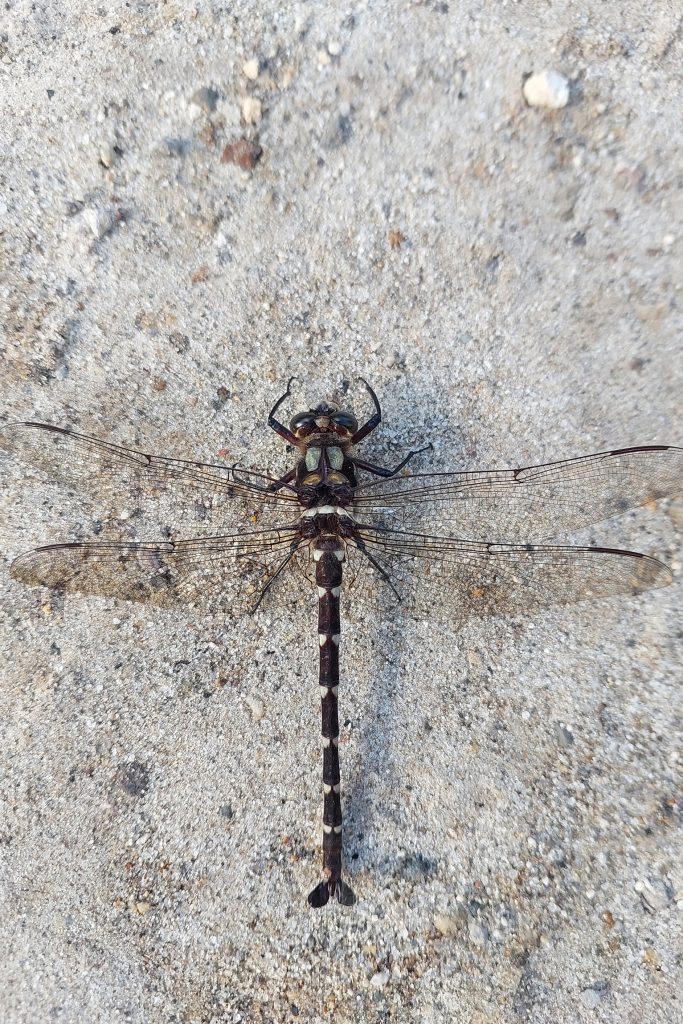
There are 10 species of dragonfly in Aotearoa, including ranger, sentry, dusk and mountain giant dragonflies. Most trampers will be familiar with the bush giant dragonfly (Uropetala carovei), which can reach 9.5cm in length with a wingspan of up to 13cm. These gentle giants live in healthy, damp native forests throughout the country and they’re not shy. If you stay still, they might just land on your hand or hat.
Damselflies: reds and blues
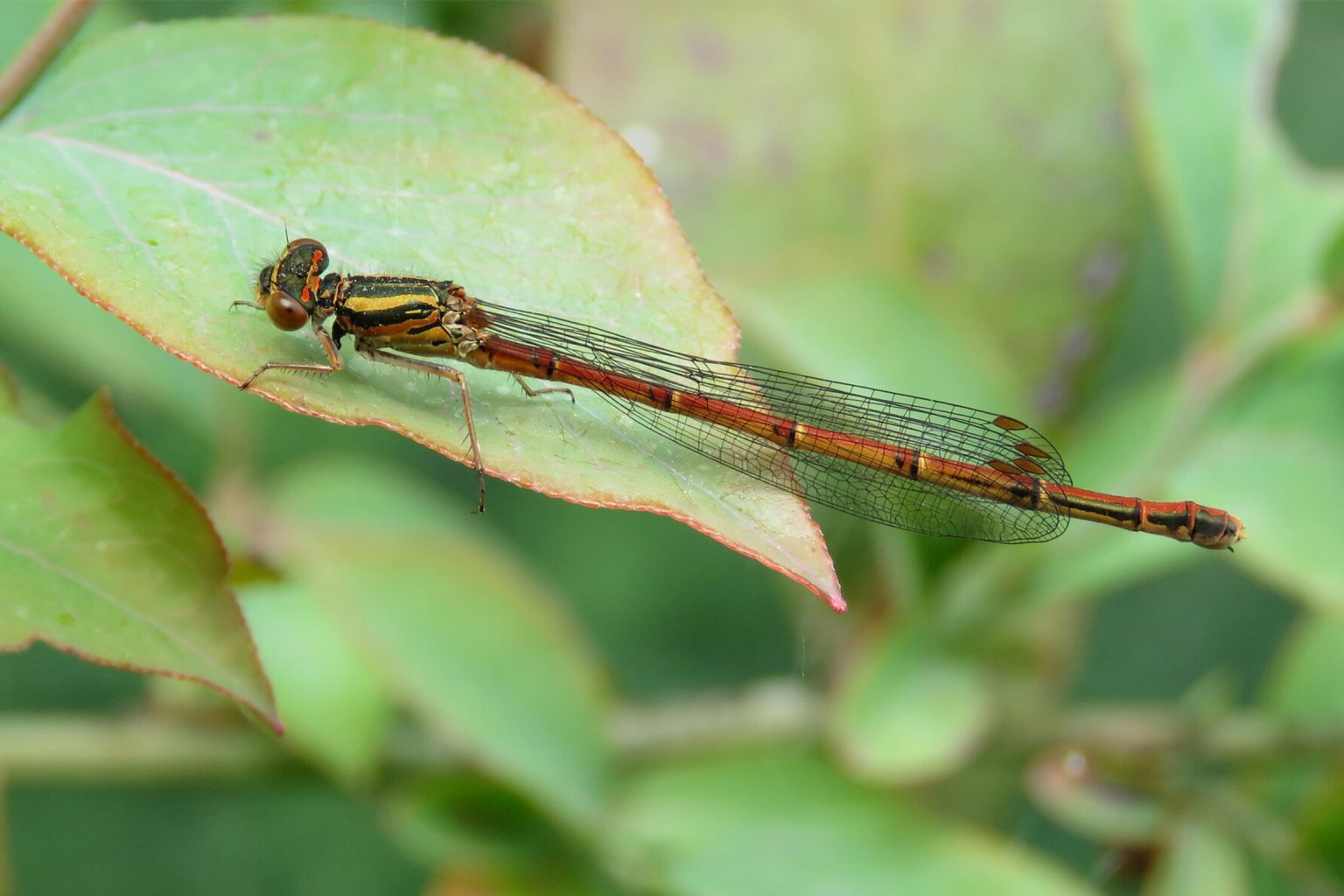
Damselflies are the slender, daintier cousins of dragonflies. It’s not too difficult to tell your dragons from your damsels. Damselflies are skinnier and rest their wings alongside their abdomen instead of perpendicular to it, like a dragonfly.
The two most common species are the kēkēwai blue damselfly (Austrolestes colensonis) and the kihitara redcoat damselfly (Xanthocnemis zealandica).
Redcoats are more common than blues, especially around lowland ponds and clear streams. Look closely and you’ll see their delicate, almost glassy wings and fine body stripes. Sometimes you can catch a mating pair creating a heart shape.
Blues are the largest of our damselflies. Experts think they’re probably better at handling the cold than redcoats as they are the main species found in alpine tarns.
Damsels are quieter fliers than dragonflies and often perch on reeds or grasses near the water’s edge, where they hold themselves perpendicular to the plant as if a gust of wind were blowing their body outwards.
When and where to spot them
Summer and autumn are the best times to find Odonata on the wing. You’re more likely to see them in native bush or wetlands, especially in places with good-quality water and little disturbance.
Next time you’re out tramping or camping, keep an eye out for the flicker of wings over a stream or pond. I dare you not to be enchanted.