The Cooks Cove Walkway is a pleasant walk with wide views of Eastland scenery and has the added interest of being the site where Captain James Cook first spent time ashore in New Zealand.
Cook sailed along the coast in 1769 and, hearing from locals that Opoutama Bay provided good protection behind some rocky islands which he named Mitre Rocks because of their resemblance to a Bishop’s mitre, he anchored the Endeavour in what has since been known as Cooks Cove. Cook and his crew went ashore to collect wood and water and to trade with the locals.
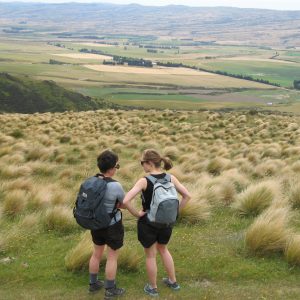
The track to the Cove begins near Tolaga Bay wharf and crosses open farmland and light bush at first. The views are stunning, with the pastured hillsides of the Uawa Valley, dotted with sheep and cattle, on the inland side, while seaward steep cliffs rear up.
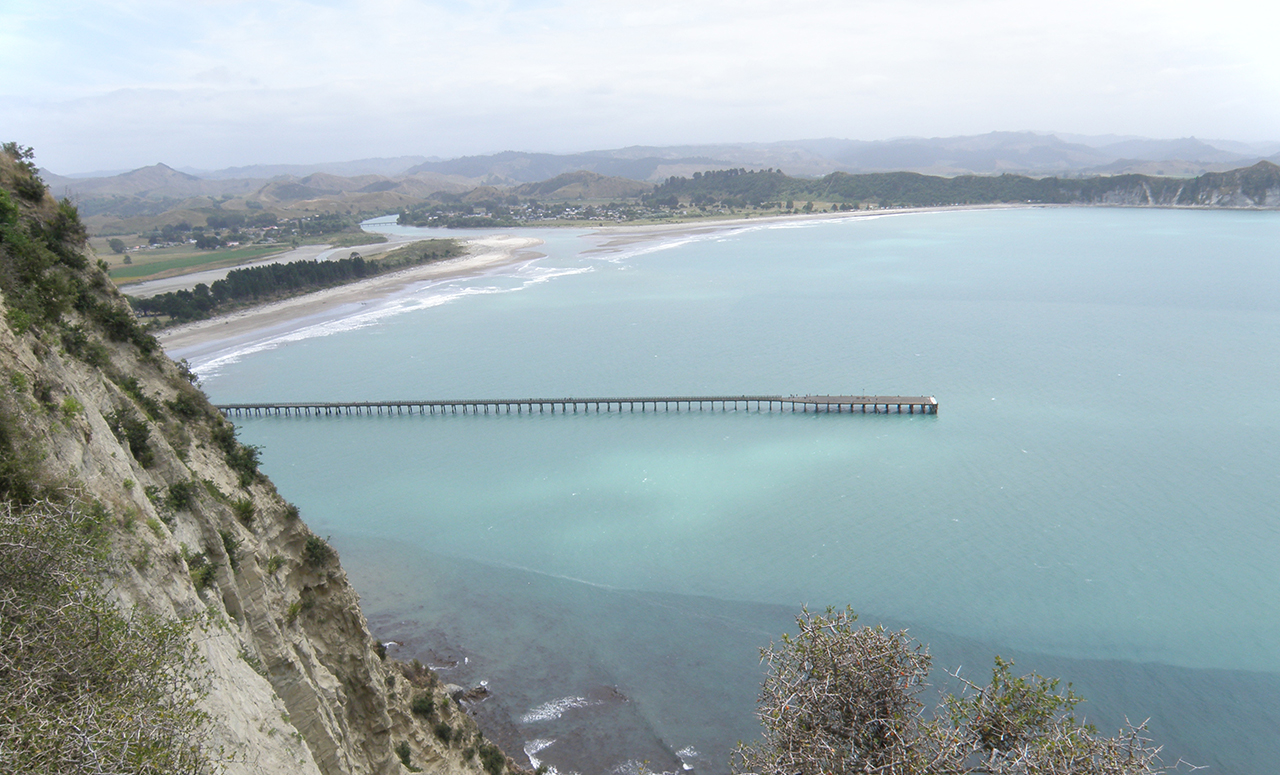
After about half an hour, the track arrives at a wooden viewing platform. This is about 125m above sea level and from here we had views down to Cooks Cove. Beside the viewing platform, previous walkers have formed a pathway around a fence to the clifftop where there are views to Tolaga Bay and its 600m-long wharf, the longest in the Southern Hemisphere.
The next section of the walkway leads down through a shady remnant of bush, mostly kanuka. In places, it can be fairly steep here and there are wooden steps along the track in the steepest parts. The track crosses a footbridge and comes out onto flats.
To the left there is a short walk to a natural archway through the hillside to the sea beyond. Cook and his crew stayed at the cove for six days and the naturalists aboard, Banks and Solander, collected plant samples. On one of their walks they came across the arch, which Banks described as a ‘most noble arch or cavern through the face of the rock leading directly to the sea. It was certainly the most magnificent surprise I have ever met with…’.
Walking around the hillside, the path passes a small cave, thought to be the one that Tupaea, Cook’s Tahitian navigator and translator, slept in during his time ashore. Tupaea was a favourite with the locals and many children were named after him. Also nearby is Cook’s Well, where the sailors found water. After six days of trading cloth, beads and nails with Maori, the Endeavour sailed away. Information panels give more details about the visit and about excavations carried out at the site in 2007. This excavation revealed that Maori had been living at Cook’s Cove since the 1300s and had hunted moa and seals.
The bay itself is small and calm, surrounded by a rocky foreshore littered with driftwood. It is a pleasant spot to wander around imagining the meeting of two different races and cultures almost 250 years ago.
– Helen Whelan

34 years of inspiring New Zealanders to explore the outdoors. Don’t miss out — subscribe today.

Questions? Contact us