Where to go to spot more of New Zealand’s largest native insect
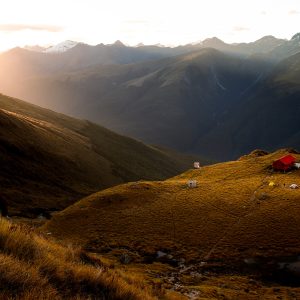
The thunderstorm unleashed its force with unexpected ferocity. One moment we had been in sun on the curious granite jumble of Kahurangi’s Lead Hills; the next we were pulling on coats in a downpour of such impunity that it was like sudden immersion. It seemed Huey was trying to flush us out of the mountains like rats from a sewer.
Water ran everywhere; small waterfalls tumbled through the granite boulders, and the thin soils simply could not contain the sudden soaking. Like most such weather events it passed quickly and the sun emerged again as we pitched our tent.
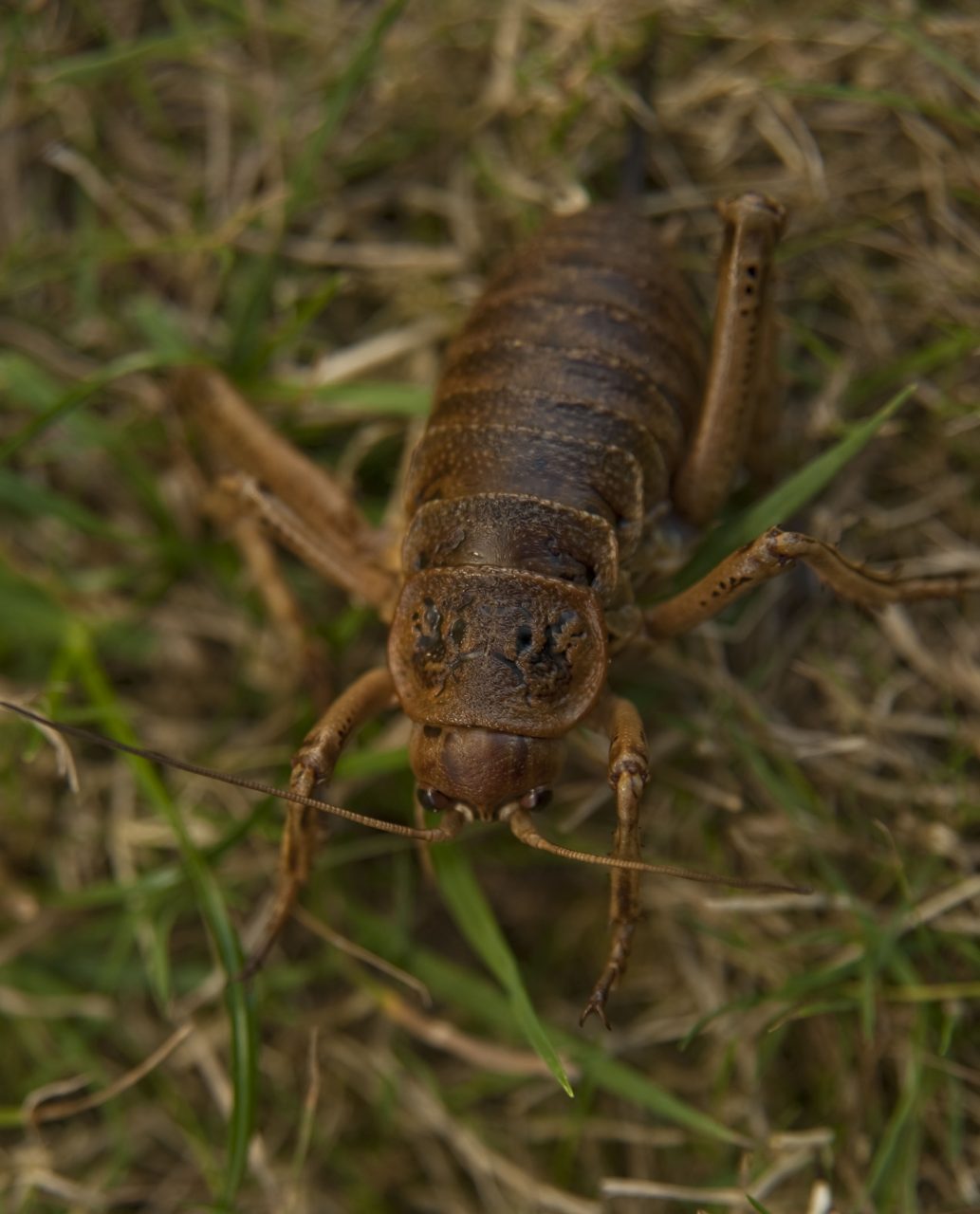
It was then I noticed a large weta, looking somewhat bedraggled – if that expression can be applied to a creature of such amoured appearance – sunning itself on a flat rock. The sudden rain had flushed the normally nocturnal creature out of its crevice. I knew enough about these large endemic invertebrates to know it was probably a giant of the endemic Deinacrida genus, but I could not name the species.
Back at home, I consulted weta expert Mike Mead’s book Forgotten Fauna and deduced that the weta was not the more common scree weta (Deinacrida connectens) but the rarer Deinacrida tibiospina endemic to north-west Nelson. A subsequent exchange with Meads confirmed a new record for the northernmost locality of the species.
Despite appearances, giant weta are docile creatures (unless you are a prey item) without the fearsome jaws that have earned their tree weta (Hemideina) and ground weta (Hemiandrus) cousins a bad reputation. Eleven Deinacrida species are recognized, although the exact taxonomy of some remains uncertain. Only the common scree weta is reasonably widespread and not considered vulnerable: present in many parts of the Southern Alps, it ranges as high as 3100m on Aoraki/Mt Cook.
Their size seems to render the giant weta especially vulnerable to rat predation and some species are considered to be remnants of once more widespread populations. For example, wetapunga (Deinacrida heteracantha) once existed in forests from Northland down to the Waikato, but now remain only on Little Barrier Island. Weighing up to 45g, they have the distinction of being New Zealand’s largest native insect, and indeed one of the heaviest in the world.
Others exist in the Kaikoura and Paparoa ranges, on Herekopare Island (Foveaux Strait) and the Poor Knight Islands. New populations and even new species of weta continue to turn up. Despite their size, observing giant weta is not easy. Many are nocturnal and often hide during the day in crevices among rocks or tree trunks. Nevertheless, a few places offer opportunities to see and appreciate these most fascinating creatures.
Mahoenui giant weta, Mahoenui (King Country)
Although known about as early as 1962, this was not recognised as a separate Deinacrida species until the late 1980s. DOC officers discovered these weta in the most unlikely location: a gorse-infested pocket of King Country farmland (its normal habitat is tawa forest).
It seems the weta had somehow survived rat and stoat predation by inhabiting the prickliest refuge on offer: old man gorse. DOC found itself in the curious position of having to maintain gorse by judicious goat browsing in order to conserve the habitat for weta.
The best way to visit is to join a DOC summer nature programme to Mahoenui.
Cook Strait giant weta, Wellington
Flat-topped Mana Island lies offshore from Wellington’s Titahi Bay suburb. The former farm and quarantine island has been a scientific reserve since 1987, and the subject of an ambitious restoration programme spearheaded by DOC and volunteer groups.
Cook Strait Giant weta (Deinacrida rugosa) are native to both Mana and Stephens islands, and Mana was the source for establishing new populations on Maud Island in the Marlborough Sounds, Somes/Matiu Island in Wellington Harbour, and at Zealandia.
Mana Island can be visited by sea kayak or boat, but landing is permitted only at the main jetty and visitors must take precautions to prevent carrying rodents with them. Somes/Matiu Island is reached on a short ferry ride from Wellington. Zealandia is even more accessible – by bus or bike.