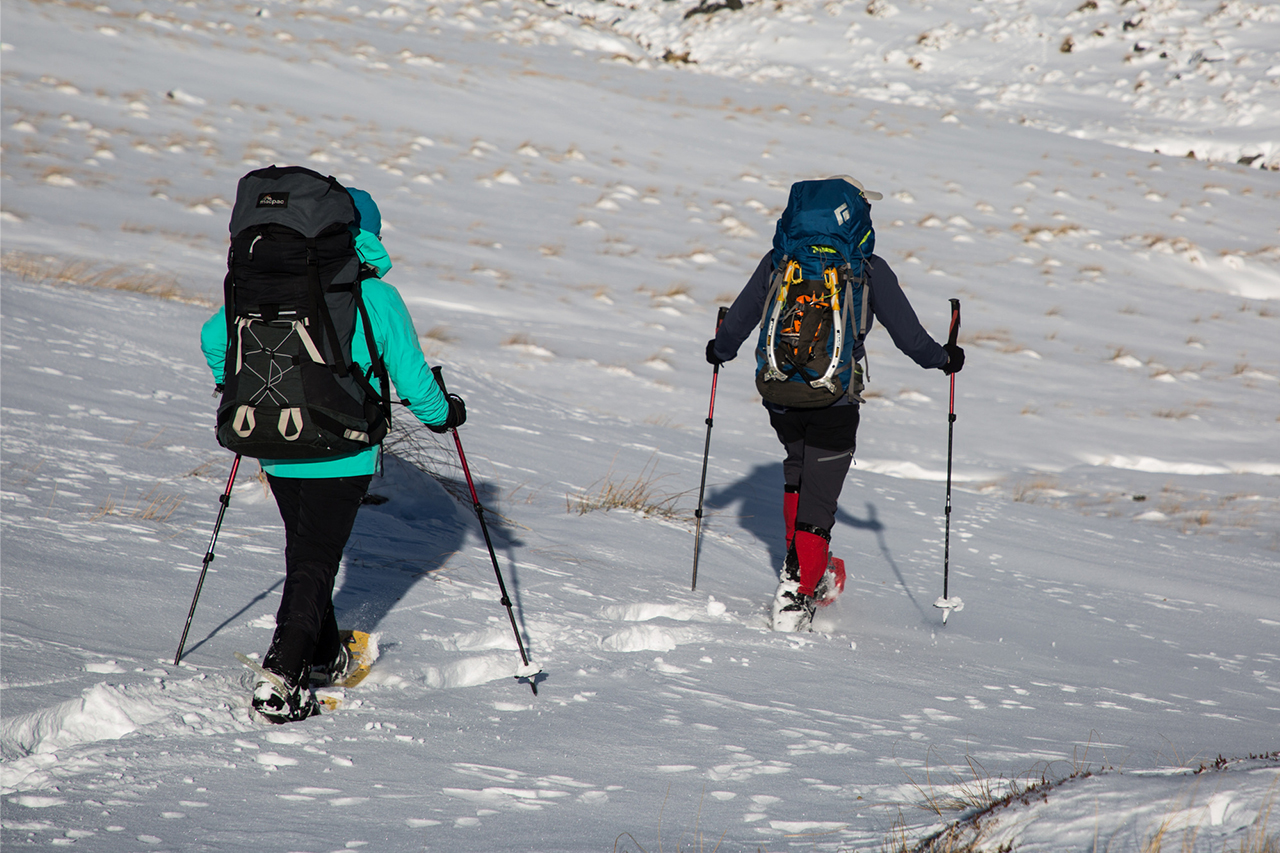
Snake Ridge has a gentle incline and we enjoyed a mild workout as we climbed to that grand lunch spot, then descended across Mt Gerald Plateau where Munro told us about watching an aurora when he camped there one night.
The next day, we scrunched up Snake Ridge, keeping away from the edge having been warned of an overhanging cornice that we couldn’t see. There was little chatter, just warmth from the sun, the Alps glistening and there were smiles all around. Near the top, we sidled across to Stag Saddle and began the long descent down Camp Stream, finally running out of snow but equally enjoying the emerging tussock landscape that’s such a distinctive feature of the Two Thumb Range in summer. We’d not seen another soul all day. This was part of the appeal for one of our group, Caroline Hughes.
“I absolutely loved the trip and am now a snowshoe addict,” she says. “I loved the serenity, plus the obvious workout you get with snowshoeing. I went home to Queenstown and bought my own, very swish French shoes, and can’t wait to use them again this winter.”
Those ‘swish shoes’ were purchased from Janelle Fletcher and Pierre Champignat in Wānaka. The couple import TSL Outdoor snowshoes made in the French Alps region where Champignat grew up. Fletcher says she’s noticed snowshoeing gaining momentum in New Zealand.
“It wasn’t easy at first after coming from France, which is such a snowshoeing nation, but what we have noticed over the last two years is that people have been diversifying and trying snowshoeing for various reasons,” she says.
“I do think Covid had an impact, people craved being outdoors and wanted to avoid ski-lift queues and crowds.”
There’s also the tightening of the dollar. “Some people just can’t afford a ski pass and with snowshoes, they can whizz up to any mountain and get out on the snow for nothing,” Fletcher says. “We also see die-hard skiers or snowboarders who either have injuries or feel their age turn to snowshoeing.”
Queenstown’s Jude Collett took up snowshoeing after a skiing injury 12 years ago so that she could still get into the backcountry in winter. She’s also one of Wakatipu Tramping Club’s growing snowshoe cohort.
“We run two or three snowshoeing trips a year,” she says. “We tend to do day trips onto the Pisa Range, or Old Man or Old Woman Range. We can also access some good high places through the ski fields, in particular The Remarkables. There are so many options after a good snow dump.
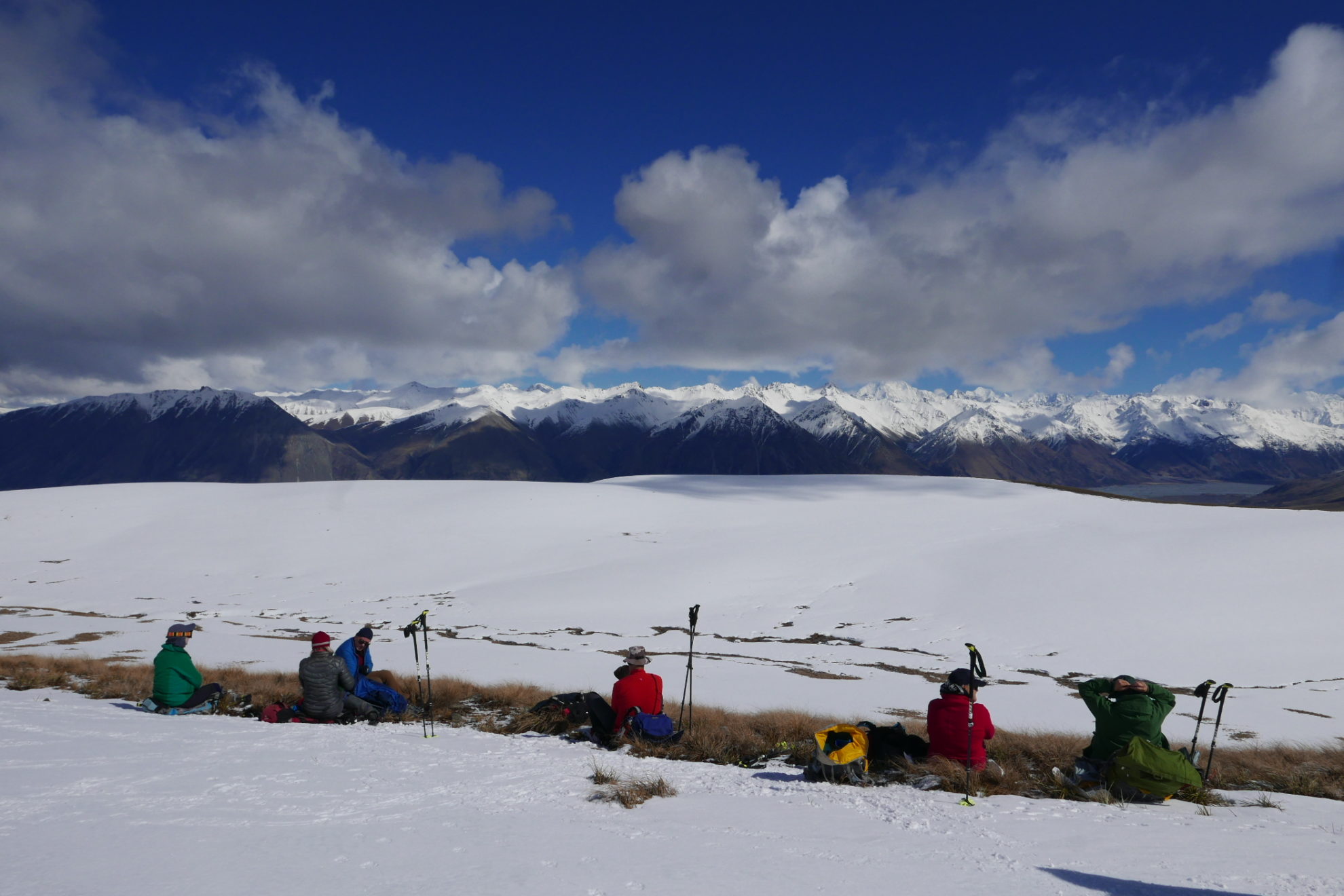
“Sometimes, if it’s a bluebird day, a few of us will just say, let’s go.
“It’s also about getting out into the hills in winter without ice axes and crampons and the skills needed to use them. Snowshoeing is available to more members. We’re thrilled that it adds to our trip options.”
Another club member, Margaret Blanshard, says the snowshoeing trips often attract older people who don’t want to downhill ski anymore.
“We have good leaders, they know their way around and can manage if they get caught in a white out, which can happen.
“Sometimes we’ll walk first, up to the snow, for example up Wye Creek, and then we put our snowshoes on. They are so light and easy to throw on your pack. The shoe designs vary, happily we are seeing more options locally now.”
It’s quite hard work, she adds. “It’s harder than walking and you don’t cover the same distances – well I don’t – but we can get to all sorts of places on snowshoes. Essentially, if you can tramp, you can snowshoe.”
At the Wānaka Snow Farm, general manager Sam Lee says snowshoeing is growing by at least fifty per cent each year. “We have been investing significantly in our snowshoe fleet.
“The new clientele includes a lot of people who have moved to the region or who are visiting and don’t have any experience in snowsports. They might have been hikers and are keen to be in the snow. Also, they are generally aged 40 plus although we do get a smattering of younger ones, and we get school groups.”
People can safely snowshoe on their own, he adds. “It’s just follow your nose; snowshoes are designed for that and whether the snow is soft or hard there is a benefit of wearing snowshoes as opposed to hiking in the snow.
“Snowshoeing is definitely opening the mountains to a wider demographic and it’s a good gentle exercise without major impact – I reckon it’s become the golf of winter sports.”
Snowshoes have long been a practical aid for more adventurous winter pursuits. Some hunters use snowshoes for winter chamois and tahr hunting. Each winter, a friend attempts at least one off-piste multi-day snowshoe/tramping adventure, the shoes help him avoid much deep snow plodding. Climbers use them for access.
Fletcher says snowshoeing can be as gentle or as high energy cardio and adventurous as you want it to be.
“Whether you want to stroll along gentle slopes as a beginner, or explore glaciers with more technical shoes, snowshoes can take you to the terrain you want to be on.”
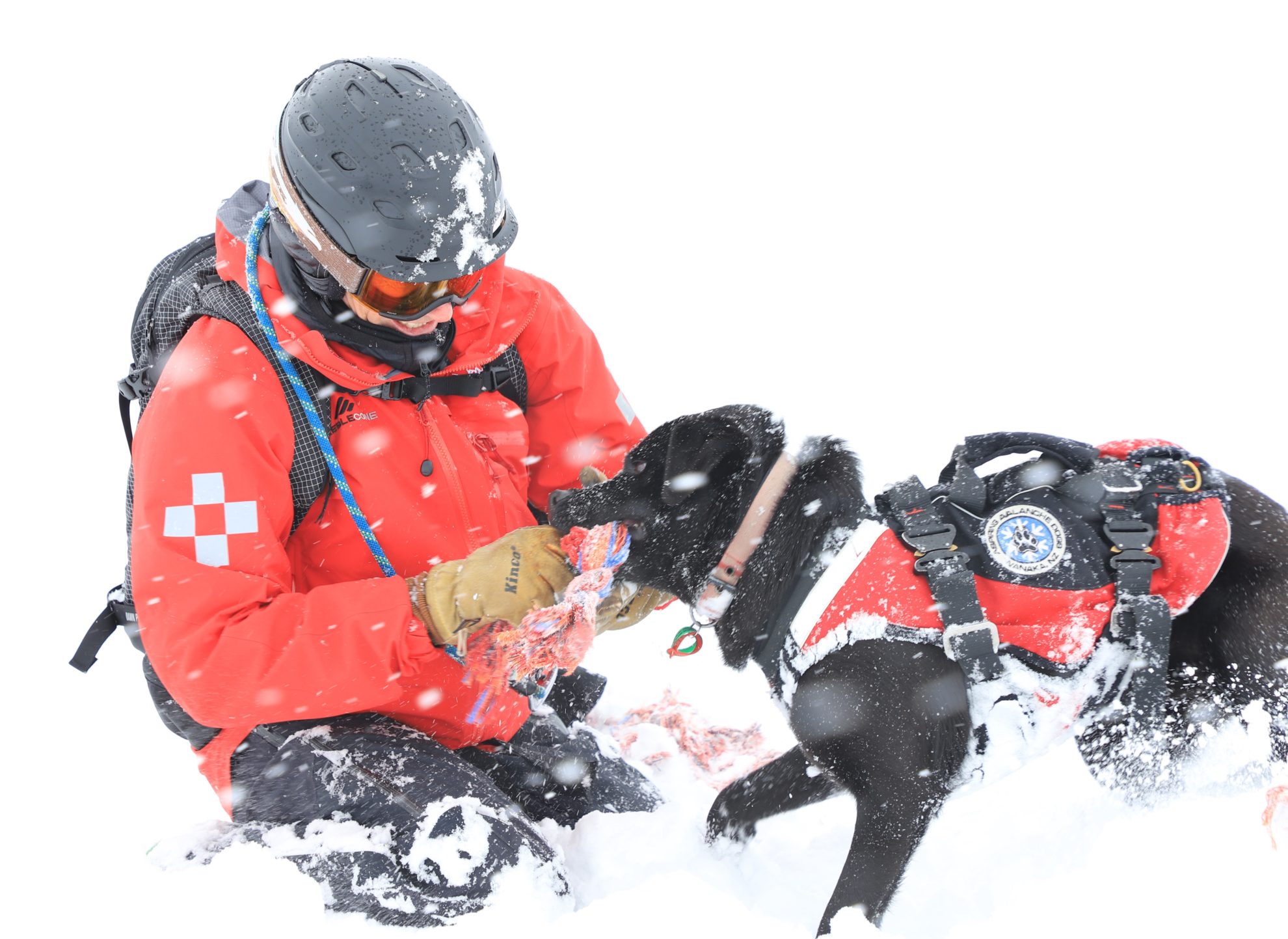
Snowshoes are now essential equipment for avalanche dog rescue teams, says Wanaka’s Matt Gunn, a senior handler with NZ LandSAR, which runs twelve avalanche dog teams certified to carry out avalanche rescues.
“Snowshoes are an incredibly valuable part of our equipment. They now have priority over skis as skis have limitations when transporting our dogs.
“It’s partly about our response protocols: we can quickly load the dogs and us and our equipment into a helicopter, but skis need to go into a pod and that’s problematic espec-ially if we want to go for a quick unload while the helicopter hovers.
“Also, the conditions we work in vary wildly underfoot. With their steel spikes, snowshoes are useful in hard, icy conditions, plus they’re good for travelling over softer snow.
“Sometimes we do need skis for traversing into terrain if helicopters can’t get close enough, but we’ve been using snowshoes as part of NZ LandSAR Avalanche Dogs for the last decade.”
Gunn also runs Aspiring Avalanche Dogs, a non-profit organisation based out of Treble Cone that aims to ensure a continued supply of trained avalanche dogs. When it comes to avalanche rescues, dogs are a critical aid, he says.
“A dog’s ability to scent minute particles is quite incredible, and they can cover a large area very efficiently and quickly. However, it takes two years to train a dog from puppy to operational level.”