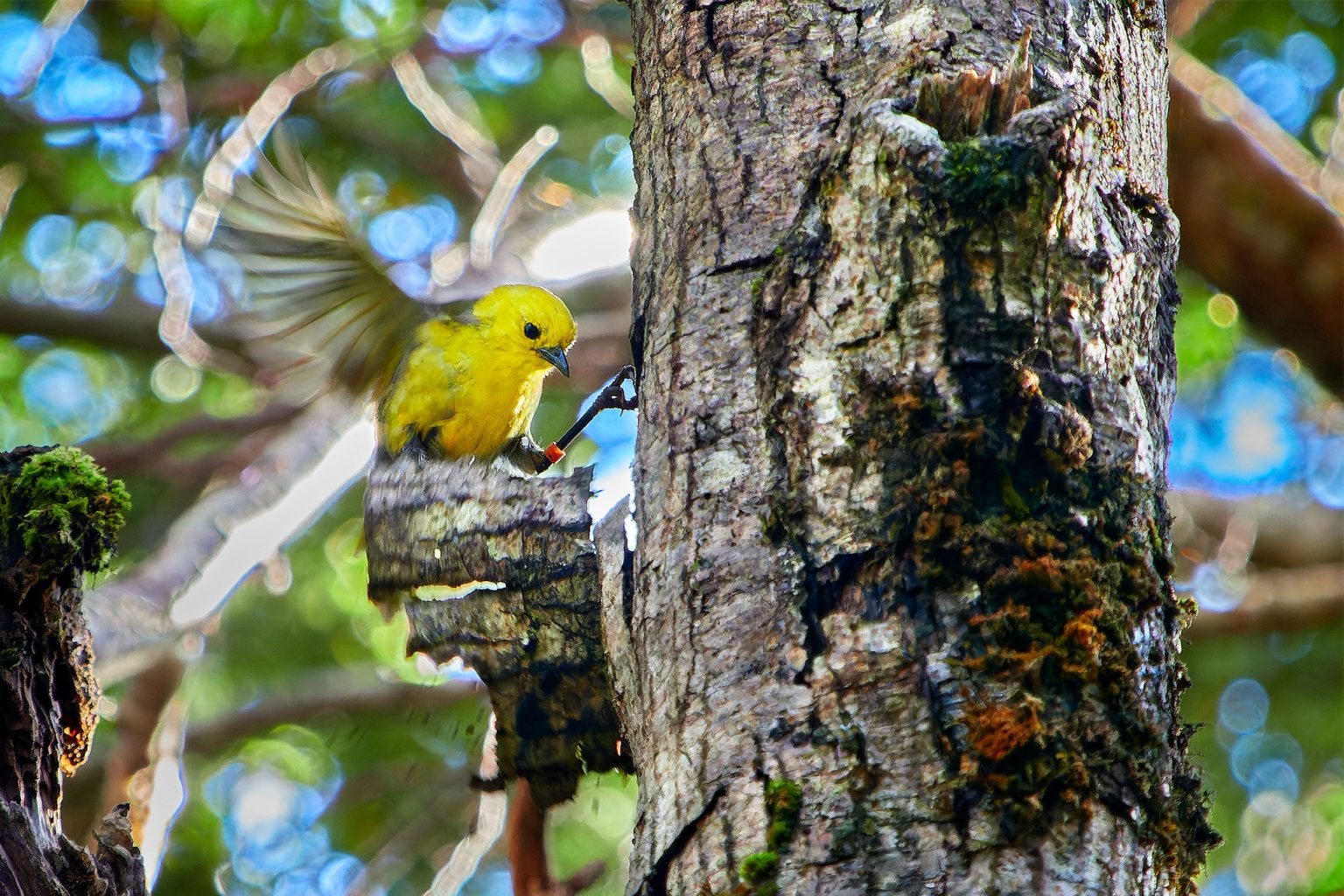
The mohua and pōpokatea are canary-like songbirds and unwitting hosts of the parasitic long-tailed cuckoo.
The mohua and pōpokatea are two closely related, sparrow-sized songbirds and are the most luminous feathered jewels of our native forests. The mohua or yellowhead is as vivid as kōwhai flowers, and the pōpokatea or whitehead is as bright as the gleaming white flowers of puawānanga, Clematis paniculata.
The South Island mohua is the more dazzling and also the more famous, having won Bird of the Year in 2013 and being depicted on the $100 note.
The gregarious North Island pōpokatea is also an avian luminary, and its silvery white plumage ensures it’s not eclipsed by its colourful cousin.
The old English name for both these endemic songsters was ‘bush canary’, after the bright yellow Atlantic canary, a popular cage-bird in Europe prized for its song. This was because of the Kiwi birds’ canary-like melodic songs, which consist of whistles and trills – viu viu viu and zir zir zir zir – and, in the case of the mohua, its bright canary-yellow head.
The mohua (30g) is heavier than the pōpokatea (18g), but the latter is more abundant and widespread in the North Island than is the mohua in the South Island.
The male mohua has a yellow head, breast and upper belly, black eyes, bill and legs, and an olive-brown back and tail. The male pōpokatea looks similar but with a white head, breast and belly, richer brown back and rufous brown tail. Both females are slightly less colourful.
A reliable place to see mohua is Ulva Island near Oban, Stewart Island. They were once throughout the South Island’s native forests but since the mid-twentieth century have been confined to beech forest. This reduction in range has been caused by introduced predators. They are now relatively common only in the Catlins, the Blue Mountains, and the Dart and Landsborough valleys.
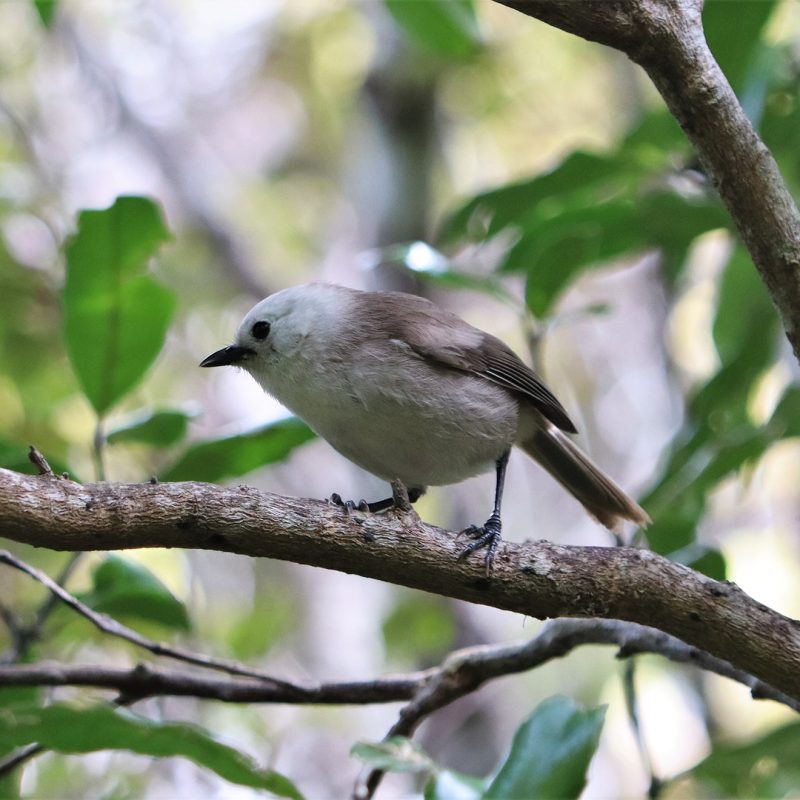
Pōpokatea are easy to see at Zealandia and on Tiritiri Matangi and Kāpiti islands and are still widespread in the North Island, mainly in larger areas of old scrub and native forest and in mature pine plantations from Waikato south.
Both feed by clambering up trunks and branches, or clinging by one foot – sometimes upside down – while using the other to tear off bark or moss. They peck and grab small grubs and insects. Pōpokatea sometimes eat small forest fruits.
During the spring to summer breeding season both species forage in family groups that include an adult pair, sometimes with one or two helpers (offspring from previous years) plus chicks that have fledged that season.
In autumn and winter they forage in larger multi-family flocks. The noisy movement of these flocks attracts other birds to follow and forage with them, such as kakariki, pīwakawaka, tomtits and brown creepers. Mohua and pōpokatea lead these mixed flocks.
Both species reveal their presence by their repeated contact calls and the falling debris they dislodge.
Both are cooperative breeders: the male sings and defends a territory against males from neighbouring territories, and the female builds the nest and incubates the eggs.
The male guards the female during incubation and feeds her while she is on the nest. Both parental birds feed their young, but helpers may assist with feeding the female on the nest and the chicks.
The mohua nests in tree cavities while the pōpokatea builds a tightly woven cup-shaped nest up to 15m above the ground in a tree fork or in dense foliage.
Both are parasitised by the endemic long-tailed cuckoo or koekoeā, a large well-camouflaged cuckoo. The pōpokatea is the only species parasitised by koekoeā in the North Island, while the mohua and brown creeper are the main host species in the South Island.
The koekoeā lays a single egg in the unattended host nest which the host adult female then incubates with her own eggs. Once the koekoeā chick hatches, it ejects the other eggs or chicks and is raised on its own by the host adults and their helpers.
As the koekoeā chick grows up to 40cm and 125g, it eventually dwarfs its unwitting foster parents.