Letter of the month
It was heartening to see the challenges of tramping with neurodiversity acknowledged in the June 2025 issue (see ‘Last Weekend’). Before we had children, my husband and I, keen trampers, were prepared for heavy packs, carrying nappies, limited walking distances, and a snail’s pace. What we had not counted on was the additional complexity when one of your children is neurodiverse.
Planning and executing tramps is another level of difficulty when your child has sensory issues and cannot sleep in a sleeping bag or any other bedding apart from their duvet from home, cannot tolerate sandflies touching their skin or flying around their face, and has severe food restrictions. Staying in shared accommodation when your child sometimes freaks out at loud noises and responds by screaming poses another barrier. However, trampers are resilient and problem solvers, as are parents of neurodiverse children, and it is great to hear of other families also working through these issues and getting out there in the wilderness.
– Lei McDowell
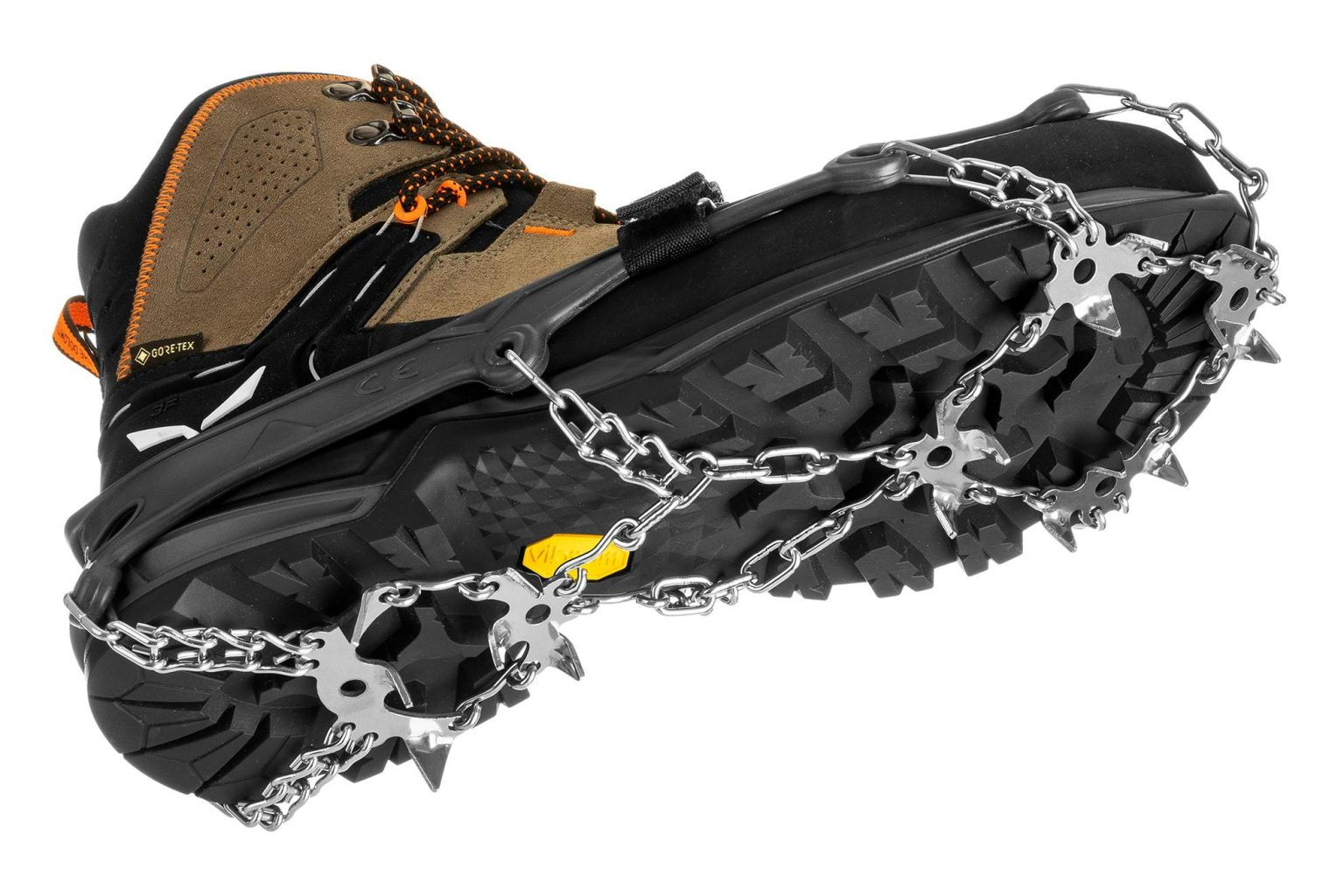
Lei receives a pair of Salewa Mountain Spikes worth $170 from www.bobo.co.nz to ensure safe winter tramping. Readers, send your letter to the editor for a chance to win.
Old pills don’t work
Recently, I was stung on the knee by a wasp. Being prepared, I applied antihistamine cream to the sting site and took an antihistamine pill. Next day I had a mildly swollen lower leg. I was disappointed the pill was ineffective as it was only 12 years past the expiry date. Lesson learnt, I refreshed my pills. Be prepared!
– Bruce Dick
Kōkako in Te Urewera
I was interested to learn that kōkako are present now in Te Urewera (‘The A to Z of tramping’, June 2025). I would like to hear them there as Te Urewera is special to me. I was a deer culler in the headwaters of the Waioeka River in spring and summer 1975–76. I also hunted in the Whirinaki, the Horomanga and Waiau areas. There were no kōkako in the upper Waioeka at that time or on the short return trips I’ve made since.
I am an ex-forest ranger and forester and have heard kōkako in Pureora Forest. I’ve also seen the famous captive one at Pūkaha National Wildlife Centre, Mt Bruce (since deceased).
One assumes that some august body is carrying out predator control, in a specific area somewhere in Te Urewera, to the extent that DOC or perhaps Tūhoe have actually released kōkako into the area? I am a fit 68 now and would be most tempted to undertake a pilgrimage to the part of Te Urewera where the birds can be heard.
Please be so gracious as to provide further details – or is it possible a reporter has been carried away by the mythological aspect of the situation?
– Maurice White
– A remnant kōkako population was restored in the Waimana Valley in northern Te Urewera after extensive trapping, as part of DOC’s Mainland Island project. Sam Gibson, who co-wrote this section of the A-Z feature, said his go-to spot would be the Otamatuna Track. – AH
Walk1200km keeps us going
I have just completed the first six months of the 2025 Walk1200km challenge.
I’ve had a fair setback with some significant achilles problems this year, but with some excellent physio treatment I’ve kept going and have just logged 952km.
Walk1200km is such an encouraging scheme and I enjoy being able to log the progress every day. Living in Central Otago, I have some beautifully scenic areas to walk in.
Thanks for keeping us all going!
– Jillian Wilson
75 peaks grading
I really enjoyed ‘75 Top Tramping Peaks’ (July/August 2025). The selection of peaks was excellent, and it gave me some great inspiration for future trips. It’s a breath of fresh air to have an article like this on challenging yet accessible and rewarding tramping trips.
However, I question a couple of the grades given to the trips in the article.
Sisyphus Peak (#62) was graded easy–moderate. I did this trip with my friend in January and I would consider it to be moderate–difficult and for fit, experienced trampers. The route up Rainbow Stream involved some boulder hopping, traversing across and through the debris of two avalanches. Some tricky route-finding up steep snowgrass slopes took us to a washed-out gut of steep scree and boulders, with a risk of rockfall from choss cliffs above. Easy scree, followed by steeper scree, lead to Wilmot Saddle, which likely would have been snowy any earlier in the season. From there to the summit is straightforward. We descended the south spur for a challenging but excellent 9hr day from the Rock of Ages Bivouac.
Compare this to Roys Peak (#64), graded moderate. Roys is much lower, the climb is shorter, there’s an excellent benched track to the top and it’s in the foothills rather than the Alps themselves, with phone service the whole way. Roy’s Peak is significantly easier than Sisyphus by any measure.
Thanks for the hours of entertainment during hut days!
– Tommy Thomson
– Our mistake, we agree Sisyphus should be moderate–difficult, which is how we graded it in the article ‘Up Sisyphus’ (February 2024). Grades are often subjective relative to a person’s fitness and experience, among other factors. Perhaps we were too cautious in our grading of Roys Peak, but compared to Mt Iron, another Wānaka peak, it is a much more serious undertaking. – AH
Walking improves lives
It has been amazing to see how Walk1200km has motivated and helped improve the wellness, fitness, and lives of so many people.
Tramping clubs also do this. I joined the Bishopdale Tramping Club upon retiring in 2017. We are predominantly over 60 years old, with a few members over 80. We walk for 4–6hr on a Wednesday, somewhere within 1.5hr of Christchurch. We use buses for transportation, so we don’t have to walk a loop track. We walk in two groups, allowing members to choose a shorter or less difficult track if they prefer.
Tramping clubs are a wonderful way to stay fit, to see parts of the local area you wouldn’t usually get to, and to meet like-minded people.
– Jan Barber