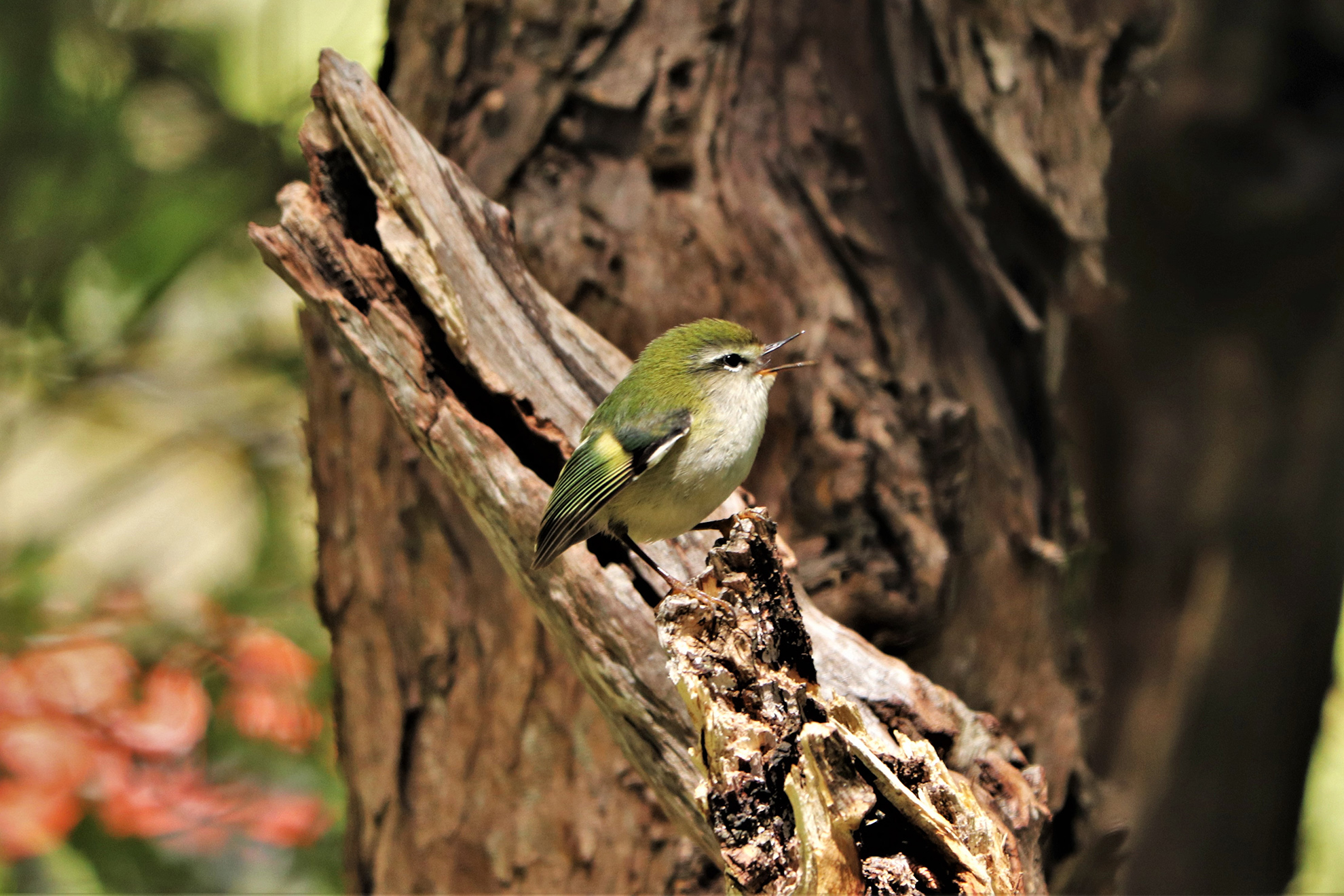
The pīwauwau rock wren has oversized feet and is NZ’s only true alpine bird. Photo: Jeremy Sanson

Ancient wrens know how to rock

September 2024

Read more from

September 2024

With the rock wren and rifleman, we get to see rockstar posturing and arboreal acrobatics.

The tītitipounamu rifleman and the pīwauwau rock wren may be two of our smallest songbirds. But, when it comes to charm and gutsy grit, size doesn’t matter.

The pīwauwau is our only true alpine bird, living in the Southern Alps between the treeline and permanent snow, where it forages for insects in crevices between large rocks – even during winter snow. This dainty 10cm bird with oversized feet conquered the Southern Alps millions of years before Ed Hillary strapped   crampons to his boots.

The even smaller 9cm tītitipounamu lives in mature native forests below the treeline in the wilder, higher altitude parts of both main islands. It is the original tree-climbing acrobat of Aotearoa’s ancient forests. It can climb the tallest native tree and hang upside down, precariously clinging to a mossy branch with its muscular feet and sharp claws while it forages for insects.

Both have a tiny tail, short rounded wings and proportionately long legs and feet. The tītitipounamu has a dark stripe by each eye and a subtle pale stripe above each eye, a dark upturned fine bill, and dark legs with kōwhai-yellow feet. The slightly smaller males have a jade green back and cap, dark wings with kōwhai and jade-green tints, and a greyish-white front with kōwhai flanks. Females are mostly yellowish-brown with dark speckling and pale greyish below.

The pīwauwau has a more prominent pale stripe above each eye, a shortish dark bill, pale pinkish legs and feet, and very long toes and claws. Males vary from emerald- to olive-green above and grey-brown below with kōwhai-yellow flanks; females are drab olive-brown and paler below, with muted yellowish flanks.

September 2024

Read more from

September 2024

The tītitipounamu rifleman is a tree-climbing acrobat. Photo: Michael Szabo

The pīwauwau gets its English name from its rocky habitat, while the tītitipounamu got its name from a nineteenth-century rifle regiment with a green uniform.

Each one sits on a separate branch of the same avian family tree: the endemic New Zealand wrens. This is one of the oldest lineages in the world’s 4000 songbird species. The wrens are thought to have diverged from other songbirds more than 80 million years ago, around the time Aotearoa broke away from the Gondwana supercontinent.

The pīwauwau is the rockstar of the two, having won the 2022 Bird of the Year poll. The tītitipounamu is yet to win it, but, if you can, watch one rapidly scaling a giant beech tree and then swinging by its claws from a high branch; it’s a diminutive Olympic gymnast.

Both make enclosed spherical nests with a small entrance hole that is lined with feathers. Like a family-sized down sleeping bag, it enables these tiny birds to conserve body heat and survive the freezing cold temperatures of winter at altitude.

Both are fast-moving with high metabolism but each has its own distinct moves. The pīwauwau is a hyperactive alpine rock-hopper. When it stops atop a rock to survey its surroundings, watch as it flicks its wings and bobs up and down vigorously. As it sings, watch also for its orange tongue going up and down when it opens its bill. The tītitipounamu constantly flicks its wings as it forages along trunks and branches, sometimes hopping onto the forest floor to eat fallen beech seeds.

A good way to find both birds is to listen for their high-pitched calls. The tītitipounamu makes staccato seep, pip or chuck calls, while the pīwauwau makes a rapid squeaky tseep-tsip-tsip call. If you hear either one, watch for a fast-moving small bird scrambling or flitting around where the sound came from.

Once you’ve seen both, you can decide if you prefer the arboreal acrobatics of the tītitipounamu or the rockstar posturing of the pīwauwau. Either way, both birds deserve a medal.

Michael Szabo is the author of Native Birds of Aotearoa and the editor of Birds New Zealand magazine.

Michael Szabo

About the author

Michael Szabo

Michael Szabo is the author of Wild Wellington and Native Birds of Aotearoa, editor of Birds New Zealand magazine, and writes for Greenpeace Aotearoa. He has explored all 14 national parks, the Chatham Islands and the Subantarctic Islands. He has also written for New Scientist, NZ Geographic, Sunday Star Times and The Listener, and is a former editor of Forest & Bird magazine. He has a joint honours degree in communications and cultural studies from the University of Leeds. His favourite food is bagels.

More From September 2024

More From September 2024

Related Topics

Similar Articles

The dilemma of deer

Here be dragons and damsels

A latter-day squawkzilla

Join Wilderness. You'll see more, do more and live more.

Already a subscriber?  to keep reading. Or…

34 years of inspiring New Zealanders to explore the outdoors. Don’t miss out — subscribe today.

Your subscriber-only benefits:

All this for as little as $6.75/month.

1

free articles left this month.

Already a subscriber? Login Now