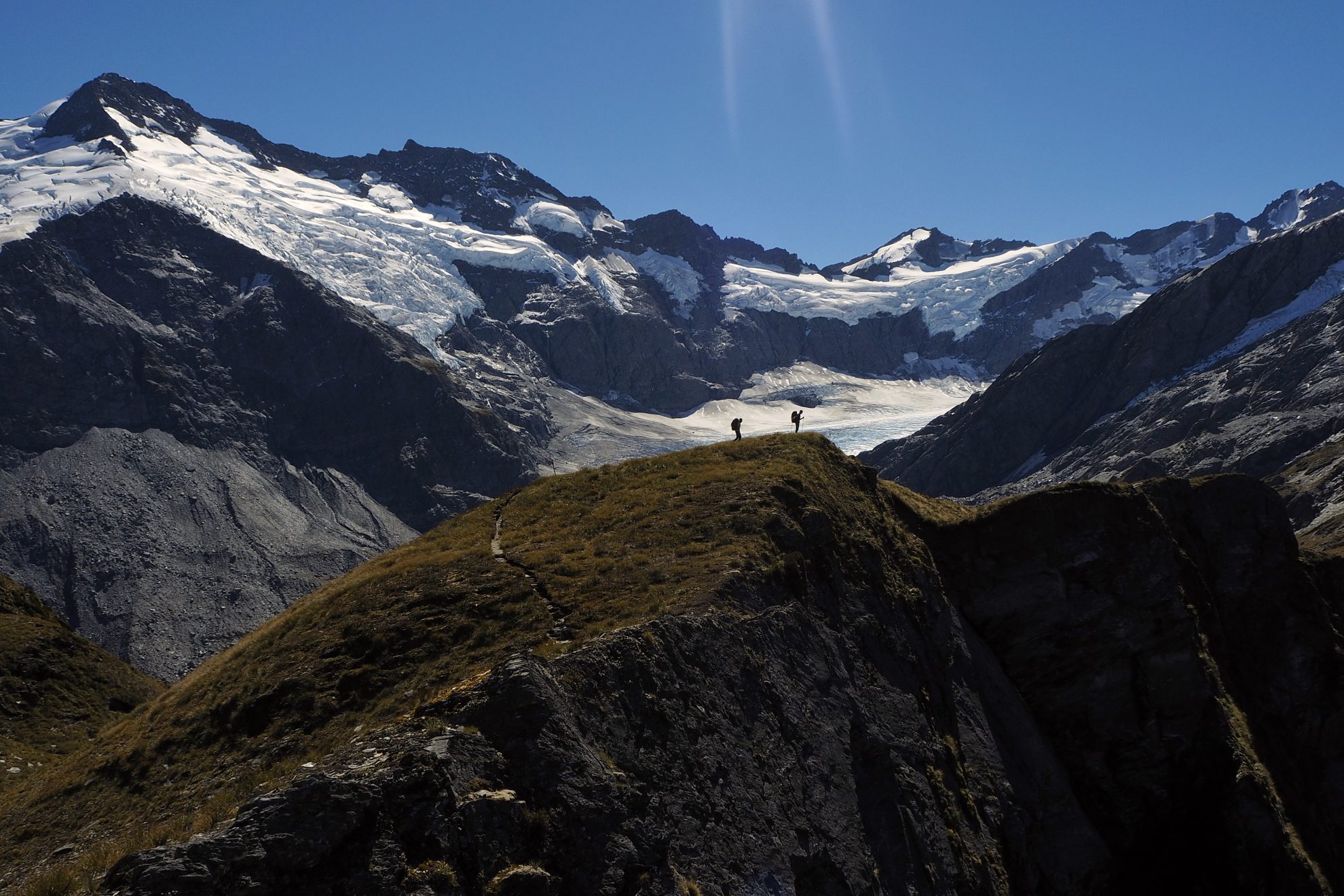
Early next morning, while it was still dark, we packed and began the climb towards Rees Saddle, where the real adventure was about to begin: a venture, off the beaten path into a land devoid of tracks or markers.
From the saddle, we dropped into Snowy Creek, avoiding bands of bluffs on the way. The place was still and silent, broken only by the gusting wind tugging at our jackets and the steady rippling of the creek as it danced and trickled its way downstream.
About 1500m from the head of the valley, we veered due east to climb a steep but straightforward spur to the high point of the trip, Pt1950.
From here, the east-lying mountains were a maze of rugged peaks. There was also a view of the upcoming crux of the trip: the sidle between Pt2000 and Pt1865, above Pine Creek.
We meandered through rocky bluffs, until halfway through to the crux, we picked up a faint goat trail that led us safely across the mountainsides.
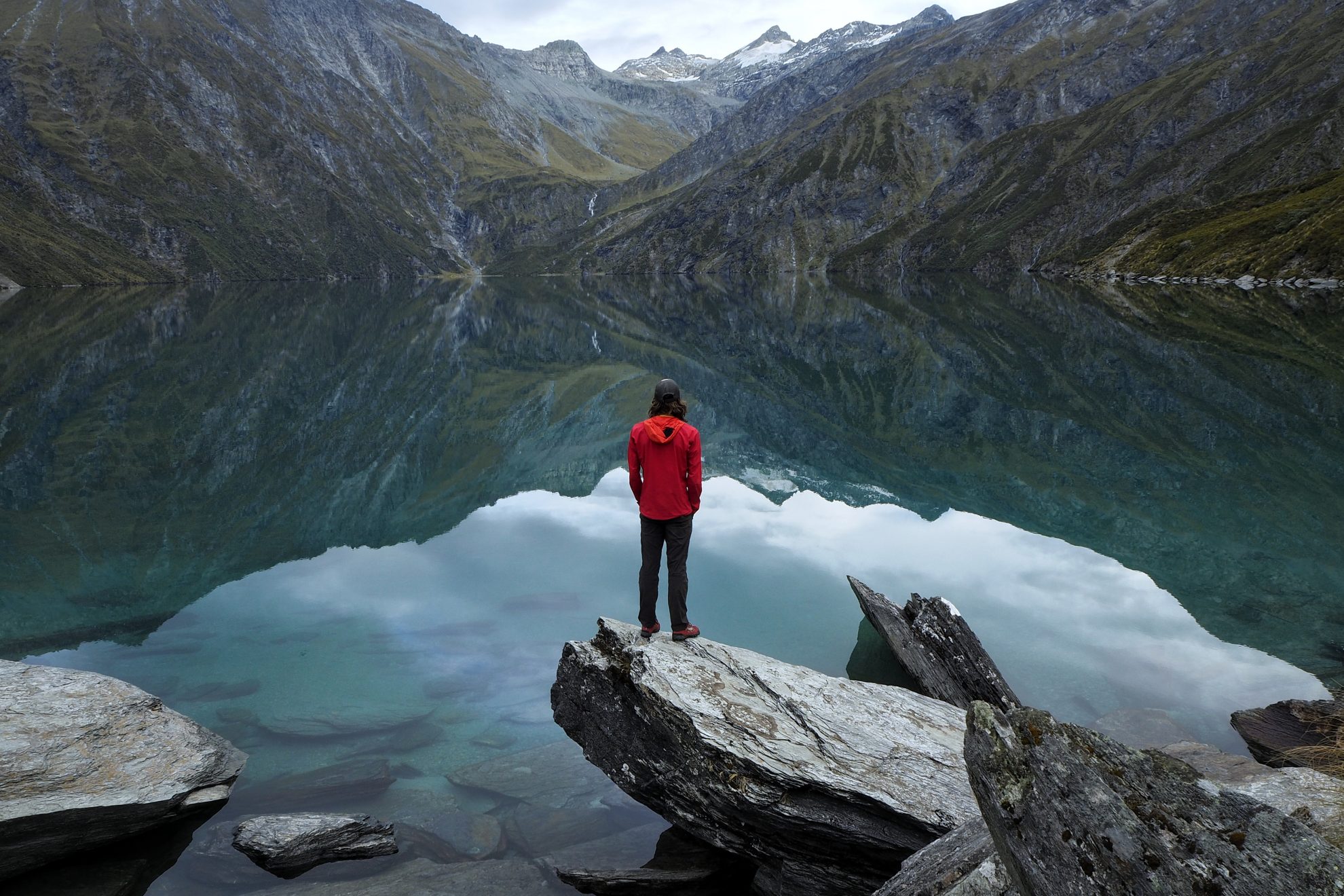
From the razorback ridge between Tyndall and Snowy creeks, there were sweeping views of the emerald blue Lochnagar, stretched out below.
The end was now close at hand and we headed down easy scree slopes.
Then, a mere 500m from Lochnagar Hut, our progress came to a sudden halt. The most draconic dracophyllum scrub I’d ever encountered lay between us and the hut. We later discovered there is a trail following a spur east of the lake outlet, but for us our final hour of the day’s hike was spent smashing, crawling, jumping and rolling our way to the hut.
As our packs finally fell from our tired shoulders, the serenity of the scene washed over us. The lake water was clear, calm and cold.
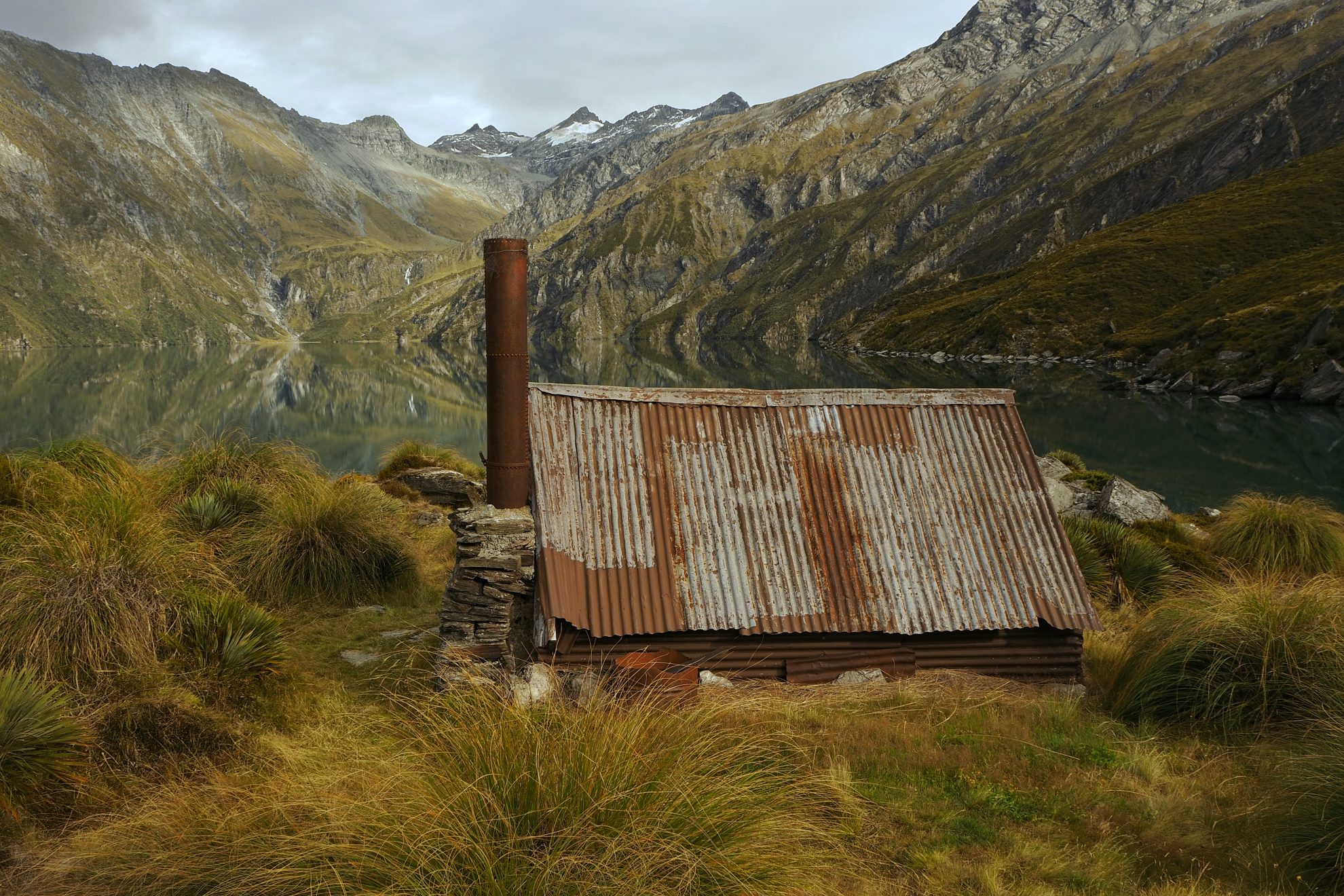
Lochnagar Hut is privately-owned by Branches Station and its rusty tin walls, roughly-hewn bunks and compact dirt floor are a far cry from Dart Hut’s exuberant luxuries.
The following morning, we again found ourselves in dense scrub. This time, however, there was a good trail down Lake Creek to the Shotover
River where an overgrown 4WD track led north to Tummel Burn Hut. It was a relief to not fight for progress, though the final two kilometres before the hut were untracked bushland.
By then, we deemed ourselves apt scrub-whackers, and compared to the previous day’s dracophyllum-induced nightmare, this section felt like a breeze. We arrived at the hut in the early afternoon and spent a relaxed evening tending an open fire and recalling past adventures.
We woke to rain and heavy grey clouds covering the tops where our route lay. At the bush edge, directly outside the hut, was a sign reading ‘Track’. We dived in and began climbing.
The well-defined track soon became well-defined scrub. As the terrain grew steeper, so the bush bashing intensified and within minutes we were head-deep in brambles, vines, thorns and mud: at times, nearly impenetrable. When we reached the treeline, we were bloodied and bruised, having covered just 800m in two hours.
Following this, we walked through tall snowgrass, with the wind and pelting rain blasting us sideways. We kept moving to stay warm, towards Shotover Saddle, not even stopping for lunch.
Finally, there was the final push to the head of Tyndall Creek and Shotover Saddle. On the Matukituki side, the wind dropped away, the clouds parted and, with a sigh of relief, we picked our way down the slope to the valley floor.