How to get into snowshoeing

May 2013

Read more from

May 2013

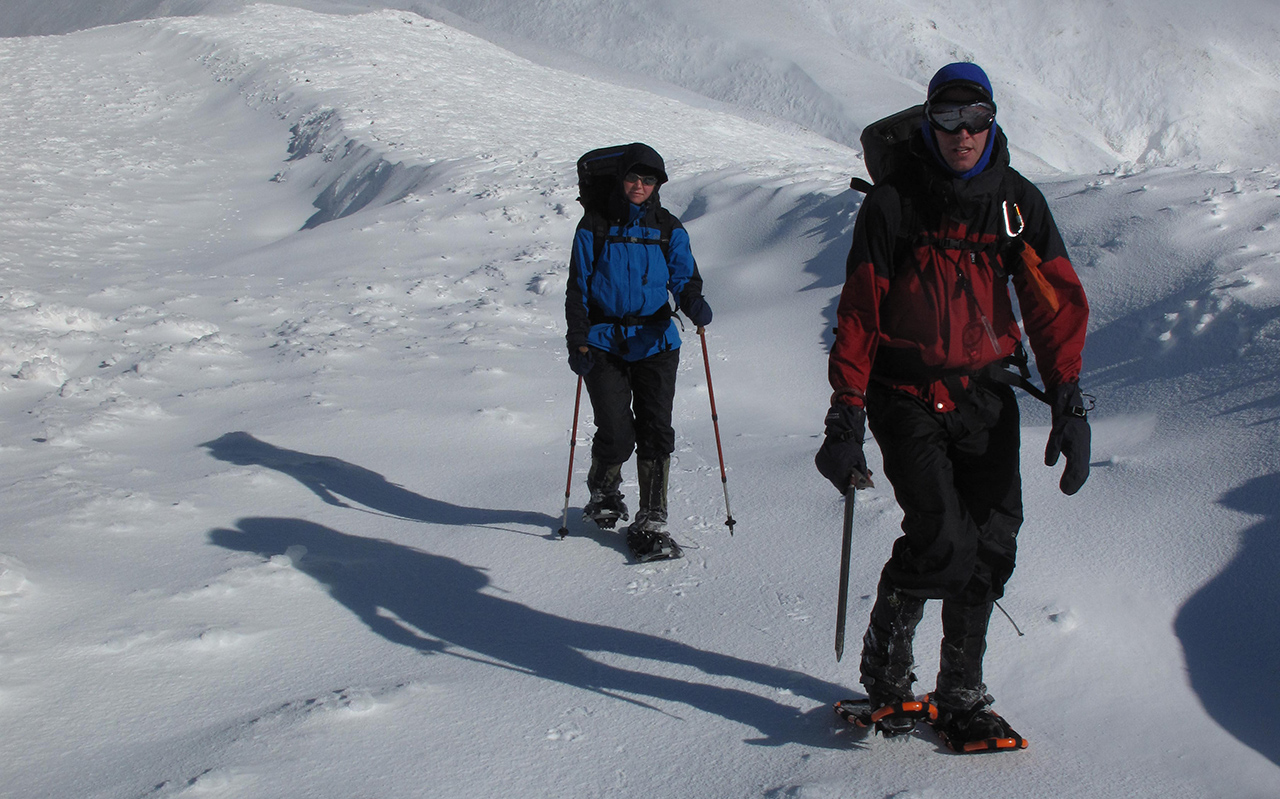
A gentle climb on snow and ice is made easy with snowshoes. Photo: Richard Davies

Richard Davies went from novice snowshoer to ‘can’t live without them’ in one season. Follow his advice and you will, too

There is nothing quite like winter in the hills with a quiet hut to look forward to at the end of a walk.

There are a few downsides though. The snow in the North Island ranges where I do most of my tramping tends to be either dreadful or terrible. After years spent plugging steps through snow and cutting my shins every time I break through a hard crust, I thought there has to be a better way.

There is and they’re called snowshoes.

A bunch of friends and I all managed to pick up some snow shoes last winter – they can be purchased in most stores or even on TradeMe. Some outdoor stores hire them out, which is a good option for those uncertain about whether to take the plunge to buy a pair or not.

There is a wide variety of brands and types out there, so for backcountry use you want to make sure you get the following features:

  • Constructed from modern and lightweight plastic materials
  • A hinged binding that allows the heel to lift free
  • A cleat underneath to provide grip on harder snow

Over the course of several snowshoeing trips I’ve had a few revelations:

  1. Snowshoeing is great fun. Walking across familiar (even boring) snowy tops in snow shoes is just as exciting as visiting new places you’ve never tramped. It is such a fun way to travel that I can’t seem to wipe the grin off my face.
  2. If the snow is dreadful with a breakable crust, you’ll still break through – but you’ll break through less often and when you do your shins are well clear.
  3. A walking pole is a lot better than an ice axe for assisting you to walk efficiently. But if you hit a hard bit you’ll want your axe to cut steps on particularly icy sections. For most scenarios, a walking pole is enough – particularly when zigzagging on steeper slopes.
  4. What goes up won’t necessarily come down. While it is reasonably easy to ascend hard icy snow using the cleats on the bottom of the snowshoe, descending is much more tenuous. In some instances it is easier to take the shoes off and either cut or kick steps in the hard snow.
  5. Snowshoes are much more efficient. One party without snow shoes did the same trip as my friends and I one weekend and took about 40 per cent longer.
Alistair Hall

About the author

Alistair Hall

More From Skills

Related Topics

Similar Articles

You can always change your plans

Back to school

Lessons learned the hard way

Trending Now

Green Point Hut, Gamack Conservation Area

The possibilities of packrafting

Every Tararua hut reviewed and ranked

The Tararua’s forgotten traverse

Leaning Lodge, Rock and Pillar Conservation Area

Subscribe!
Each issue of Wilderness celebrates Aotearoa’s great outdoors — written and photographed with care, not algorithms.Subscribe and help keep our wild stories alive.

Join Wilderness. You'll see more, do more and live more.

Already a subscriber?  to keep reading. Or…

34 years of inspiring New Zealanders to explore the outdoors. Don’t miss out — subscribe today.

Your subscriber-only benefits:

All this for as little as $6.75/month.

1

free articles left this month.

Already a subscriber? Login Now