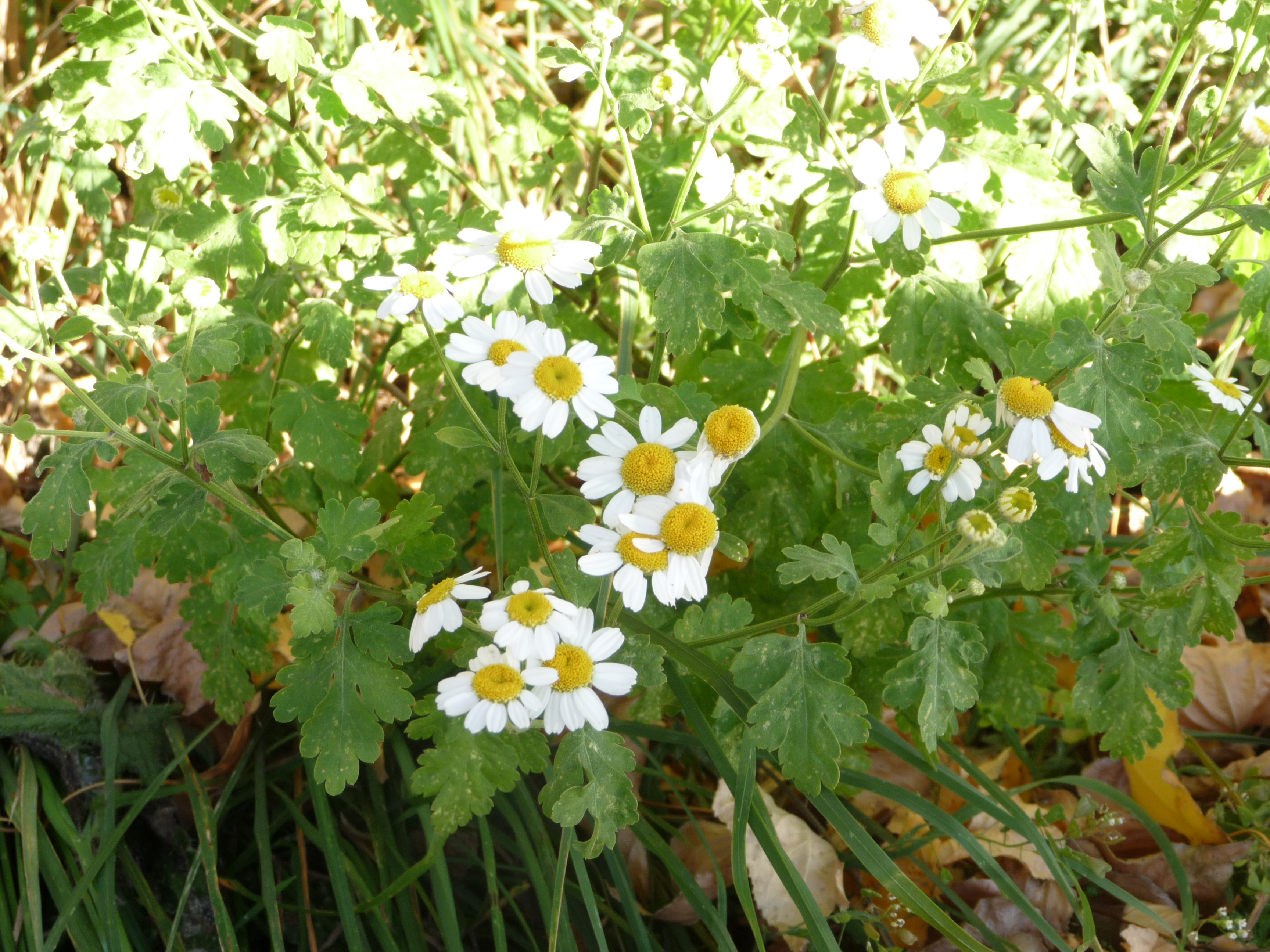
Description: Feverfew is found in many old gardens and wild areas and it is occasionally grown for ornament. The plant grows into a small bush around 45cm high. This is covered by flowers reminiscent of daisies and small serrated leaves.
Season: It flowers in the summer months although can be seen from early spring onwards. The seeds ripen in autumn.
Fruit: Feverfew produces no fruit, only seeds. The edible part being the dried flowers and leaves. They can be added to foods to impart a slightly bitter, deliciously aromatic flavour. The flowers should be harvested when young and tender and dried quickly to retain all the natural oils.
Leaves: The citrus scented leaves should be gathered with care as they can cause dermatitis and ulcers if not processed properly.
Location: Feverfew is found in mountain scrub, rocky slopes, walls and waste places at altitudes below 800m. It will tolerate sustained winds but not prolonged frosts.
Why eat them? The leaves and flowering heads are an anti-inflammatory, a stimulant and a sedative containing high levels of melatonin. Chewing them has proved itself to be of benefit in the treatment of migraine headaches, rheumatism and arthritis. A tea made from the whole plant can be used in the treatment of colds and fevers. Applied externally as a tincture, the plant can be used in the treatment of bruises.
Unusual tip: The dried flower buds are a source of insecticide, and have the same properties as pyrethrum. Steep one cup of dried flowers in 1-litre of hot soapy water for an hour. Strain and allow to cool slightly before spraying on plants.
Mt Somers via Te Kiekie Route, Hakatere Conservation Park
The Tararua’s forgotten traverse
Subscribe!
Each issue of Wilderness celebrates Aotearoa’s great outdoors — written and photographed with care, not algorithms.Subscribe and help keep our wild stories alive.