A new merino fibre spinning technique delivers a stronger fabric that does all the things we want merino to do – better!
Garments made from merino wool – especially base layers and socks – have long been favourites for trampers. Merino wool has many positive features. It is lightweight, temperature regulating (it keeps a wearer comfortable whether the ambient temperature is hot or cold), breathable and naturally anti-odour, and maintains these properties even when wet. But merino garments do have a few downsides. They’re expensive, especially compared to synthetic rivals such as polypropylene, and they can develop holes sooner than one would hope. This is especially annoying in light of their cost.
Merino is an inherently strong fibre, but the standard spinning methods, known as ring and core spinning, do not get the best from it.
Ring spinning twists wool fibres to produce rope-like threads. This process stresses the fibres which are then prone to breaking (hence the holes). Ring spinning can also result in fabric that is itchy to wear, and because the fibres are twisted so tightly, thermoregulation and anti-odour abilities are inhibited, too.
Core spinning twists wool fibres around a central filament, often made from a synthetic material like nylon. This method leaves fibres a bit stronger than ring-spun threads but still twists the wool and creates the same drawbacks.
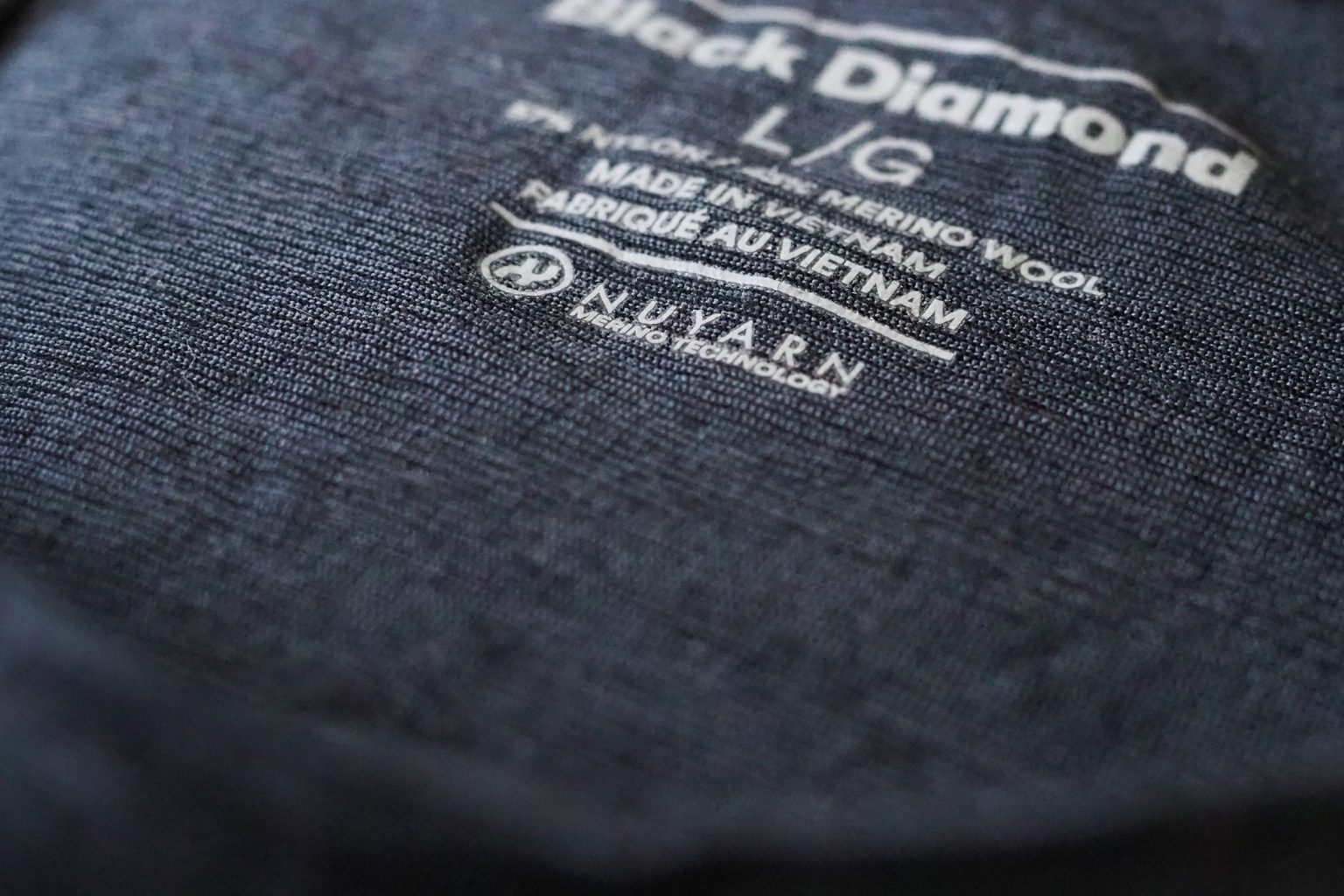
In 2014 a new method of spinning was developed in New Zealand. In this process, called Nuyarn, merino fibres are woven around a central filament without twisting the wool, which effectively removes a lot of the issues plaguing ring and core spinning.
AgResearch New Zealand and Intertek Vietnam tested and compared Nuyarn fabric against ring-spun merino and found Nuyarn to be five times faster drying while also having 50 per cent more tensile strength, 85 per cent more elasticity and 8.8 times greater abrasion resistance. Thermal retention was improved by 35 per cent and wind resistance by 53 per cent.
Thermal retention and wind resistance come from Nuyarn’s better loft – that is, its ability to trap air rather like down insulation does.
But while Nuyarn has been available for over a decade, it hasn’t completely taken over as the spinning method of choice for all producers of wool garments. Overseas brands that use Nuyarn include KUIU, Artilect and Black Diamond, but few New Zealand-based brands have adopted it. Those that have are sold on it.
Kathmandu has used Nuyarn in some of its socks for several years; hunting brand Swazi uses it too. Nelson-based clothing brand Yank uses nothing but Nuyarn.
In short, Nuyarn allows merino to perform as it should, and merino garments made with it become worth their premium price.












My gear through the decades