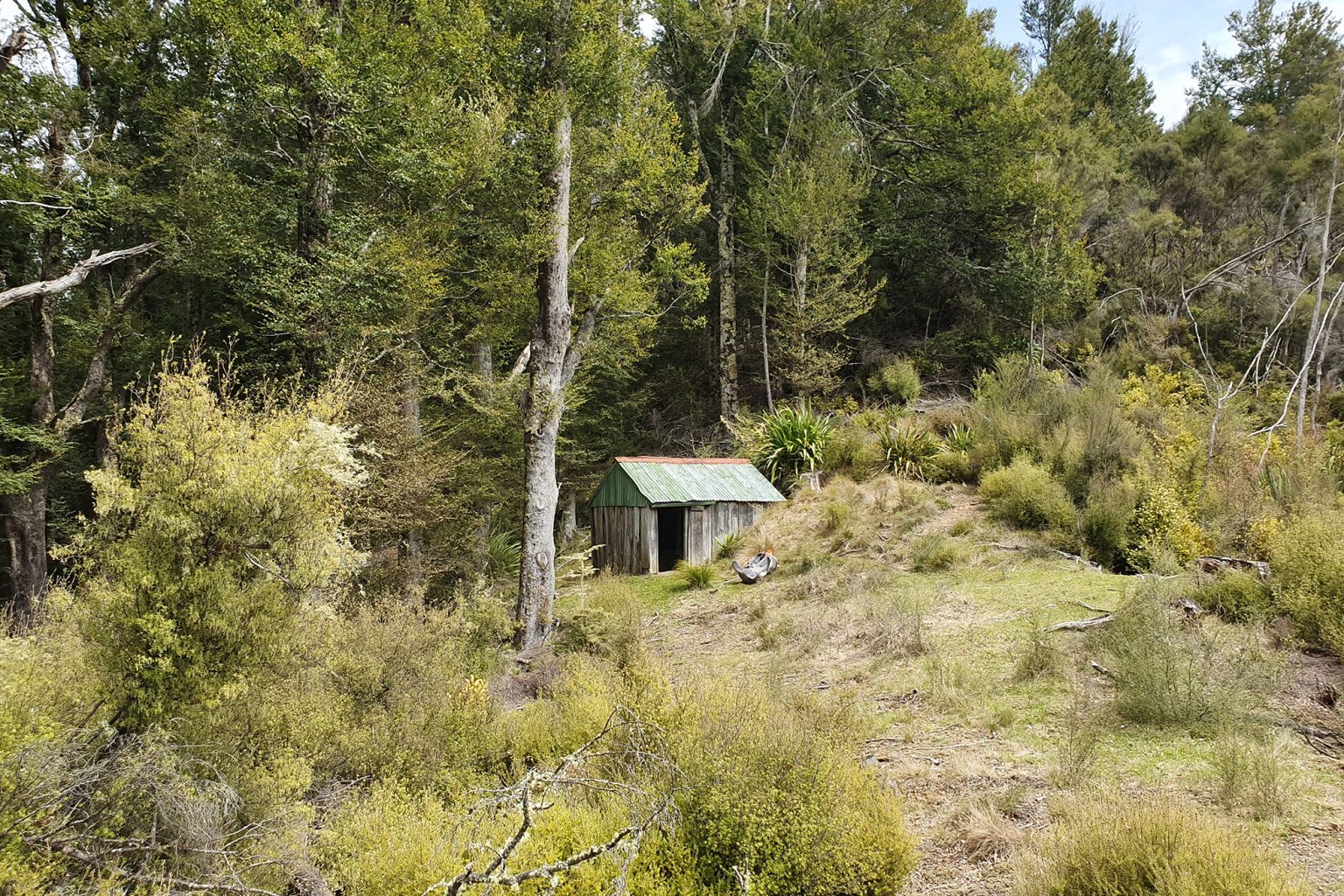
Many huts that are used as tramping accommodation today were historically used by shepherds and musterers working isolated areas of farmland. Here are some that are easy to visit.
Kaweka Forest Park
Early Māori living in the eastern Kaweka foothills gathered food from the nearby forests. Ngāti Mahu and Ngāti Hinepari set up transient camps near the Mangatutu and Mangatainoka hot springs, and the Upper Mohaka River was an important source of tuna or eels.
European colonists modified the area considerably and grazed merino sheep over the entire range. Some of their early huts remain.
Iron Whare is a small hut made from vertical slab tōtara and is thought to have been built in the 1870s by musterers who carried the materials in to the site. It is the oldest hut in Kaweka Forest Park and possibly the oldest in the mountain regions of New Zealand.
Manson Hut was built from split slabs and beech cut from the surrounding forest in the 1940s. It was used by musterers working on nearby Ngamatea Station farm.
Coromandel Forest Park
In the 1860s Thomas Crosbie travelled from Scotland and cleared the land known as Crosbies Settlement. The only access was by foot, horse or horse-drawn sledge, and was often impassable in bad weather. The settlement was abandoned in 1926 and the modern Crosbies Hut has since been built on the site.
Tongariro National Park
Located at 1740m at Hut Flat on Whakapapa, Glacier Hut was built by the first people in the country to try recreational mountain skiing. It’s now a small museum managed by Ruapehu Ski Club.
Ka Whata Tu o Rakihouia Clarence
For more than 750 years, Māori living at the mouth of the Waiau-ua Clarence River used this river valley to get to Waiau. In 1857 the first colonial sheep runs were established in the area but were abandoned 30 years later. Access has always been difficult; the vehicle track was only completed in 1969.
Black Spur Slab Hut was built around 100 years ago and used by shepherds during tupping season.
Further down the river is Bluff Dump Hut, a depot for goods brought over the pack track before winter cut off access to the area.
Old Willows Hut was used by Wattie Hedgeman, a rabbiter and farmhand. It’s covered in written and carved graffiti dating back to 1925.
Already a subscriber? Log in
Subscribe to read this article immediately and unlock exclusive 10-15% discounts at NZ’s best outdoor stores.
Cancel anytime.

Questions? Contact us