Imagine tripping and finding you can’t put weight on your leg. You may be only a couple of hours from a road end but unable to walk. If you don’t have an emergency shelter you could get seriously cold, even hypothermic while waiting for rescue.
There are many reasons you may need to seek shelter overnight or even during the day, which is why some form of emergency shelter or tent should be taken on every trip.
Survival ‘space’ blankets or bags
These are waterproof metalized plastic sheets or bags and may have additional fabric insulation. They can trap 80-90 per cent of heat lost by a body due to radiation, water evaporation or convection.
Blankets or bags are not expensive and weigh less than 100g. The lighter ones will provide less warmth and are more prone to tearing, especially to shred when nicked. Some are very crinkly to sleep in. Most will fit two people.
A bag will prevent air gaps when sleeping, but a blanket is more versatile. It can wrap around you or go over the top like a flysheet so you can change, eat or work on a patient whilst underneath.
Whichever you choose, they are light and cheap enough to have in a day or overnight pack at all times. They’ll last a couple of years unused, but over time may delaminate.
Survival tubes or tube tents
These tube or tent-shaped shelters are made of plastic or metalized plastic and are generally big enough for two people. They can also be used as groundsheets or tarps.
They’re quick to set up but require trees, bushes or hiking poles to be strung to. They are a little heavier and cost more than a survival blanket and are more suited to overnight or longer trips where you are carrying a sleeping bag.
Pack liners
These are large plastic bags that fit inside packs to keep gear dry. I always recommend double bagging (in smaller plastic bags or dry sacks) items you need to keep dry. It’s amazing how water can seep inside a pack liner during hours of rain or after a dunking in a river. Keeping your spare clothes dry may be essential to your survival.
The pack liner can also double as a survival bag. Bring your pack inside to use as an insulation layer under you.
Unless it is very cold you will get wet from condensation.
Flysheets and plastic sheets
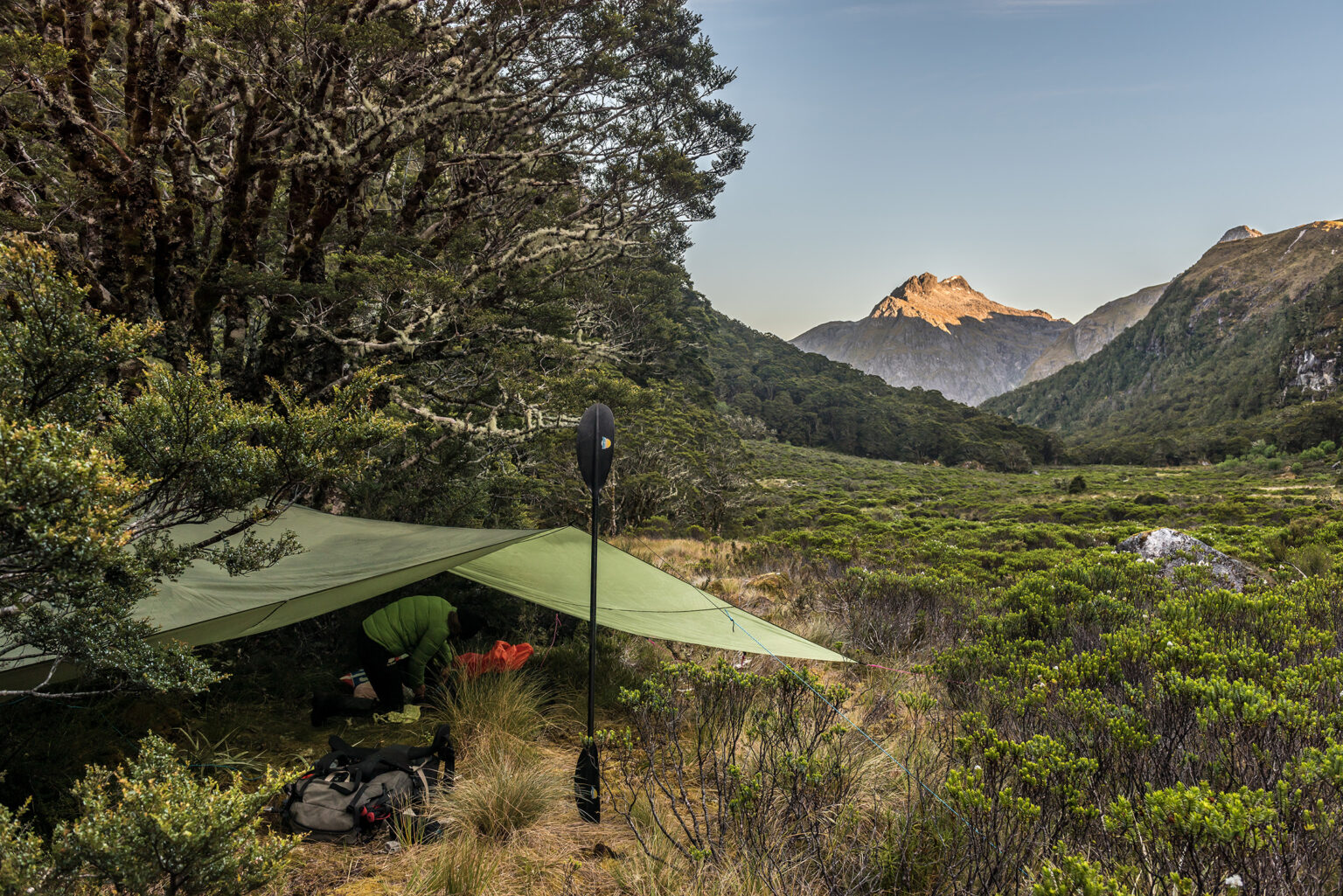
Flysheets are made of various tent materials, usually with a ridgeline and eyelets. They are quick to set up and are versatile shelters for wet lunch stops or as short-stay ‘tents’.
Once, during a 24-hour enforced stop, I set my flysheet low during overnight torrential rain and lifted it higher during the daytime when light rain fell so I could watch the birds in the clearing. I stayed drier than a couple in a nearby tent where condensation built up in their enclosed space.
Plastic sheets can be used as a cheap alternative to flysheets. Those blue trailer tarps have eyelets but lose their waterproofness as they age.
Fugging
If your group is getting cold and at risk of hypothermia, you can pull a shelter (easier with the sheet designs) over your group. It will act as a windbreak and mean you’re all sharing the air you breathe: everyone is inhaling warm air. This is called fugging.